
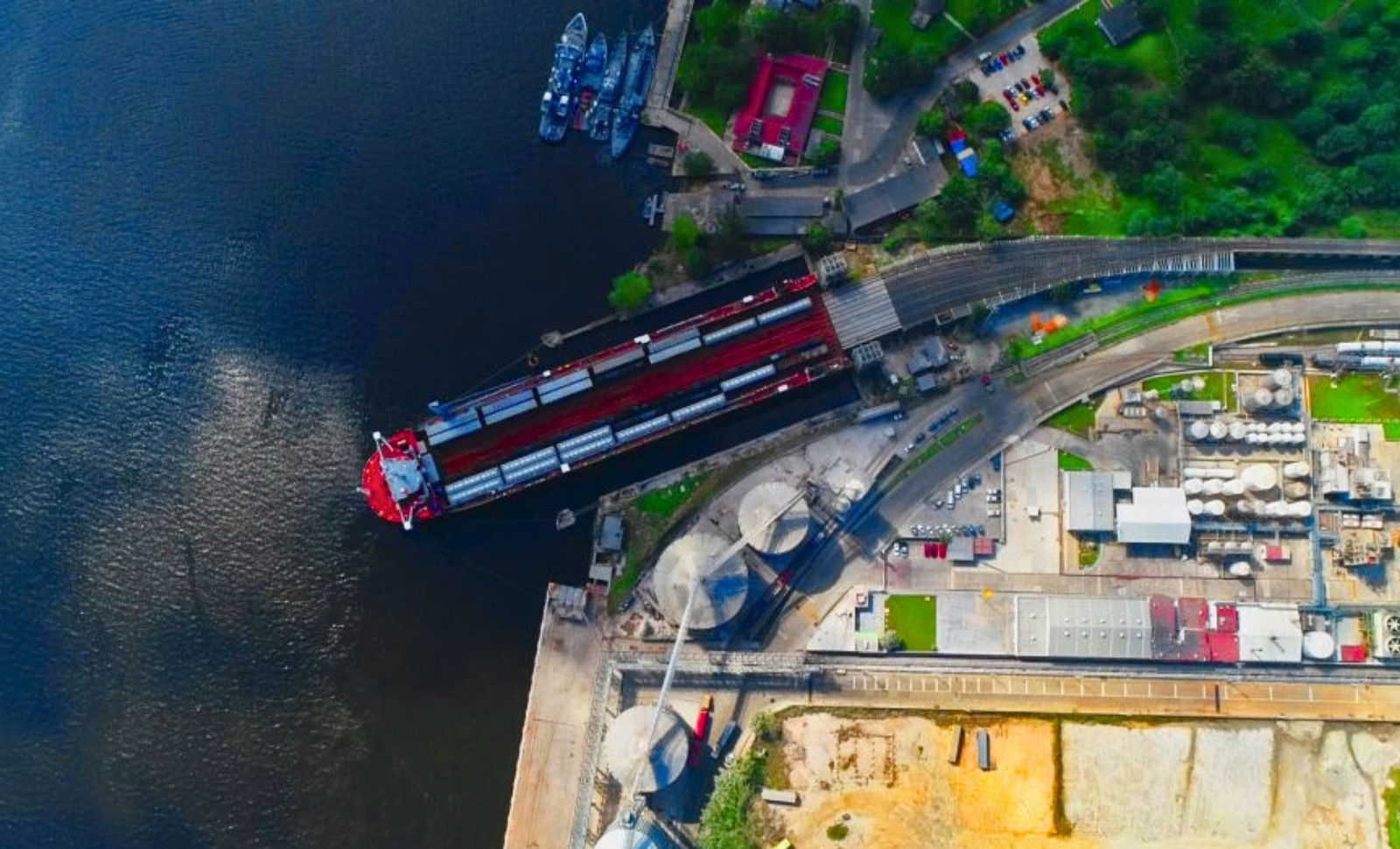
Mexico’s Interoceanic Corridor of the Isthmus of Tehuantepec successfully transported 900 vehicles from Asia to the eastern United States during spring 2025. This milestone marked the inaugural large-scale test of the 303-kilometer rail link bridging the Pacific port of Salina Cruz and the Gulf port of Coatzacoalcos.
Executed by Hyundai and its logistics division Hyundai Glovis, each rail segment took close to nine hours, culminating in a total trans-ocean transfer time near 72 hours. Coinciding with this, a climate report published the same year indicated that the Panama Canal might experience more frequent severe droughts by century's end if greenhouse gas emissions remain unchecked.
These findings underscore a shared concern for maritime shipping: a key waterway handling roughly 5% of global sea freight risks growing instability, prompting the exploration of viable alternatives.

Details of Hyundai’s Logistics Trial
From March 28 to April 3, 2025, the vehicle carrier Glovis Cosmos shipped automobiles from South Korea to Salina Cruz. Subsequently, 600 and then 300 vehicles were loaded onto 50 BI-MAX rail wagons designed for transporting cars and moved across southern Mexico via Line Z of the corridor. At Coatzacoalcos, these vehicles transferred onto the vessel RCC Africa bound for Brunswick, Georgia.

This operation demonstrated the corridor’s capability to support international multi-modal freight. For automakers, the value is evident: amid Panama Canal drought-related delays in 2023 and 2024, some routes extended from 15 up to 20 days. Nino Morales, President of the CIIT Oversight Commission, called the test an important step toward the corridor’s strategic goals. “This pilot reinforces the Interoceanic Corridor as a vital new passage connecting Asia with the U.S. East Coast,” Morales emphasized.
Challenges Facing the Panama Canal’s Water Supply
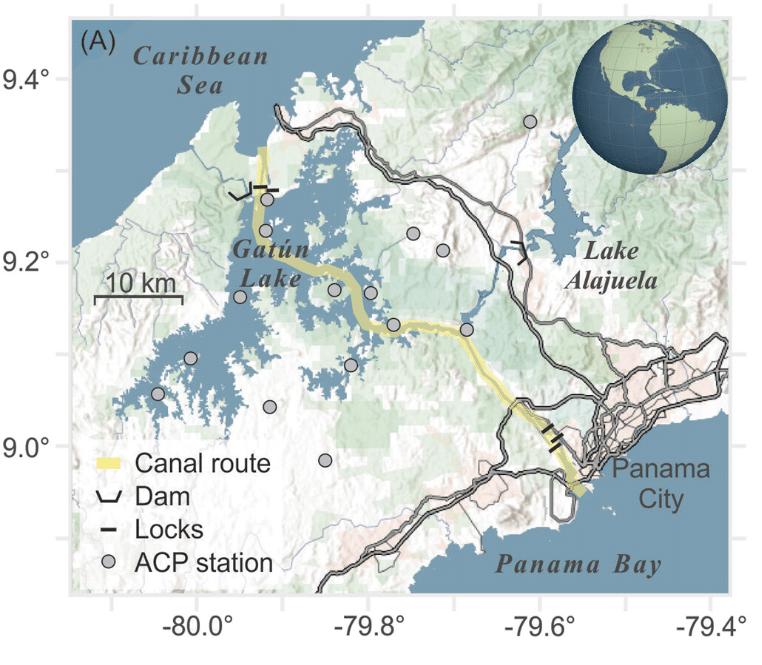
The drought during 2023–2024, detailed in a recent study, was pivotal to the Hyundai operation’s commercial significance. Water levels in Gatún Lake, the freshwater source fueling the canal’s lock system, dropped close to two meters below the previous year’s levels by January 2024. As a result, canal operators cut daily vessel transits from a normal 38 down to 22 and enforced cargo weight restrictions, causing congestion and costly reroutes around South America.
Samuel Muñoz of Northeastern University analyzed future water level fluctuations for Gatún Lake in a Geophysical Research Letters study. His models predicted that under scenarios with high greenhouse gas emissions, drought frequency resembling 2023’s could double by century’s end. The decline in Panama’s wet-season precipitation, particularly from May to August, was the primary factor, with monthly rainfall potentially decreasing by around 50 millimeters.
Muñoz clearly noted the stakes tied to emission choices: “If we reduce emissions following lower pathways, this system remains fairly stable. Without mitigation, low water levels currently causing disruptions could become the norm by 2100.”
In response, canal administrators are enhancing water efficiency and planning a new reservoir to help mitigate future dry spells.
Implications of a Dry Panama Canal for Global Commerce
The CIIT is not a direct substitute for the Panama Canal, as it requires two ocean transfers limiting its advantages to cargo types where timeliness outweighs additional handling costs. Vehicles fit well into this niche; however, large-scale container shipping faces challenges.
Run by the Mexican Navy and sanctioned in 2019, the corridor initiated rail freight operations in 2023. The broader logistics complex, including port expansions and ten industrial parks, aims for full readiness by mid-2026. Southern Mexico economist Omar Cancino highlighted the corridor’s role in advancing resilience, stating, “The CIIT has potential as a critical alternative route for global trade amid changing supply chains and geopolitical tensions.”
Its timing is critical. The increasing momentum of nearshoring shifts manufacturing toward Mexico, positioning the corridor as a strategic junction for an evolving industrial landscape and a necessity for supply lines less reliant on a single maritime route.
Ongoing Controversies and Safety Concerns
The corridor’s development has encountered significant pushback. Indigenous groups in Oaxaca and Veracruz have opposed land allocations for planned industrial hubs, with courts temporarily halting some projects amid legal disputes. Environmental advocates warn that new transportation and energy infrastructure risks accelerating deforestation and ecosystem fragmentation within a region with considerable tropical forest coverage.
In December 2025, a derailment of a passenger train on this route in Oaxaca resulted in over a dozen fatalities. This tragedy spurred congressional demand for probes into possible contractual irregularities and scrutiny over safety oversight on this rapidly advancing military-managed rail initiative.
While freight service is operational and the corridor has proven viable for international vehicle transport, sustained traffic will depend on consistently meeting the 72-hour target and expansion of port capacities at both termini.
- Categories:
- News











0 comments
Sign in to Comment