
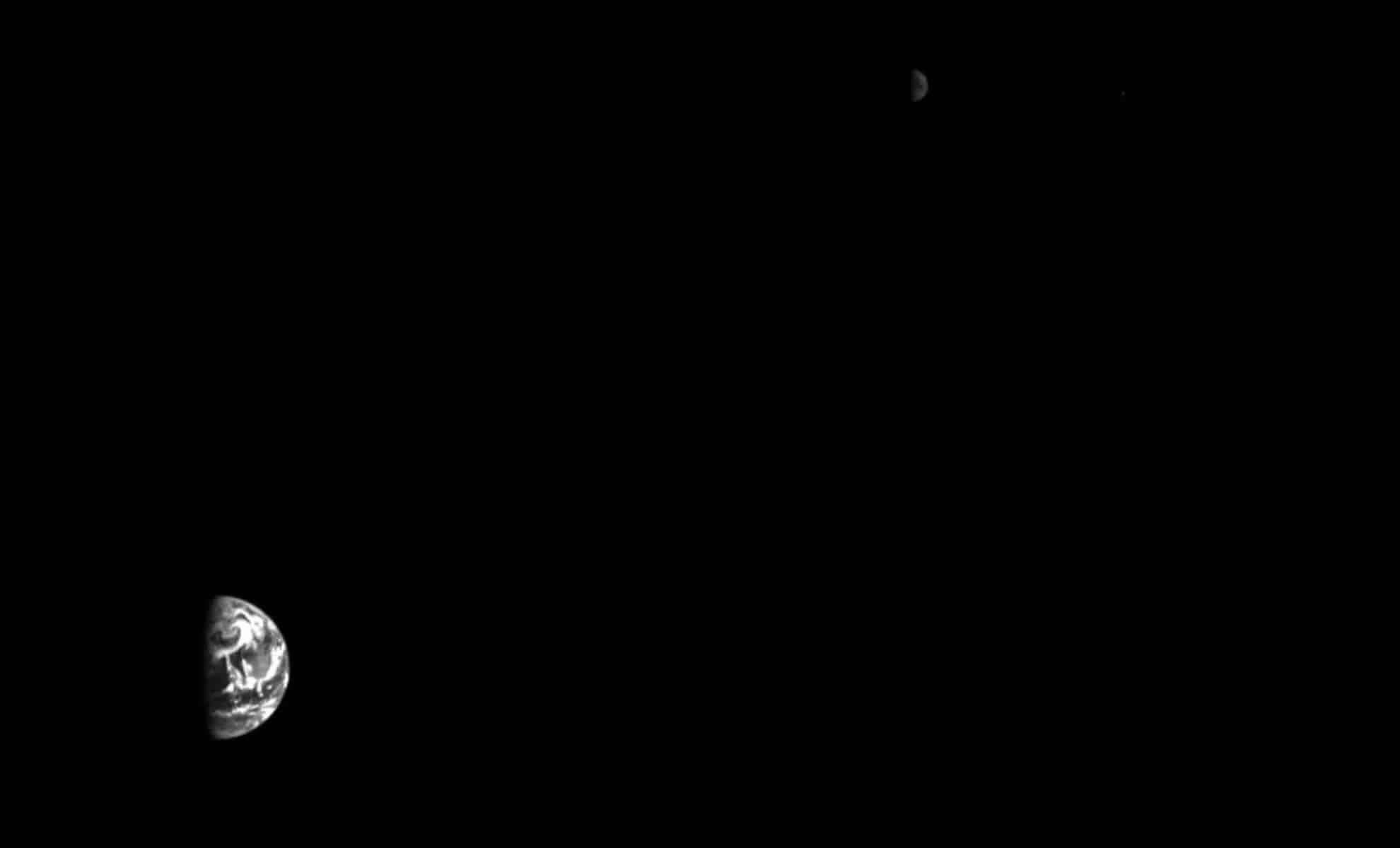
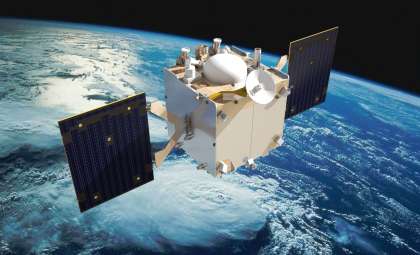
ESA’s Hera spacecraft has transmitted its initial snapshots of Earth and the Moon as it embarks on its mission to investigate the Didymos-Dimorphos asteroid system.
Launched successfully in October 2024, Hera follows NASA’s Double Asteroid Redirection Test (DART) mission, which purposely collided with Dimorphos in 2022. Hera’s objective is to analyze the consequences of that collision and determine how practical asteroid deflection could be for shielding Earth from future threats.
A Glimpse Back at Home
Captured shortly after Hera’s instruments were first powered on in space, these new images—taken with the Asteroid Framing Camera (AFC)—show a breathtaking view of Earth and its companion Moon from about 1.6 million kilometers (1 million miles) away. In the photographs, Earth is positioned at the bottom left, adorned with radiant cloud patterns over the Pacific, while the Moon is visible near the center. ESA shared the photo on X (formerly Twitter) with the message “Farewell, Earth!” as the spacecraft begins its deep-space voyage.

🌎 Farewell, Earth! 👋
Last week, after we successfully launched our Hera mission, its instruments were switched on for the first time and the asteroid deck was pointed back towards our planet.
This allowed Hera to capture the first images of Earth and the Moon from a distance… pic.twitter.com/usrZtxapRU
— European Space Agency (@esa) October 14, 2024
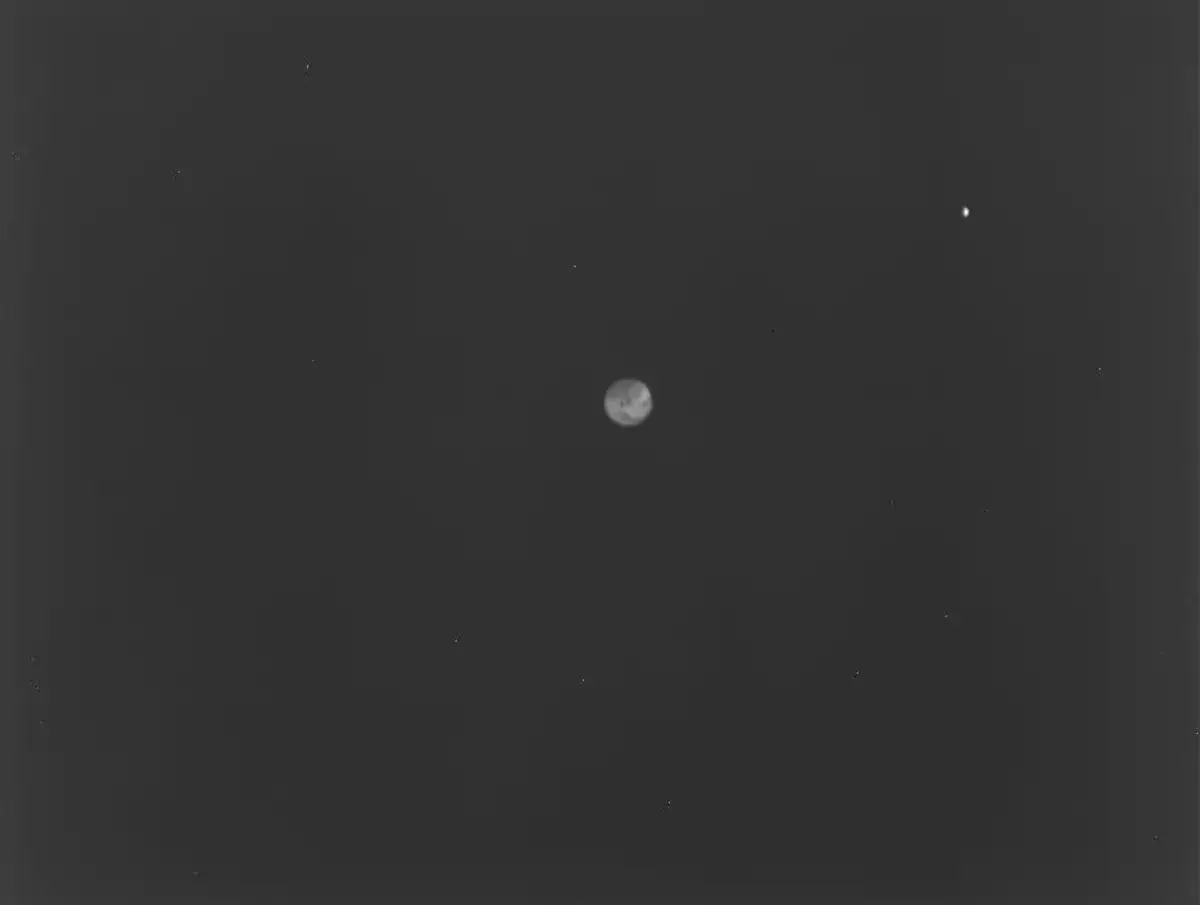
Besides the AFC photo, Hera’s Thermal Infrared Imager (TIRI) captured another impressive image of Earth from roughly 1.4 million kilometers (900,000 miles) away. This picture shows the North Pole at the top, with the Atlantic Ocean and the eastern U.S. coastline clearly visible. The Moon appears as a bright spot near the upper right corner. These early tests of Hera’s sensors offer vital insights that will aid in the detailed examination of the asteroid system ahead.
Evaluating DART’s Impact with Close Observation
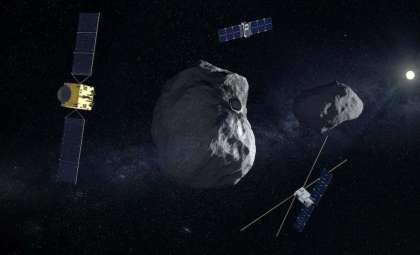
Hera is designed to carefully examine Dimorphos, the smaller partner of the Didymos asteroid pair, which was struck by NASA’s DART spacecraft in 2022. The success of DART in altering Dimorphos’ orbit confirmed that kinetic impact could be a promising approach for asteroid threat mitigation. Yet, many uncertainties remain regarding the long-term alterations to Dimorphos’ surface and interior following the collision.
“Hera will thoroughly characterize Dimorphos to provide a complete understanding of the effectiveness of DART’s impact method,” explained Paolo Martino, Deputy Project Manager of Hera. By measuring the crater’s size and depth created by the DART impact, Hera will contribute essential knowledge about how various asteroid types respond to deflection attempts. This data will be instrumental for designing future planetary defense missions that could safeguard Earth from hazardous asteroids.
Advancing Asteroid Science and Defense
Beyond examining surface changes, Hera aims to investigate the internal makeup of both Dimorphos and Didymos. The spacecraft is equipped with innovative instruments, including the HyperScout H sensor, which analyzes wavelengths beyond human vision to identify the asteroids’ mineral composition. This helps scientists learn about their physical attributes such as density and porosity.
Supporting Hera on this voyage are two CubeSats named Milani and Juventas. These tiny satellites will collaborate with Hera to map Dimorphos’ surface and interior structure, measure its gravitational field, and assess how the impact influenced its overall integrity.
Scheduled to reach its destination in 2026, Hera is expected to revolutionize our understanding of asteroid behavior and provide significant breakthroughs for protecting Earth through informed planetary defense strategies.
- Categories:
- Astronomy ,
- News ,
- Nasa






0 comments
Sign in to Comment