
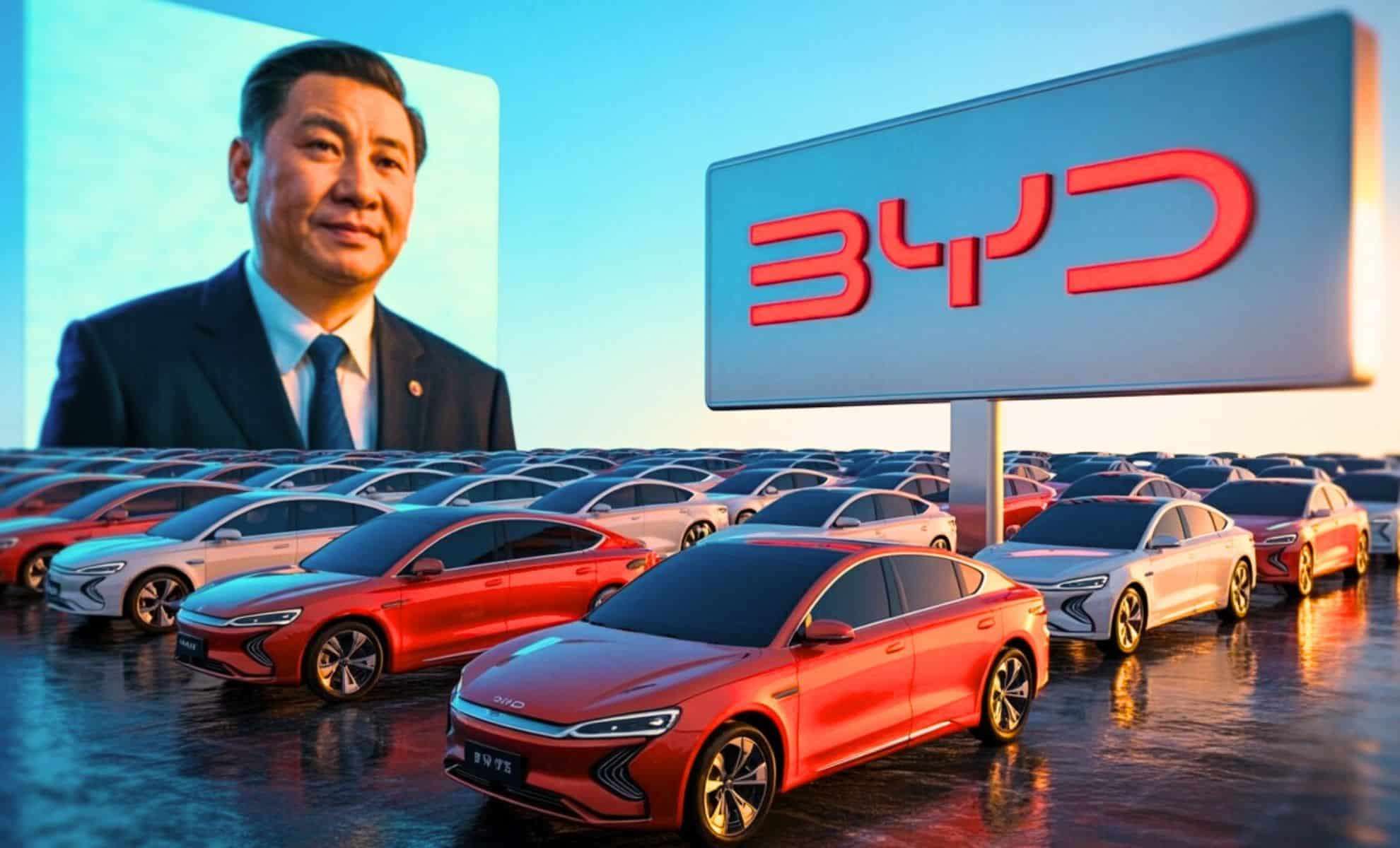
For much of recent history, Tesla dominated the global electric vehicle landscape. However, in 2024, the tides shifted dramatically. Industry statistics reveal that BYD — Build Your Dreams surpassed Tesla in sales, delivering an impressive 4.3 million units, marking a 41 percent increase compared to the previous year. Meanwhile, BYD’s profitability has doubled within just two years.
Among its prominent investors is Warren Buffett, who backed BYD in 2008 and has witnessed incredible gains. His original $230 million investment has appreciated nearly thirtyfold. BYD’s achievements don’t just stem from volume but also from the premium features of its newest vehicles: luxurious massaging Napa leather seats, 15-inch rotating OLED screens, ultra-fast 10-minute charging, and an astonishing claimed range of 2,100 kilometers — all available at prices competitive with a Volkswagen Golf.
Technological Advantages Fueling Growth
A significant edge for BYD lies in its vertical integration. Unlike Tesla, which still depends on key suppliers such as Panasonic, BYD manufactures its own batteries, semiconductors, and even glass components. This self-sufficiency helped BYD circumvent the global semiconductor shortage of 2021 and capitalize on its lithium extraction ventures in Tibet and South America.

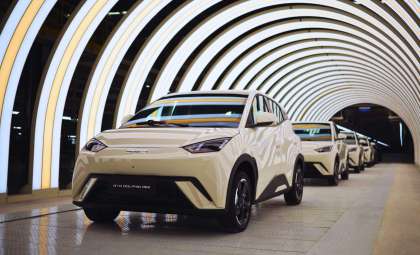
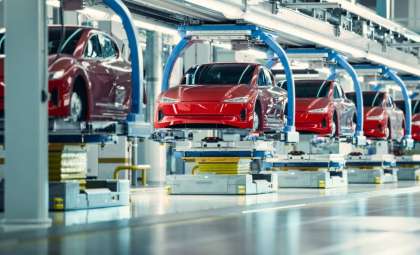
At facilities spanning Shenzhen, Xi’an, and Changsha, a car is produced approximately every 50 seconds. Automation has reached an advanced 85 percent efficiency — a level rarely matched in China. BYD’s standout innovation is its Blade Battery, which utilizes lithium iron phosphate for enhanced safety and about 30 percent lower production costs than traditional lithium-ion batteries. Automakers like Ford and Toyota have already inked agreements to incorporate this battery technology in forthcoming models.
Aggressive Global Expansion
BYD's footprint beyond China is rapidly expanding. In Thailand, it captured a commanding 40 percent of the electric vehicle market within just 18 months. Its Tang model secured a spot among Norway’s top five electric vehicles. Moreover, BYD customizes vehicles for specific regions: heat-resistant batteries cater to Israel’s climate, while ethanol-electric hybrids are developed for the Brazilian market.
Strategic collaborations are multiplying. Uber has placed orders for 100,000 BYD vehicles to green its fleets, Amazon is piloting BYD vans for last-mile deliveries, and Shell’s charging stations across Europe are integrating BYD’s fast-charging systems.
Challenges and Controversies
Despite its achievements, BYD faces significant challenges. In January 2025, a report by GMT Research accused the company of hiding substantial debt. By scrutinizing BYD's supply-chain financing — which extends supplier payments by nine months versus the industry standard of two months — GMT estimated BYD’s actual debt to amount to approximately $44 billion, nearly sevenfold higher than what the company officially reports.
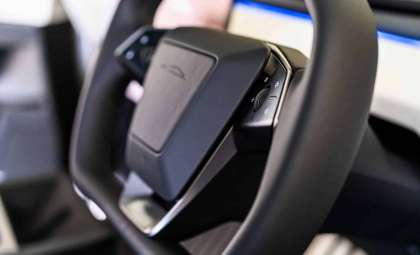
Concerns about product reliability have also surfaced. A recall in September 2024 involved nearly 100,000 vehicles due to a steering column safety issue linked to fire hazards, marking the largest recall in the company’s history. Customer complaints range from defective audio systems and malfunctioning GPS to early battery degradation. In Europe, there have been reports of mold in new cars and paint damage after a single wash.
Labor practices have come under fire as well. Brazilian authorities accused BYD in December 2024 of employing forced labor at one of its local plants.
Allegations of Inflated Sales Figures
Some analysts suggest BYD’s sales numbers may be exaggerated. A common method in parts of China involves registering vehicles under shell corporations or leasing companies before reselling them as “zero-kilometer used” cars. Satellite imagery revealing huge parking areas brimming with unsold BYD vehicles supports these claims. In response, China’s Ministry of Commerce has initiated an anti-dumping probe.
The Impact of State Support
BYD’s competitive pricing is also tied to significant government subsidies. From 2018 to 2022, it received about $3.7 billion in state aid — more than any other automaker worldwide. In 2022, these subsidies accounted for roughly 26 percent of BYD’s net profits. Economists contend that BYD’s current scale owes much to this state intervention.
Concerns mount as subsidy programs begin to phase out. Indeed, as China started reducing direct incentives, BYD’s domestic sales experienced a noticeable downturn in late 2024.
The Path Ahead: Three Possible Outcomes
Experts consider three potential futures for BYD:
- Collapse: A mounting debt crisis could disrupt supplier relations, possibly turning BYD into China's version of Lehman Brothers.
- Global Leader: BYD may overcome quality and financial issues, continue receiving governmental support, and emerge as the predominant player in the global EV market, relegating Western competitors to niche roles.
- Trade Restrictions: Escalating geopolitical tensions might lead Western nations to impose tariffs and bans, confining BYD's operations mainly to China and emerging economies.
The trajectory of BYD will not only define its destiny but also influence the broader automotive industry's future direction.
Beyond Automobiles
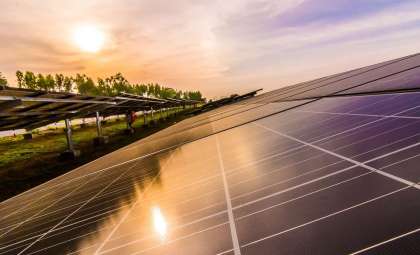
At its essence, BYD’s ambitions extend well beyond vehicles. The company is aggressively investing in solar energy, battery storage solutions, and urban transit infrastructure, including its SkyRail monorail system. Founder Wang Chuanfu envisions a world where one in every three cars sold globally is Chinese-made, with half bearing the BYD name.
Whether BYD will become the next automotive powerhouse or face challenges similar to other large Chinese conglomerates remains uncertain. What is undeniable is that BYD symbolizes the clash between China’s industrial strategies and the Western market-driven approach. As the competition in electric mobility heats up, the ramifications will extend far beyond just car sales.
- Categories:
- News







0 comments
Sign in to Comment