
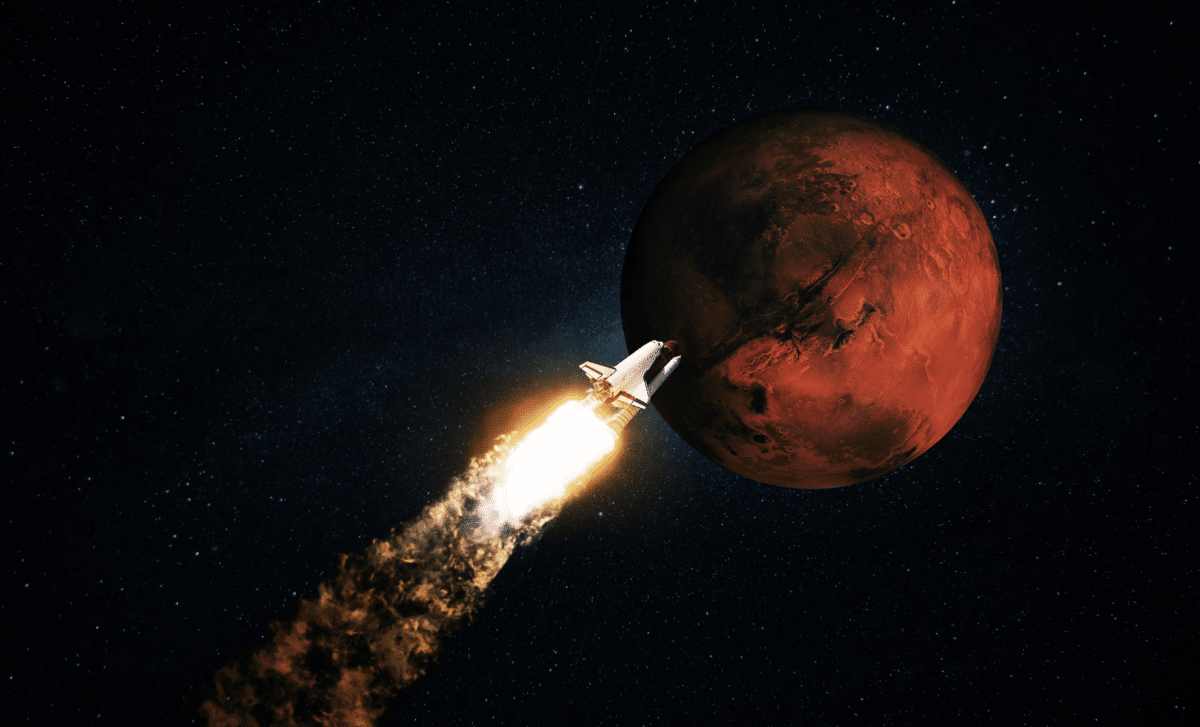
For many years, journeys to Mars have demanded extensive, multi-year expeditions across vast distances. However, a recent investigation published in Acta Astronautica points to an overlooked pathway hidden within the unpredictable trajectories of asteroids, potentially shortening interplanetary travel to Mars dramatically by utilizing early asteroid orbital data.
A Fresh Perspective on Mars Transit Routes
The conventional approach to planning Mars missions focuses on carefully calculated orbits, planetary positioning, and efficiency over extended timeframes, often lasting several months for each leg of the trip. This new study proposes a different strategy by examining preliminary orbital data of asteroids that, despite their initial imprecision, might highlight faster travel corridors.
The concept involves pinpointing spatial alignments among Earth, Mars, and the orbital planes of certain asteroids. Viewing these early asteroid trajectories not as obstacles but as navigational beacons may reveal more efficient transit routes. The research spotlights asteroid 2001 CA21, whose initially estimated orbit intersects the paths of both Earth and Mars. Even after further refinements, this initial data serves as a valuable guide, suggesting a novel astrodynamical technique that leverages approximations for mission planning.

2031: A Pivotal Opportunity for Mars Travel
The analysis reviewed several forthcoming Mars oppositions, especially those occurring in 2027, 2029, and 2031, evaluating the feasibility of this shortcut. Mars opposition, when Earth aligns directly between the Sun and Mars, already marks a prime launch period due to closer planetary proximity. Among these, the 2031 alignment stood out as uniquely compatible.
Marcelo de Oliveira Souza of the State University of Northern Rio de Janeiro (UENF) highlights that the 2031 alignment matches closely with the inclination plane tied to asteroid CA21, enabling spacecraft paths within five degrees of this orbital tilt, which reduces fuel demands and streamlines the route. As described in Acta Astronautica, Oliveira Souza states:
“The 2031 Mars opposition supports two complete sub-year round-trip missions consistent with the CA21-anchored plane.”
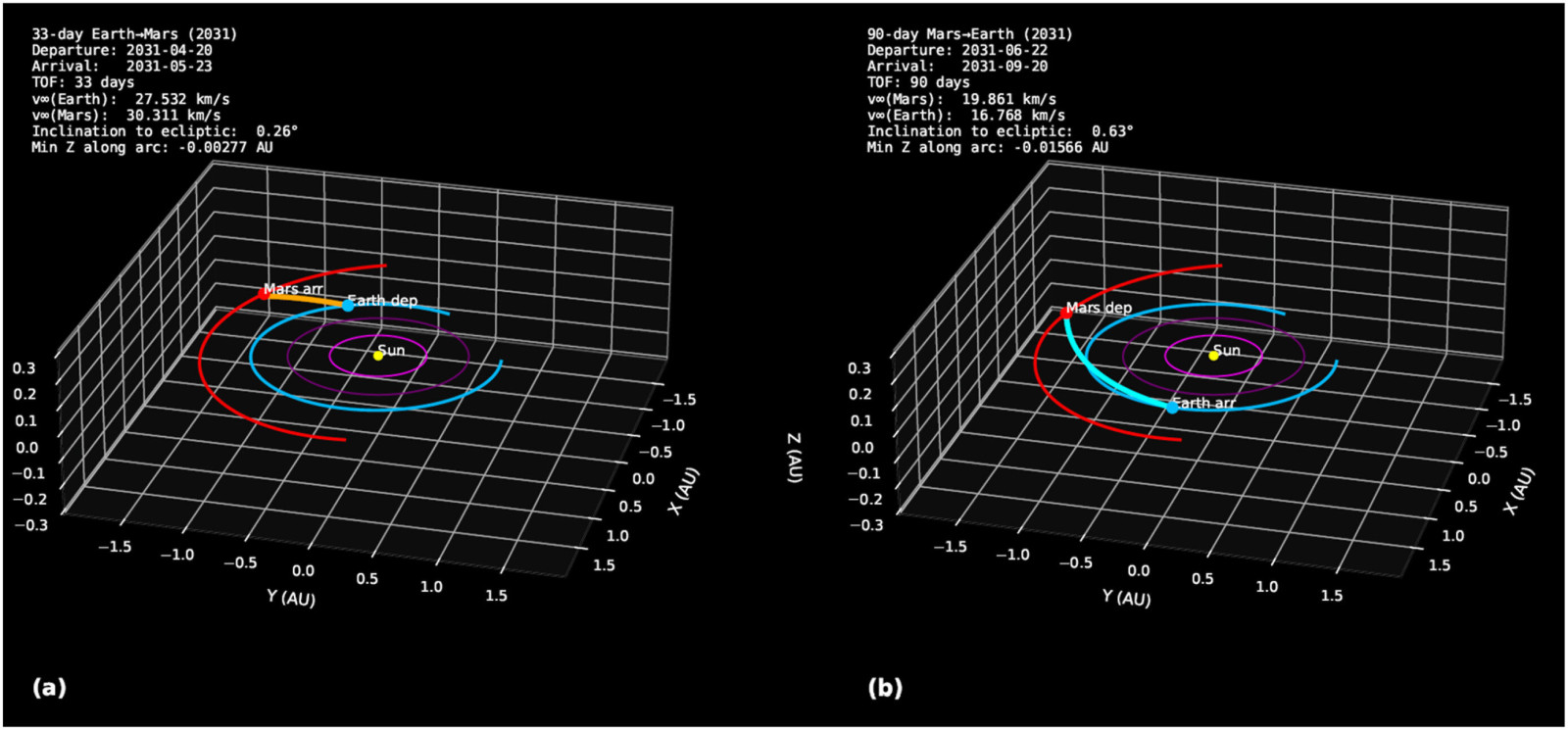
This discovery represents a major leap forward, with potential trips outbound lasting as little as 33 days and returns around 90 days. Even the more conservative breakdown of 56 days out and 135 days back compresses the mission duration from years to just around five months.
Asteroids as Navigational Reference Points
While asteroids have traditionally played roles in gravity assists or as objects to avoid, this study recasts them as key geometric reference marks. By examining the inclinations and early orbits of small bodies, researchers can identify spatial planes that aid in plotting efficient transfer routes between planets.
Oliveira Souza underscores the significance of this shift, saying:
“This study illustrates how the well-defined plane geometry of a preliminary small-body orbit can be employed as a methodological screening tool for rapid interplanetary transfer identification.”
Instead of planning around specific asteroid flybys, the strategy leverages the asteroid’s orbital framework as a reference, enabling quicker and broader exploration of possible mission configurations hidden within large datasets.
This approach could be vital early in mission design, where agility and speed are paramount, blending the value of approximation with precision to transform the way we plan interplanetary travel.
Benefits for Manned Mars Exploration
One of the greatest obstacles for human Mars missions is the length of travel time, which exposes astronauts to extended radiation, mental strain, and considerable life-support challenges. Slashing round-trip travel to approximately 153 days could greatly reduce such risks.
Shorter trips also cut down the need to carry extensive supplies, lowering launch costs, easing spacecraft design, and potentially allowing for more frequent missions. Though this study doesn’t propose an immediate mission blueprint, it sets the stage for future faster, leaner Mars exploration strategies.
The results indicate that mission developers should expand their tools to include novel data types and innovative methodologies. As governmental and commercial efforts accelerate toward Mars, such breakthroughs could play a crucial role in establishing a reliable human foothold beyond Earth.
- Categories:
- Space









0 comments
Sign in to Comment