
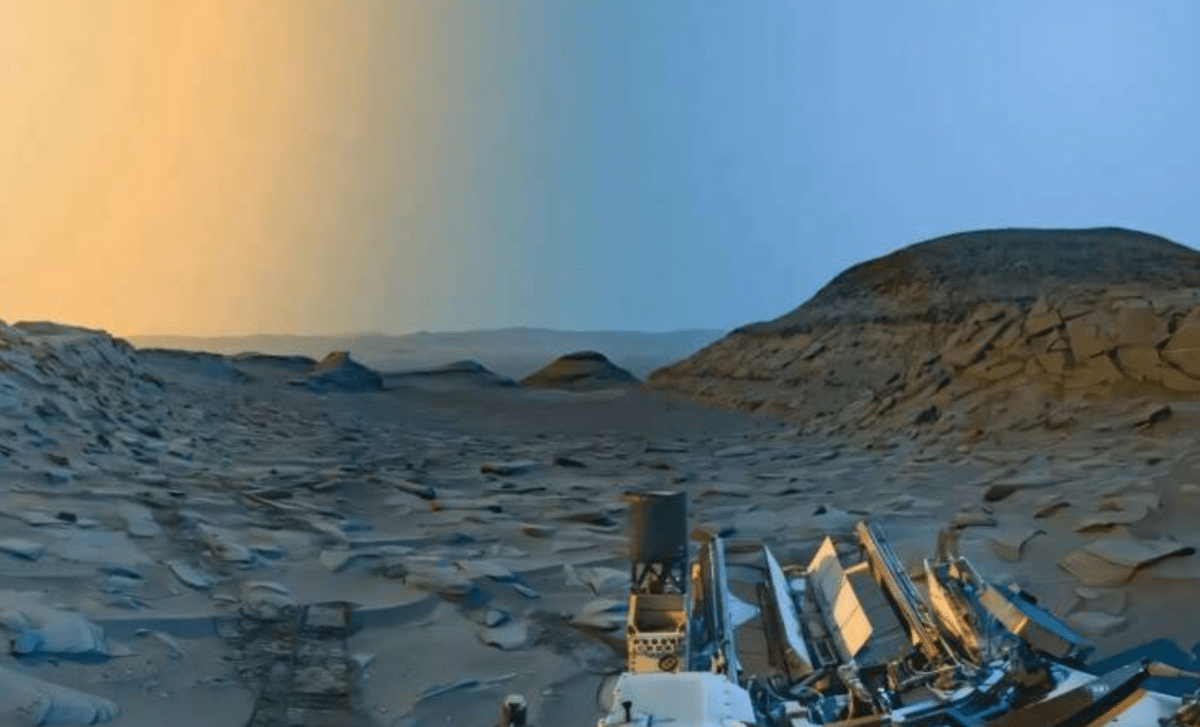
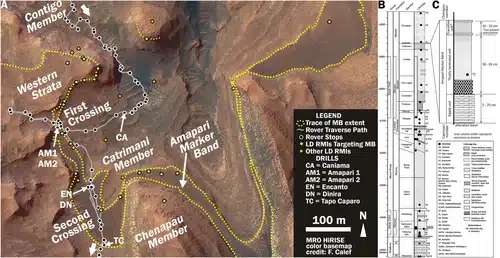
The Curiosity rover has uncovered an extraordinary concentration of iron, manganese, and zinc together for the first time in Mars’ Gale Crater. Reported in the Journal of Geophysical Research: Planets, these metal-rich layers suggest the presence of an ancient lake that could have supported life, offering fresh evidence about Mars’ wet history. Located within the Amapari Marker Band on Mount Sharp, this discovery sheds light on a period when water shaped the Martian landscape and raises new possibilities regarding microbial life on the planet.
Significance of Redox Metals and Clues to Mars’s Biological Potential
The abundance of redox-active metals like iron, manganese, and zinc found by Curiosity isn’t merely a geological curiosity; it could hint at environments conducive to life. On Earth, these metals participate in redox reactions that sustain microbial ecosystems, such as in lakes or subsurface waters. Such parallels increase the prospect that similar processes might have occurred on ancient Mars.
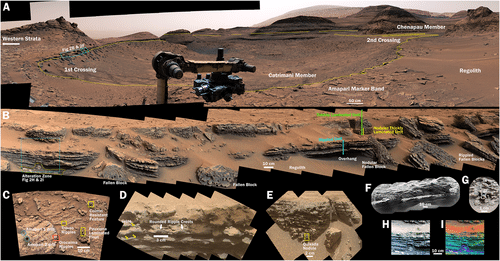
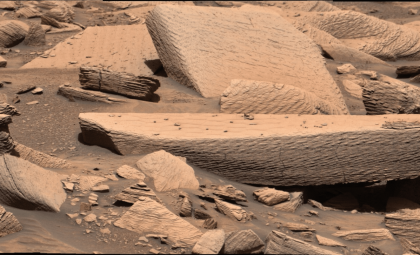
“The metals were found in preserved ripples, which is the clearest evidence we have that a lake was present in Gale Crater. But what’s more surprising is that this lake existed high up on Mount Sharp, where the rover explored rocks that were deposited during an era on Mars when the climate was drying out,” said Patrick Gasda, ChemCam Instrument science team member and research scientist at Los Alamos National Laboratory.
Add Cosmo Herald as a Preferred Source

This discovery indicates that even as Mars transitioned to its frigid, arid state, isolated water bodies like the one in Gale Crater might have sustained habitable conditions for some time.
Published in the Journal of Geophysical Research: Planets, the research highlights not only Mars’ wetter epochs but also the persistence of localized environments that could have harbored microbial life long after the global climate had dried out. The metal concentrations in these rocks elevate the possibility that life once existed in these ancient Martian lakes.
Insights into Mars’ Environmental Evolution
This landmark finding enhances understanding of the climatic shifts on Mars. Early Mars was much wetter, dotted with numerous lakes, but as it evolved into a colder and drier world, such aqueous environments became rare and transient.
“Ancient Mars was much wetter, and lakes in craters were common then,” explained Gasda. “It seems that as Mars became drier and colder, lakes that formed less frequently were very short-lived.”
This revelation adds weight to the hypothesis that early Martian conditions in crater basins offered habitats potentially favorable for life. The metal-rich deposits in the Amapari Marker Band contribute vital evidence toward piecing together Mars’ intricate environmental history and emphasize the importance of ongoing exploration aimed at uncovering the Red Planet’s biological potential.
Looking Ahead: Curiosity’s Role in Mars Investigations
These new insights open exciting avenues for upcoming Mars missions. The identification of redox-sensitive metals provides promising targets for further chemical analysis by Curiosity. Patrick Gasda remarked,
“Given the exciting astrobiological implications raised by the Amapari Marker Band, these types of materials should be prioritized for future Curiosity chemistry analysis or for returning samples from Mars’ Jezero Crater, should the opportunity arise.”
Future endeavors may include detailed in situ studies or retrieving samples for study on Earth. These results also underscore the value of missions like NASA’s Perseverance rover currently exploring Jezero Crater, another ancient lakebed with potential life-signatures. Continued investigation of such mineral deposits could bring humanity closer to answering the profound question of whether Mars ever hosted life.
- Categories:
- Nasa





0 comments
Sign in to Comment