
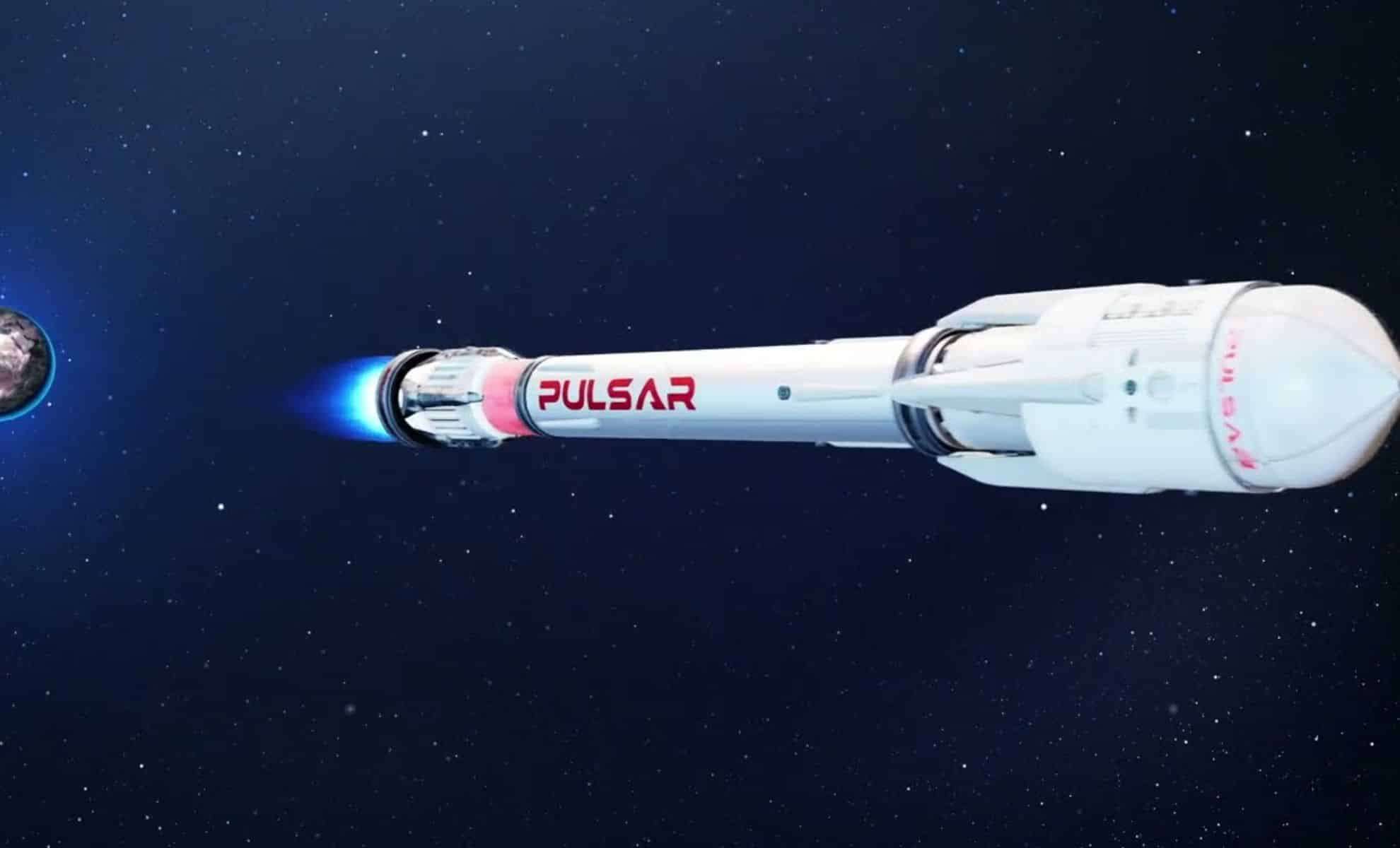
A UK startup specializing in space propulsion has introduced an innovative nuclear fusion-powered rocket concept that could shorten voyages to Mars drastically. In a recent presentation, Pulsar Fusion revealed their Sunbird Migratory Transfer Vehicle, driven by cutting-edge dual direct fusion drive (DDFD) engines.
Harnessing Star-Like Power for Space Travel
The Sunbird spacecraft, as described by Pulsar Fusion, is engineered to reach speeds up to 329,000 miles per hour (more than 529,000 kilometers per hour), positioning it as the fastest self-propelled craft ever designed. This performance is made possible through nuclear fusion—the very process fueling stars like our Sun. Their DDFD engines are predicted to produce exhaust velocities near 310 miles per second (500 kilometers per second), far surpassing today's conventional chemical thrusters.
In a company video, the Sunbird can be seen detaching from a station, maneuvering into position using its eight thrusters to dock with a larger vehicle resembling a SpaceX Starship upper stage, before activating its powerful engines and setting off for far-flung planets.

Plans to Achieve Fusion Propulsion in Orbit by 2027
While visually impressive and technologically promising, Pulsar Fusion admits significant milestones remain ahead. Later this year, the firm intends to test key elements of the fusion power system, with full orbital trials planned for 2027. Succeeding would represent a breakthrough for aerospace propulsion and fusion energy.
CEO Richard Dinan told Gizmodo via email that their strategy involves creating a scalable framework for deep space transit. By employing Sunbird vehicles in space-based logistics, they aim to transform interplanetary cargo transport, moving everything from living modules and exploration rovers to scientific instruments across the solar system.

$70 Million Fusion Rocket Could Ignite a New Space Logistics Era
Dinan estimates each Sunbird craft would have a commercial price near $70 million. Nevertheless, the company suggests that investment could be recouped within one or two years through missions involving orbital freight, scientific expeditions, or infrastructure deployment. With a payload capacity between 2,200 and 4,400 pounds (1,000 to 2,000 kilograms), this vehicle could serve as a crucial resource for both governmental agencies and private aerospace enterprises.
The Sunbird’s potential extends well beyond Mars. As reported by Payload, Pulsar Fusion foresees its propulsion system supporting missions transporting telescopes deeper into space, facilitating asteroid mining, or deploying robotic probes throughout the solar system. With rising global focus on missions to the Moon and Mars, the company anticipates Sunbird playing a pivotal role in the expanding space economy.
As Pulsar Fusion advances development, it joins a group of pioneers betting on fusion propulsion to deliver quicker and more efficient space travel. The prospect of halving travel time to Mars with reusable fusion rockets could revolutionize humanity’s exploration of the cosmos.
- Categories:
- Space









0 comments
Sign in to Comment