
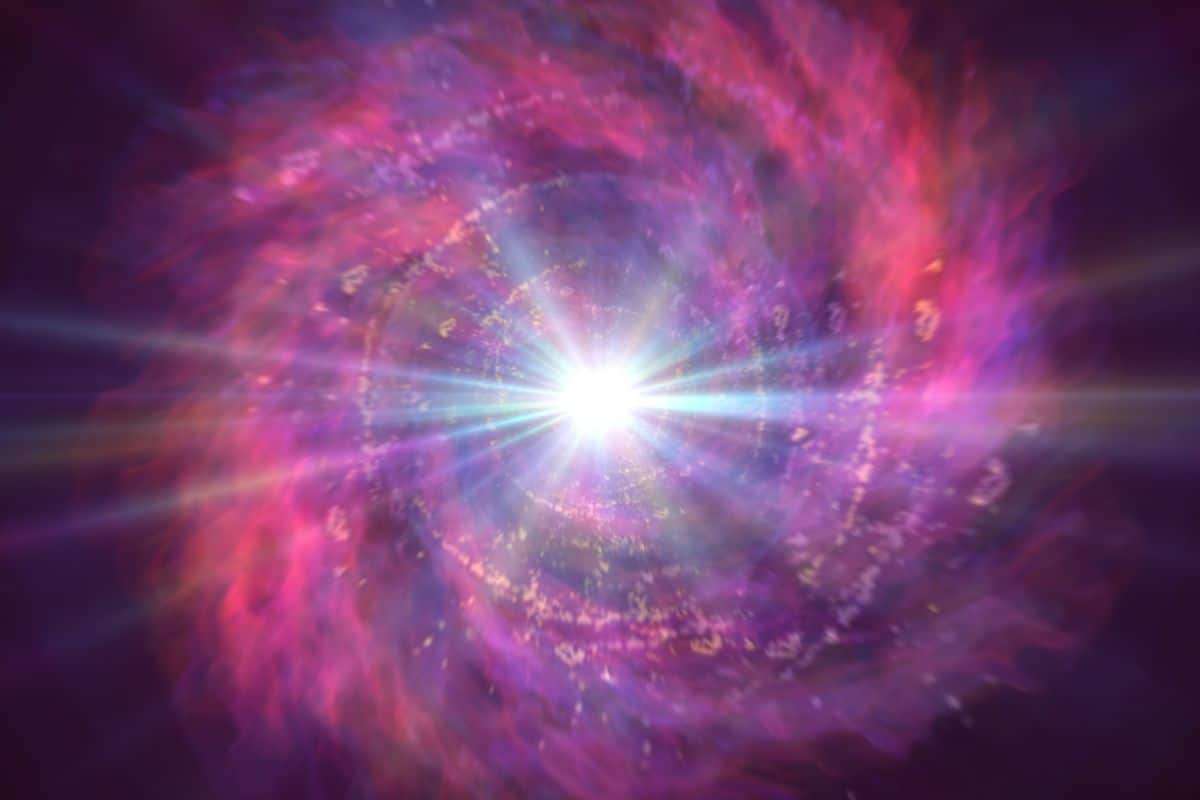
For many years, Type Ia supernovae have served as critical tools for tracking the universe's expansion. These brilliant stellar explosions act as standard candles in cosmological research and were instrumental in revealing the accelerating growth of the cosmos, ultimately pointing to the existence of dark energy.
Recently, an extensive database featuring 3,628 Type Ia supernovae—almost doubling previous compilations—has emerged, promising to enhance our grasp of how the universe evolves.
An Unprecedented Collection of Data
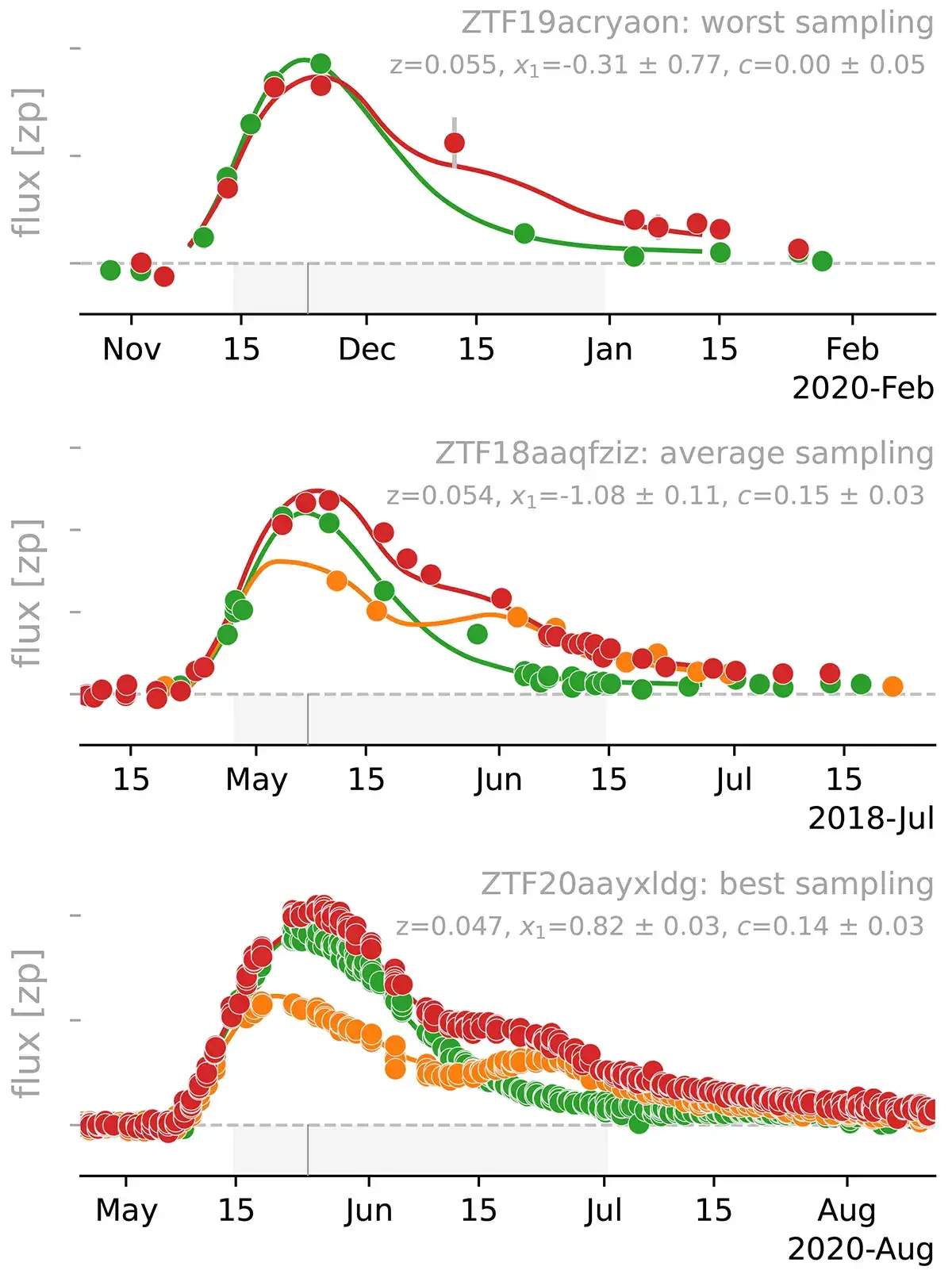
The Zwicky Transient Facility (ZTF), a California-based astronomical survey, has revealed the most detailed collection of supernova data ever assembled. This research, featured in Astronomy & Astrophysics, provides an unparalleled look into Type Ia supernovae.
Mathew Smith, a co-leader from Lancaster University for the ZTF supernova project, describes it as a “transformative dataset for supernova cosmology.” The sheer volume of observed supernovae empowers scientists to refine cosmic expansion calculations with unprecedented accuracy.

Over the past three decades, astronomers have improved methods for employing Type Ia supernovae as distance markers in space. Early on, brightness measurements had roughly 40% variability, but advances in statistical adjustments lowered this uncertainty to about 7%. With this newly published dataset, researchers anticipate achieving even greater precision, making Type Ia supernovae an even more dependable cosmological yardstick.
Unraveling the Enigma of Type Ia Supernovae
These explosions occur when a white dwarf, the dense core left behind after a star dies, accumulates material from a companion star, eventually reaching a critical threshold that triggers a thermonuclear explosion.
Despite their pivotal role in astronomy, many details about Type Ia supernovae remain elusive. There is ongoing debate about whether white dwarfs always detonate when they hit a specific mass or if other mechanisms initiate the explosion.
The ZTF initiative captures these events mere hours after detonation, shedding new light on the earliest stages of supernova evolution.
Kate Maguire, a professor at Trinity College Dublin, remarks, “We have captured multiple supernovae within days—or even hours—of explosion, providing novel constraints on how they end their lives.”
Challenging Our Cosmic Understanding
This vast dataset emerges amid significant debate over the so-called Hubble tension—an inconsistency between different measurements of the universe’s expansion speed.
When researchers calculate the expansion rate using Type Ia supernovae, the Hubble constant appears higher than estimates derived from observations of the cosmic microwave background, the remnant radiation from the Big Bang.
This contradiction hints that our current models of cosmic expansion might be incomplete. Some experts speculate that dark energy, the force behind the accelerating universe, may exhibit unexpected properties.
Advancing Toward Solving Cosmic Puzzles
A major advantage of this dataset is its reduction of systematic errors found in earlier studies. Previous supernova data often combined results from diverse surveys with varying equipment and calibration standards, leading to inconsistencies. The ZTF dataset, by contrast, provides a coherent and uniform collection that helps minimize these issues.
Mickael Rigault, leader of the ZTF cosmology team, underscores the importance of this effort: “For the past five years, a group of thirty experts from around the world have collected, compiled, and analyzed these data.
This sample is so unique in terms of size and homogeneity that we expect it to significantly impact the field of supernova cosmology and lead to many additional discoveries.”
By offering thousands of new observations of low-redshift supernovae—those close in cosmic terms—the dataset refines our view of how the universe’s expansion speed changes over time. If existing discrepancies continue, it may prompt a fundamental rethink of the laws governing physics.





0 comments
Sign in to Comment