
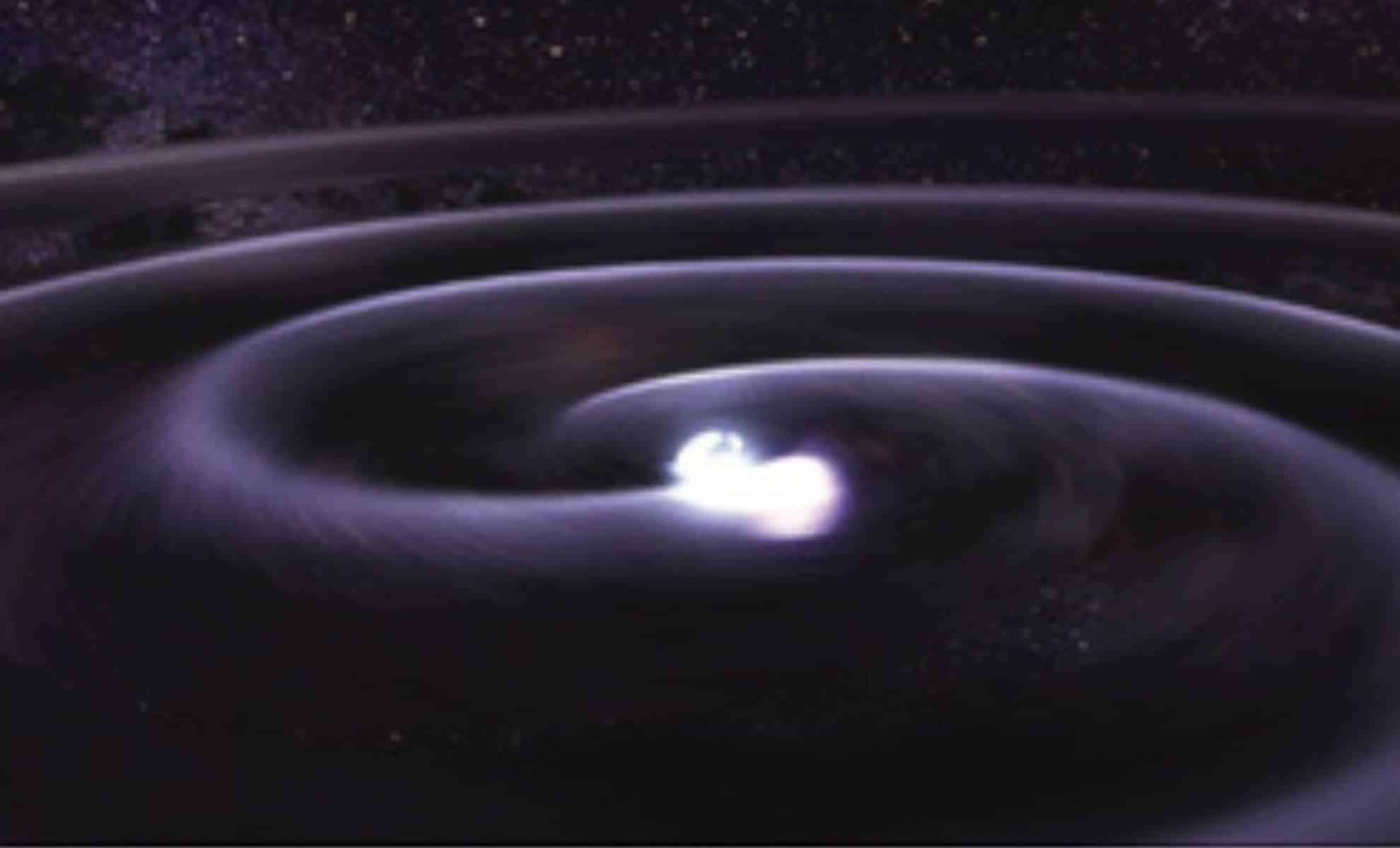
A luminous star that emerged in the night sky over eight centuries ago and disappeared has recently reignited, granting astronomers a rare opportunity to study its stellar activity.
This intriguing “guest star,” documented in 1181 across historical Asian texts, was brought back into the spotlight in 2021. New findings reveal its extraordinary features and shed light on the mechanisms driving its latest outburst.
Tracing Historical Sightings and Modern Identification
During 1181, observers noted a bright star in the Cassiopeia constellation that remained visible for roughly half a year. Known as a “guest star,” it appeared amid the upheavals of the Genpei War and was chronicled in Japanese, Chinese, and Korean annals.

At its brightest phase, the star’s luminosity rivaled that of Saturn, a remarkable phenomenon amid the political changes in Japan with the rise of the shogunate. Despite considerable historical attention, its precise location and nature eluded scientists for centuries until modern astronomers combined archival research with advanced observations to locate it in 2021.
“Ancient records from multiple East Asian regions describe this transient star shining as bright as Saturn for about 180 days before fading,” noted Takatoshi Ko, a doctoral candidate from the University of Tokyo’s Department of Astronomy. This discovery bridges past human observations with current scientific exploration, enabling deeper inquiry into the star’s origin and traits.
An Uncommon Supernova Event
Now designated as supernova remnant (SNR) 1181, the star’s remnants are the result of two white dwarfs merging—a relatively infrequent Type Iax supernova. Differing from typical supernovae that completely disrupt the progenitor stars, this rare explosion left behind a rapidly spinning white dwarf.
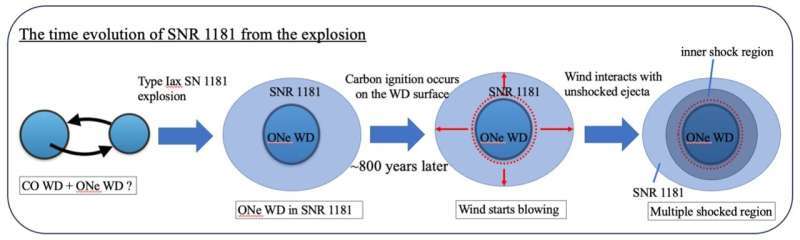
Studying SNR 1181 grants scientists a closer look at the aftermath of this rare stellar collision. “A white dwarf represents the dense core left after a star like our Sun exhausts its fuel. Instead of a full annihilation during the merger, the result is a unique white dwarf spinning rapidly,” the team explained.
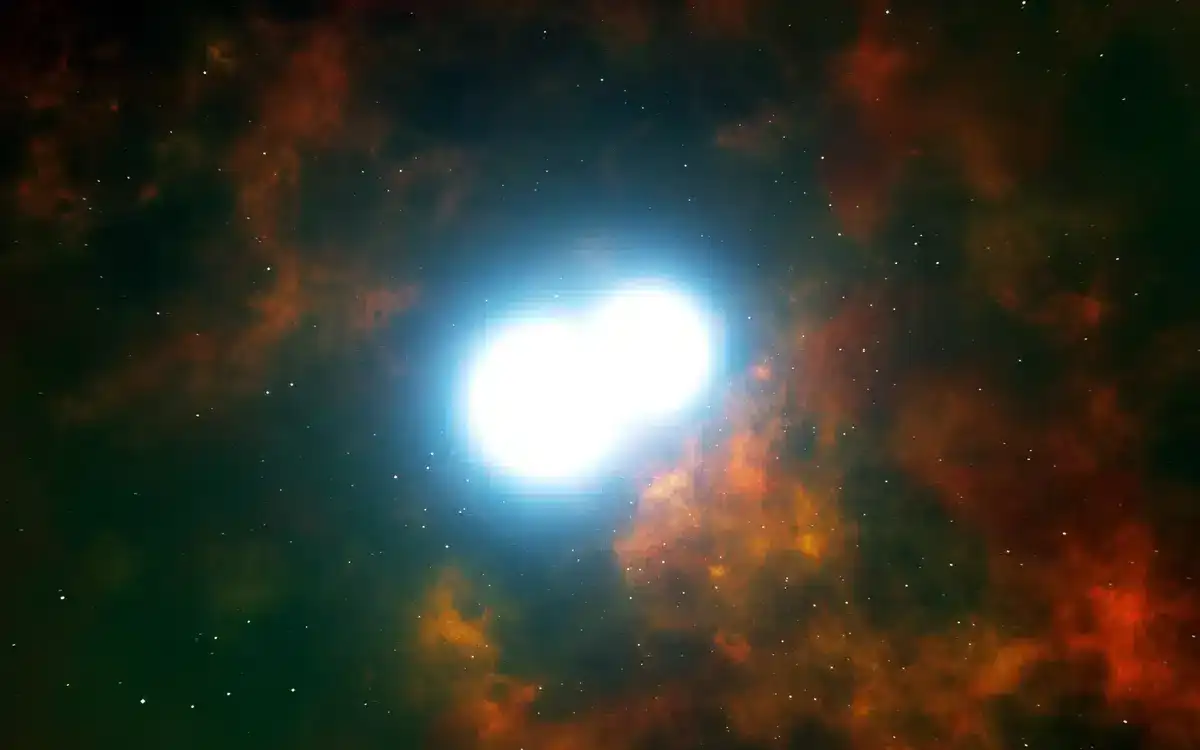
This discovery challenges traditional supernova frameworks and enhances understanding of white dwarf evolution. In-depth analysis of the SNR 1181 debris provides critical data on the physical phenomena occurring during and after these atypical stellar explosions.
New Data on Stellar Winds and Activity
Recent research indicates the onset of rapid stellar winds streaming from the remnant white dwarf’s surface over the last two to three decades. This development was surprising since no such winds were detected immediately post-explosion. “Assuming the stellar wind started immediately after SNR 1181’s emergence conflicts with observed shock wave sizes,” Ko stated. “Accounting for a delayed wind onset allowed us to align our models with all observations, clarifying the peculiar nature of this high-velocity wind.”
Advanced simulations imply that accretion of material onto the white dwarf has increased its temperature and density, rekindling the stellar winds. Numerical modeling tracing shock region evolution supports this theory. This renewed activity suggests the white dwarf might be undergoing fresh nuclear reactions due to surface matter buildup, driving the observed outflows.
A Collaboration Bridging Past and Present
The fusion of ancient texts and cutting-edge astronomy has been crucial for decoding SNR 1181. “Using historical records to date supernova remnants and estimate their luminosity is a rare and valuable tool for contemporary astronomy,” Ko emphasized. This interdisciplinary method showcases how diverse knowledge can merge to deepen our comprehension of cosmic events.
Future investigations include observations with the Very Large Array (VLA) in New Mexico and the 8.2-meter-class Subaru Telescope in Hawaii. These efforts aim to test theoretical models of the white dwarf and its dynamic winds, offering clearer insight into the mechanisms powering this renewed activity.
Meaningful Revelations on Stellar Life Cycles
Insights from SNR 1181 broaden our understanding of the variety of supernova types and the evolution of their remnants. The study highlights the impact of integrating historical data with modern technology for breakthroughs in star science.
Exploring objects like SNR 1181 enhances knowledge about stellar life cycles and the complex dynamics shaping remnants across the galaxy. These findings deepen astrophysical understanding and inform studies on star explosions, evolution, and formation of unusual stellar bodies.
Continued research into SNR 1181 promises to unravel further mysteries about stellar physics, linking historic observation with modern astrophysical phenomena to expand our grasp of the universe.
- Categories:
- Astronomy ,
- News ,
- Space







0 comments
Sign in to Comment