
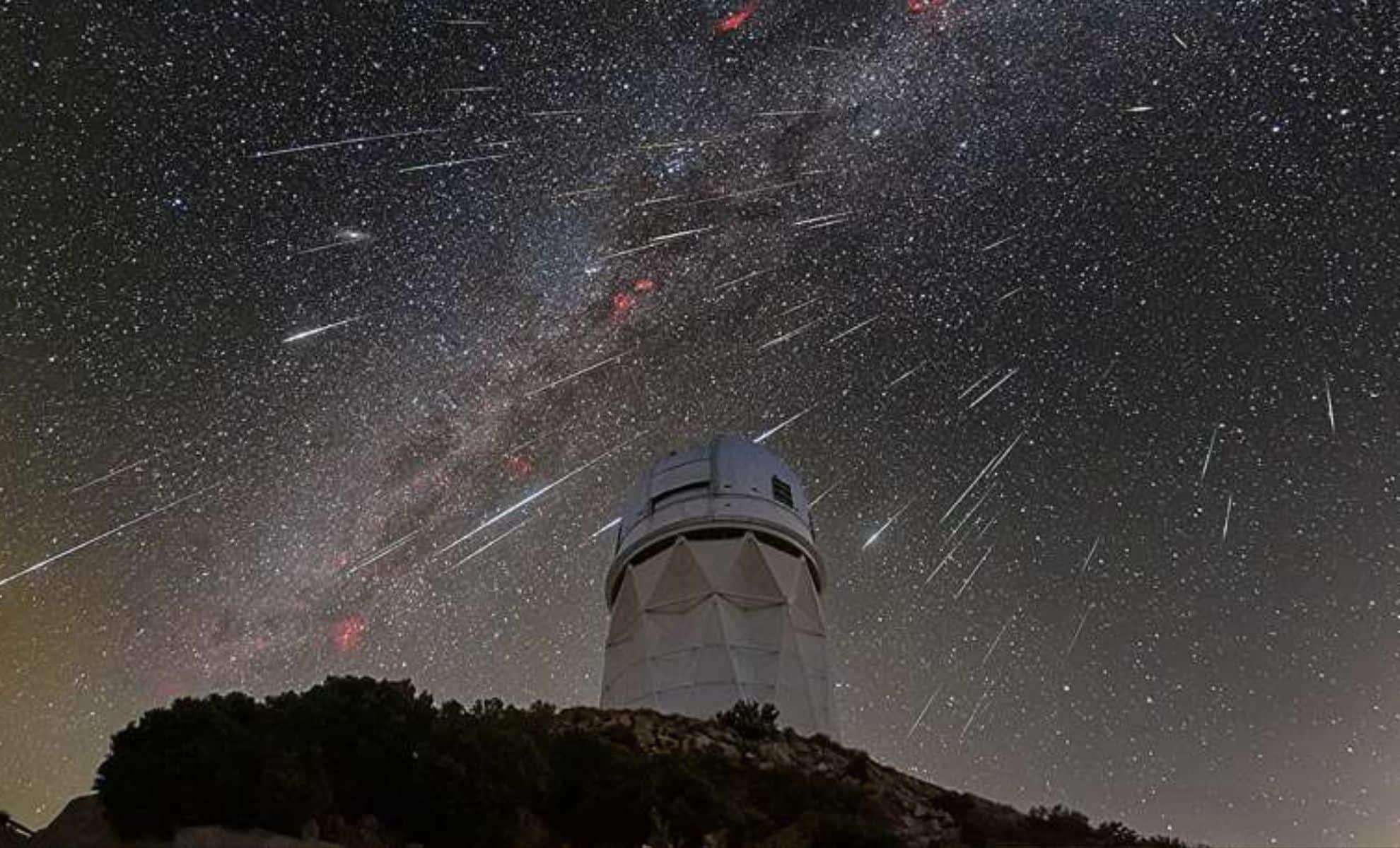
The Dark Energy Spectroscopic Instrument (DESI) has achieved a remarkable milestone by affirming Einstein’s general relativity on the most extensive cosmic scales ever studied. Through mapping over 11 billion years of the universe's history by observing millions of galaxies and quasars, DESI has reinforced our foundational grasp of gravity and unveiled new aspects of dark energy, the elusive force fueling the universe’s accelerated expansion. These insights significantly advance the field of cosmology, enhancing our comprehension of cosmic evolution and offering fresh perspectives on neutrinos, some of the universe’s most enigmatic particles.
Examining Gravity Across Cosmic Distances
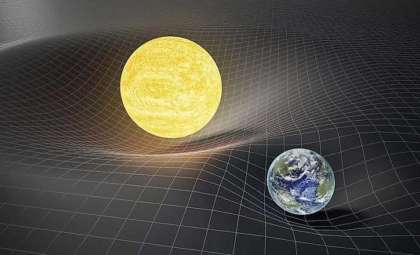
For more than 100 years, Albert Einstein’s general relativity has underpinned our understanding of gravity, explaining everything from how planets move to the way light bends near massive bodies. However, testing this theory on the immense scale of the cosmos has been limited—until now. DESI has tracked the formation and evolution of cosmic structures over 11 billion years by studying nearly six million galaxies and quasars. This vast trove of data enables scientists to scrutinize whether gravity behaves as expected at intergalactic expanses.
“While general relativity has been rigorously tested within our solar system, we also needed to verify its predictions on far larger scales,” explained Pauline Zarrouk, a cosmologist at the French National Center for Scientific Research (CNRS) and co-leader of the investigation. “By analyzing how galaxies emerged and clustered, we can directly confront our models, and so far, our observations strongly support Einstein’s predictions across cosmological distances.”

This project marks an extraordinary advance in precision cosmology. By mapping galaxy distributions and interactions over vast stretches of space, DESI not only corroborates Einstein's framework but also excludes alternative gravity theories proposed to explain cosmic acceleration without involving dark energy. These results reinforce the Lambda Cold Dark Matter (LCDM) model as the best current description of how our universe evolves.
Revealing Dark Energy’s Changing Role and Neutrino Insights
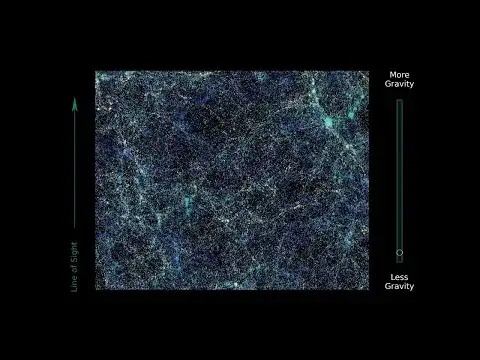
Beyond confirming general relativity, DESI has delivered profound revelations about dark energy. This mysterious force, responsible for the accelerated growth of the cosmos, remains one of physics’ greatest puzzles. DESI’s data indicates that the intensity of dark energy might vary over time, challenging the assumption of its constancy and pointing toward new theoretical avenues about the universe’s ultimate destiny.
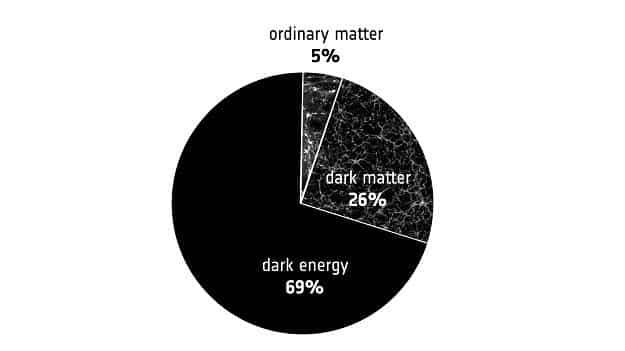
Mark Maus, a Ph.D. candidate at Berkeley Lab and UC Berkeley involved in DESI’s theoretical work, emphasized the research’s significance: “Dark matter constitutes roughly 25% of the universe, while dark energy makes up about 70%, yet their true nature eludes us. Being able to capture detailed images of the universe and directly tackle these fundamental questions is truly extraordinary.”
Additionally, DESI has sharpened constraints on the masses of neutrinos, the nearly invisible particles that permeate the cosmos. Billions of neutrinos pass through us every moment, but their precise mass remains uncertain. DESI's findings limit the combined mass of the three neutrino types to below 0.071 eV/c², refining earlier measurements and advancing our knowledge of these “ghost particles”.
Cutting-Edge Technology Powering Discoveries
At the heart of DESI’s achievements is its innovative technology. Installed on the Nicholas U. Mayall Telescope at Kitt Peak National Observatory, DESI features 5,000 robotic lenses capable of observing many galaxies simultaneously. This advanced instrumentation has produced the most extensive 3D map of the universe, charting galaxy and matter distributions across immense cosmic distances.
Dragan Huterer, a University of Michigan professor and co-lead of DESI’s cosmology analysis team, explained the impact: “This marks DESI’s inaugural glimpse at how cosmic structures grow. Our unprecedented ability to explore modified gravity and refine dark energy models is just the beginning.”
In its initial year, DESI has surpassed decades of previous research in precision and scale. The team is currently examining data from its first three years and anticipates revealing deeper findings by 2025, advancing our grasp of the universe’s expansion and dark energy’s properties.
The Next Frontier in Cosmic Research
As DESI progresses into its fourth year of a planned five-year survey, its goal is to map a staggering 40 million galaxies and quasars. This immense dataset will offer the most detailed cosmic portrait ever assembled, enriching our understanding of key cosmic elements like dark matter, dark energy, and neutrinos, and may lead to groundbreaking discoveries in physics.
“Observing the universe on such a grand scale while testing fundamental theories and uncovering new enigmas is truly extraordinary,” remarked Zarrouk. DESI’s successes highlight the power of global collaboration, advanced technology, and humanity’s relentless curiosity about the cosmos.
By affirming Einstein’s theory of gravity and illuminating the complex nature of dark energy, DESI paves the way for a transformative era in cosmology. As the project continues, it promises to reveal more about the forces shaping our universe, inspiring deeper insights into the interconnected fabric of matter and energy that defines our existence.






0 comments
Sign in to Comment