
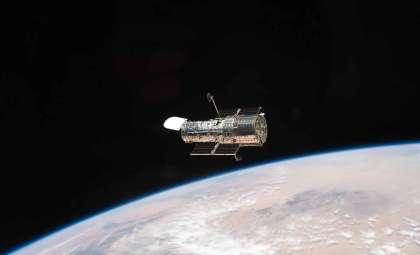
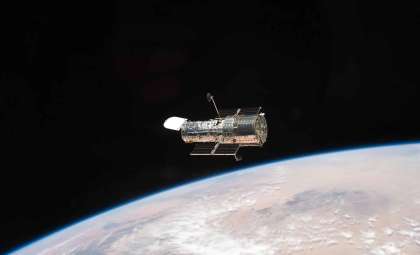
The Hubble Space Telescope, a joint effort by NASA and the European Space Agency (ESA), remains at the forefront of cosmic exploration.
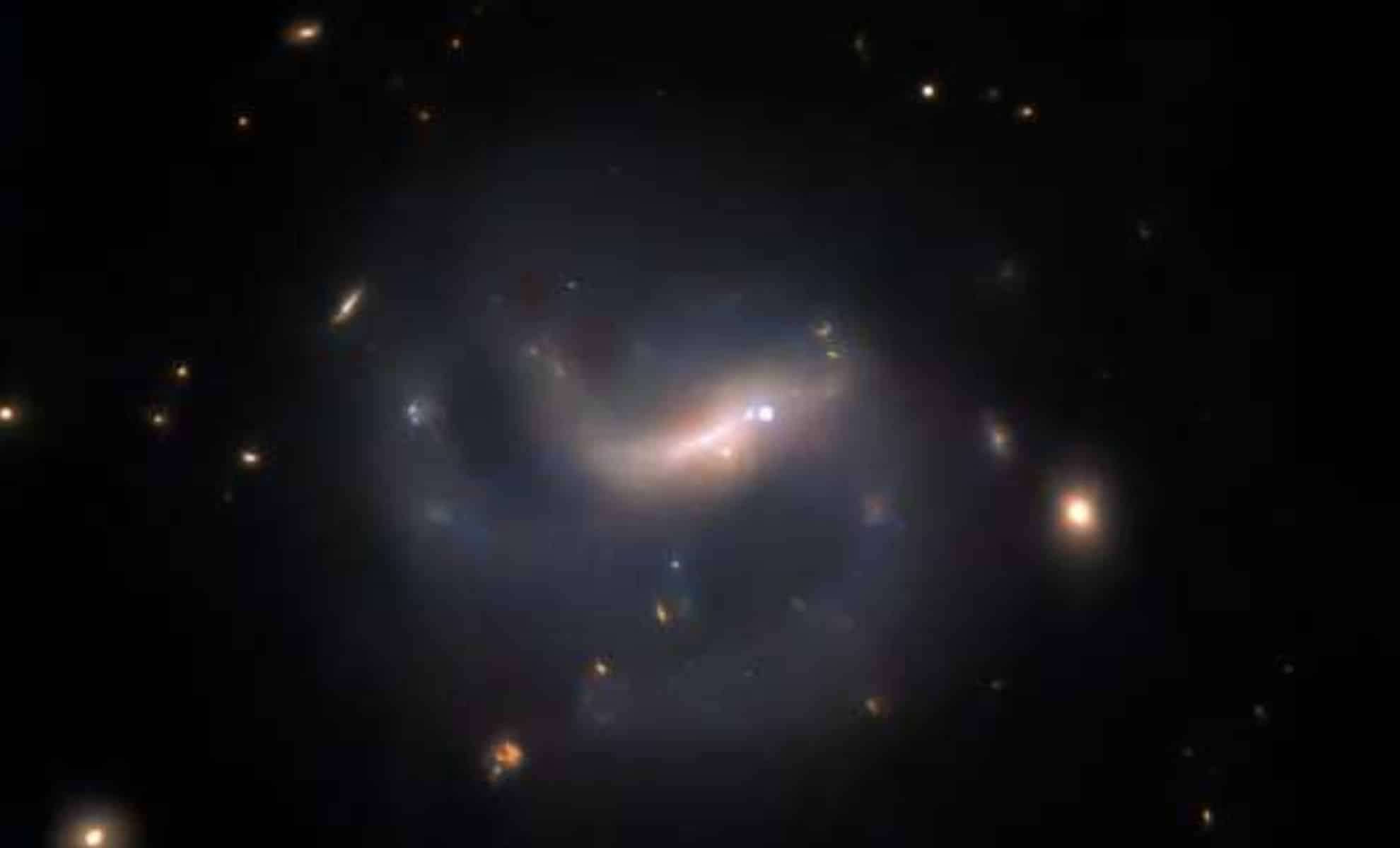
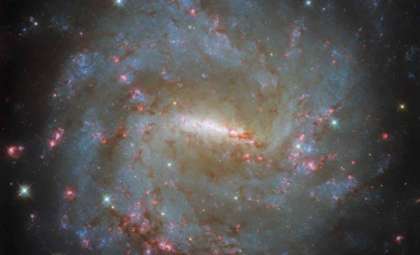
Recently, Hubble captured an extraordinary image of a supernova occurring in LEDA 857074, an understudied barred spiral galaxy situated within the Eridanus constellation.
This remarkable stellar explosion, named SN 2022ADQZ, has illuminated its host galaxy, showcasing Hubble’s vital role in unveiling previously hidden cosmic phenomena.

Supernova Sheds Light on an Overlooked Galaxy
LEDA 857074 features a distinct central bar and fragmented spiral arms, yet has been largely neglected in astronomical research, referenced in fewer than five scholarly articles.
Such limited study reflects the immense number of galaxies in the universe, many of which remain unexplored. The galaxy’s obscurity made it an unlikely focus for advanced space instruments—until the recent supernova changed that.
SN 2022ADQZ was first detected by an automated sky survey in late 2022, sparking interest that prompted targeted observations with Hubble in early 2023.
The supernova’s luminous burst provided a unique chance to investigate LEDA 857074 in detail. Hubble’s exceptional imaging ability separated the supernova’s glow from the galaxy’s background light, offering clearer insights than ground-based telescopes, which face atmospheric limitations.
Decoding Supernova Explosions: Unleashing Stellar Energy
Supernovae represent some of the most powerful explosions in the universe, signaling the dramatic death of massive stars. When a star several times the mass of the Sun depletes its nuclear fuel, it collapses under its own gravity, triggering a cataclysmic detonation that momentarily outshines whole galaxies. This event disseminates heavy elements, seeding the cosmos for the birth of new stars and planets.
SN 2022ADQZ fits this pattern, offering valuable information regarding stellar lifecycles. While it likely originated from a supermassive star’s death, precise details about the progenitor and supernova classification remain under study. Such research is vital for enhancing models of star evolution, especially for underexplored galaxies like LEDA 857074.
Supernovae have profound effects beyond their explosion zones, influencing galactic environments by initiating star formation and enriching the chemical makeup of interstellar space. Studying individual supernova events is therefore crucial to understanding galaxy evolution comprehensively.
Hubble’s Critical Role: Revealing the Universe in Detail
Hubble’s capacity to capture intricate images of distant phenomena like supernovae highlights its essential role in astronomy. By analyzing supernova light patterns and spectra, astronomers can uncover details about the explosion’s intensity, ejecta composition, and remnants such as neutron stars or black holes. These findings help reconstruct the star’s life story and explosive end.
The designation of LEDA 857074—a previously overlooked galaxy—as a host to a bright supernova immortalizes it in cosmic records, illustrating the element of chance in celestial discoveries. With millions of galaxies and thousands of yearly supernova detections, spotting one in a specific unexamined galaxy is rare, but immensely valuable.
Close study of SN 2022ADQZ enriches understanding of processes in LEDA 857074 and informs broader investigations into supernova diversity and their influence on host galaxies. This helps scientists refine stellar evolution theories and insights into their galactic impacts.
Looking Forward: New Horizons in Cosmic Research
Observations of SN 2022ADQZ within LEDA 857074 pave the way for deeper investigations into star life cycles and galactic behavior. Ongoing analysis aims to clarify explosion mechanics and galaxy features, potentially revealing star formation trends in quieter galaxies and supernova occurrence rates in such environments.
This discovery also underlines the importance of space-based telescopes like Hubble, which bypass the blurring effects of Earth’s atmosphere to deliver crisp, high-resolution images impossible from the ground.
Data from SN 2022ADQZ will feed into evolving models of stellar death and galactic change, enhancing comprehension of how stars impact their galaxies. As Hubble continues its mission, it promises to uncover further cosmic treasures, spotlighting distant stars and galaxies otherwise hidden from view.
- Categories:
- Astronomy ,
- News ,
- Space ,
- Nasa




0 comments
Sign in to Comment