
For many years, dark energy has been the prevailing explanation for the universe’s accelerated expansion, believed to constitute roughly 70% of its total energy. Yet, innovative research spearheaded by Professor David Wiltshire at the University of Canterbury in New Zealand casts doubt on this view.
The team proposes that the observed cosmic acceleration could actually stem from gravitational effects on the passage of time, prompting a fundamental rethink of how cosmic dynamics are understood.
Reconsidering the Foundations of the Big Bang Model
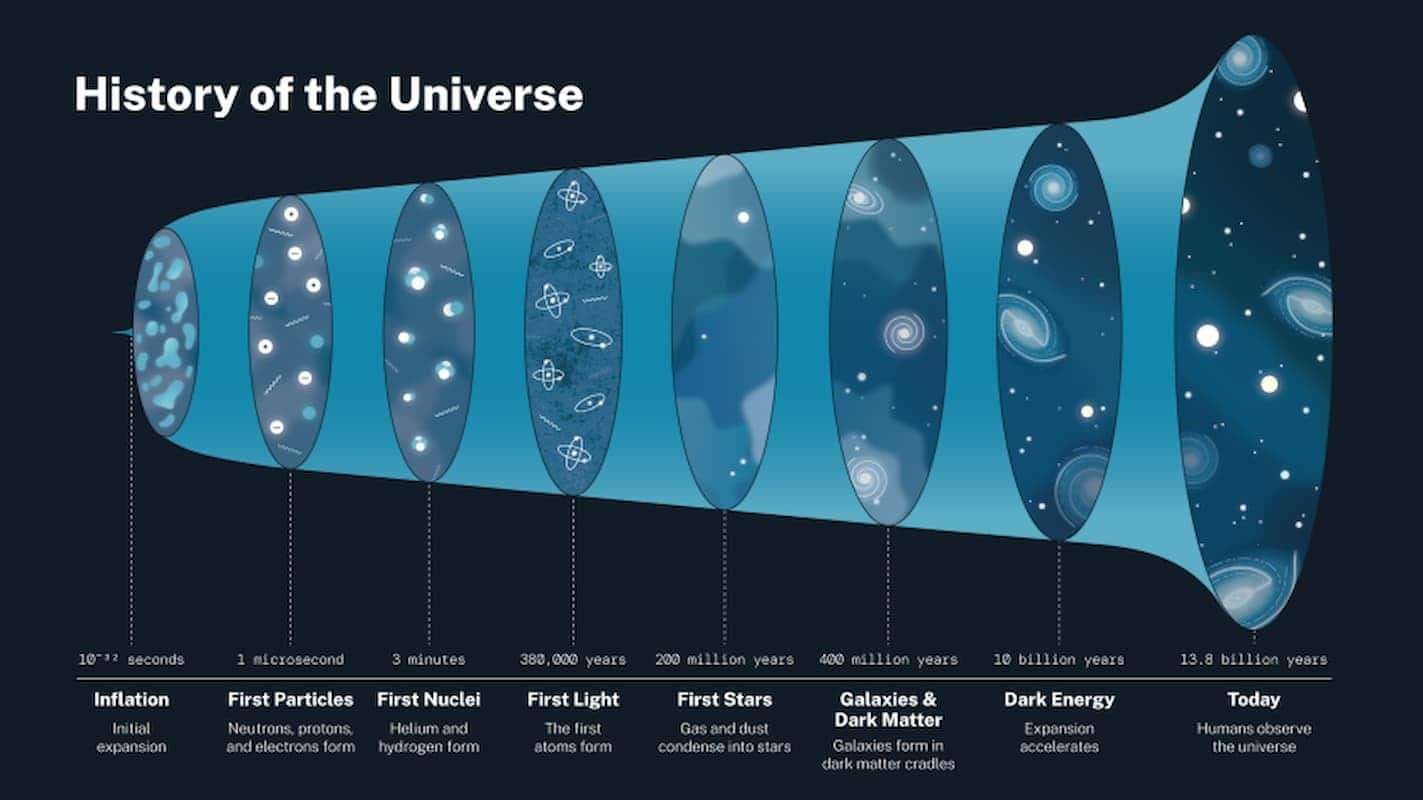
The idea of dark energy originated in the late 1990s following the discovery that distant Type Ia supernovae appeared dimmer—and thus farther away—than predictions suggested. This implied that the universe’s rate of expansion was increasing rather than slowing down, leading to the integration of dark energy into the standard ΛCDM (Lambda Cold Dark Matter) model, which has since guided cosmological research.

Nevertheless, anomalies such as the persistent Hubble tension—discrepancies between current expansion measurements and those inferred from the early universe—have raised questions about the ΛCDM paradigm. The Pantheon+ collaboration, which compiled data from over 1,500 supernovae, further revealed tensions that lend support to alternative frameworks like Wiltshire’s timescape model.
Introducing the Timescape Model: Time’s Uneven Flow Across the Universe
The timescape model, developed by Wiltshire and colleagues, suggests that variations in gravitational fields cause uneven rates of time flow throughout the cosmos:
- In regions with high matter density, such as galaxies, time advances more slowly.
- In vast, sparsely populated cosmic voids, time speeds up.
This results in a “crumpled” space-time fabric where light moving between these zones appears stretched, creating the impression of accelerated expansion. Essentially, the universe may be expanding at different rates depending on location rather than uniformly speeding up.
Core Concepts of the Timescape Framework:
Whilst consistent with Einstein’s general relativity, this interpretation significantly diverges from the conventional ΛCDM model. Wiltshire argues that it may reconcile the Hubble tension and other persistent challenges faced by contemporary cosmology.
Compelling New Data Supports the Timescape Perspective
Initial tests in 2017 showed the timescape model offering a marginally superior fit to observational data compared to ΛCDM. More recent analyses, including detailed supernova light curves from the Pantheon+ collaboration, now deliver what Wiltshire describes as “robust evidence” favoring this alternative theory.
Future observational campaigns, such as NASA’s Nancy Grace Roman Space Telescope and ESA’s Euclid mission, will provide comprehensive datasets on cosmic structures and supernovae. These will be vital for testing and potentially validating the timescape hypothesis against the prevailing cosmological model.
Implications: A Paradigm Shift in Cosmology?
If verified, the timescape model would fundamentally alter our conception of cosmic expansion by attributing the accelerated expansion illusion to gravitational time dilation. This could eliminate the necessity of invoking mysterious dark energy, while simultaneously illuminating the nature of ongoing cosmological puzzles like the Hubble tension.
As Professor Wiltshire notes, this approach may “address some of the most significant inconsistencies in modern astrophysics,” offering a fresh vantage point on the universe’s true nature. Upcoming missions and continued research will be pivotal in determining whether this theory reshapes our cosmic understanding.
Sources of the study: Royal Astronomical Society / doi.org/10.1093/mnrasl/slae112





0 comments
Sign in to Comment