
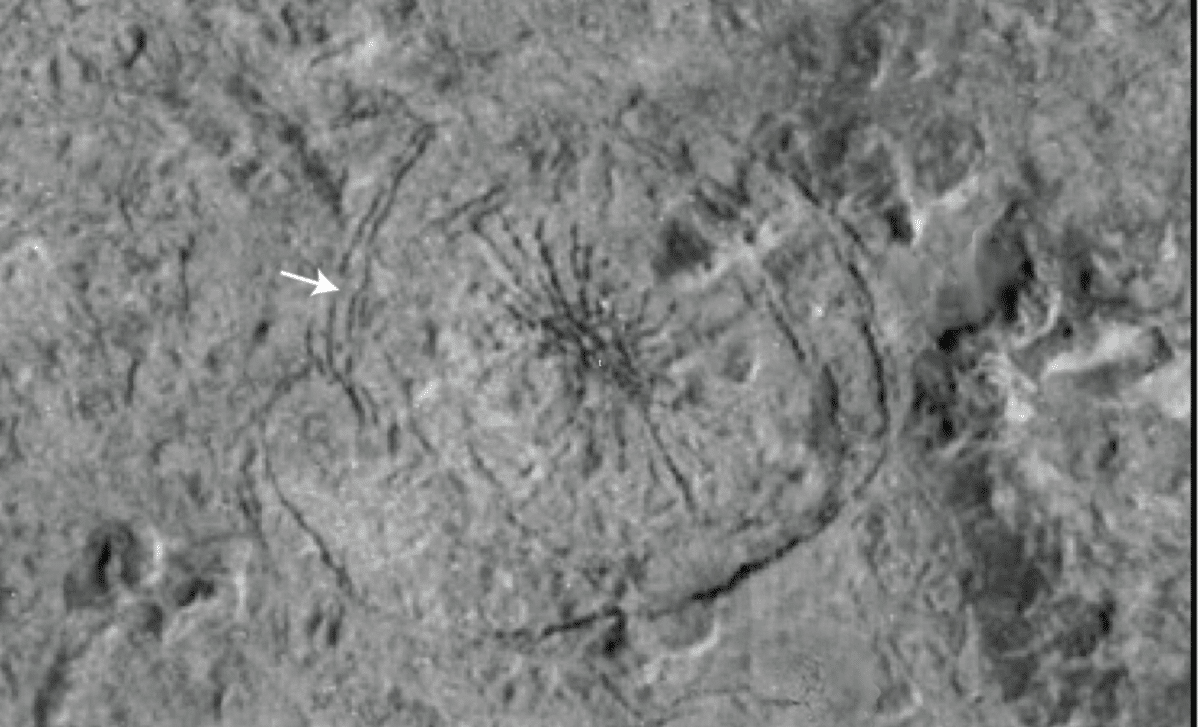
A recent publication in The Planetary Science Journal unveils a remarkable discovery on Europa, one of Jupiter’s moons. Scientists have identified a distinctive surface pattern that could provide valuable clues about the subsurface environment hidden beneath Europa’s icy crust. This intriguing feature, named the “Damhán Alla,” or “spider”, has significant implications for comprehending extraterrestrial geology and suggests the presence of hidden salty waters below the surface.
Tracking Europa’s Mysterious Surface: Discovery of the ‘Damhán Alla’ Formation
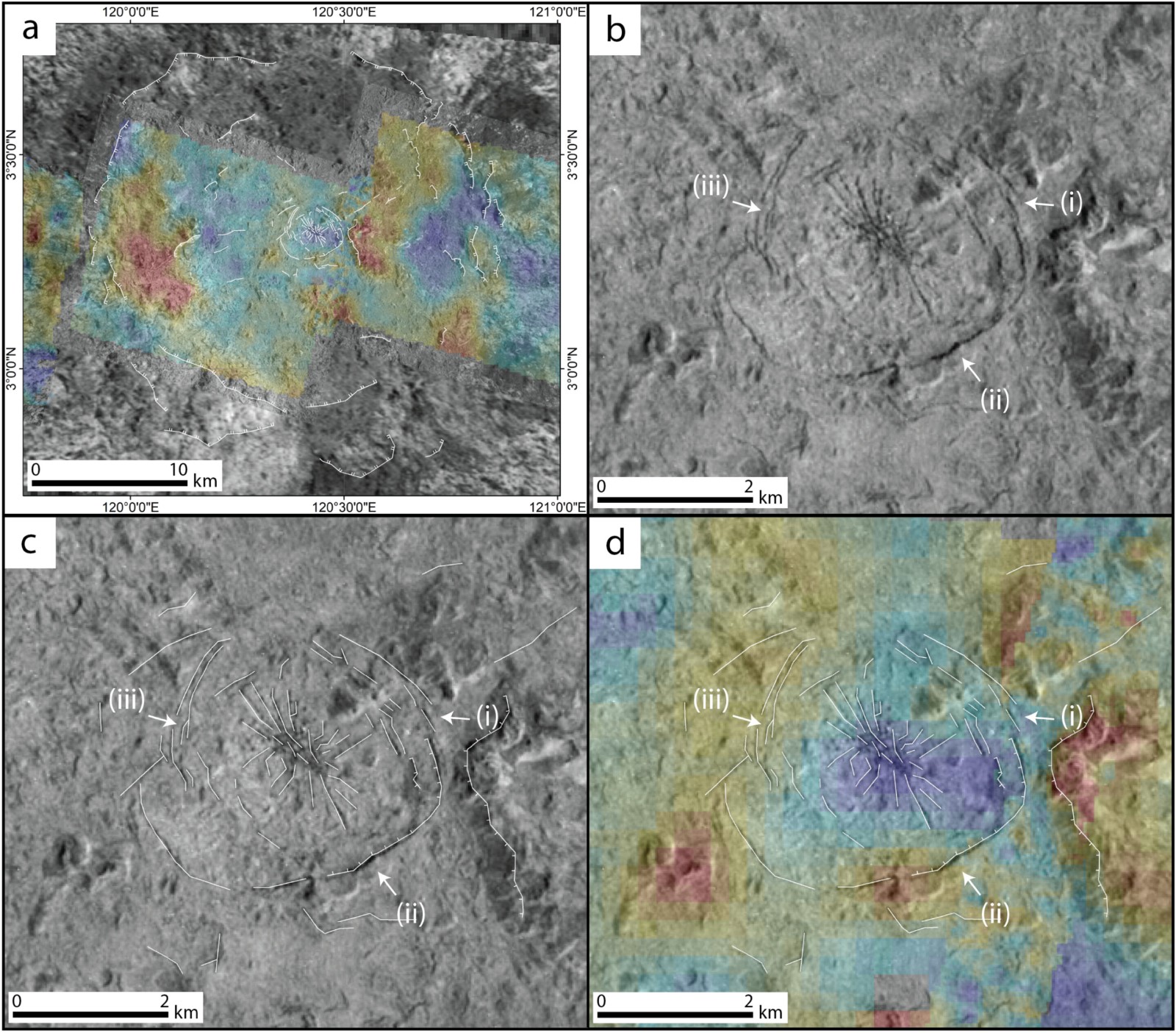
The frozen landscape of Europa has captivated scientists for years. Newly published research in The Planetary Science Journal reveals a web-like structure on Europa’s surface near the Manannán crater. This pattern, named Damhán Alla—the Irish word for spider—was discovered through extensive geomorphological studies and fieldwork aiming to decode how these surface formations relate to the moon’s icy shell and what lies underneath.
The surface of Europa has displayed numerous unusual formations, many thought to be connected with water beneath the ice. The “spider” pattern represents a rare geological feature that might unveil the dynamics beneath the crust. Researchers, including Dr. Serina Diniega from NASA’s Jet Propulsion Laboratory, propose that this structure is associated with the flow of liquid water underneath Europa’s frozen exterior, strengthening the hypothesis of a subsurface ocean — a finding with major astrobiological importance.

“I was fascinated by animations in an RTE News story showing a water plume shooting miles above the moon’s surface and the possibility that liquid water, or even an ocean, might exist there,” said the Dublin-born Dr. Diniega. “It encouraged me to explore NASA’s website to learn more about icy planetary surfaces and eventually pursue a career in planetary science at Trinity College Dublin.”
How Europa’s ‘Spider’ Mirrors Terrestrial Ice Phenomena
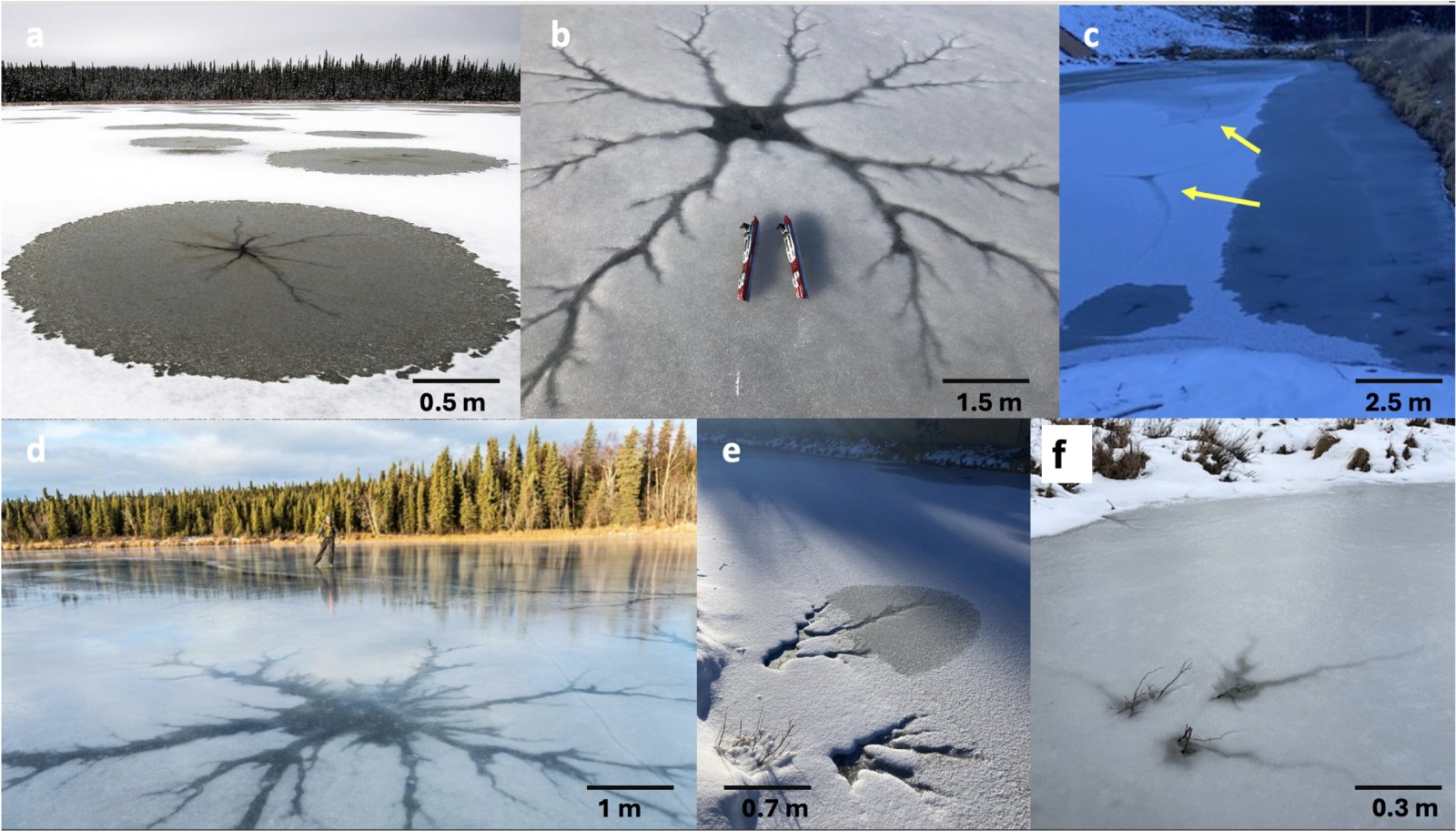
Comparisons between the surface features on Europa and Earth are more than just analogies; the mechanisms behind their formation likely share similarities. The researchers suggest that the spider-like pattern on Europa parallels the “lake stars” seen on Earth — concentric ice patterns that arise through freezing and sublimation processes. Dr. Diniega and her colleague, Dr. Jen, performed laboratory simulations examining ice behavior under controlled conditions to explore this theory.
“During my Ph.D. with Dr. Mary Bourke, a professor at Trinity, I pursued a dream project, investigating the role of ice sublimation as a driver of surface change on Mars. I also got to intern at NASA, and Mary connected me with NASA scientists, including her collaborator, Dr. Serina Diniega, who I eventually ended up working with for my postdoc at NASA JPL,” explained Dr. Jen, reflecting on her journey into planetary science.
This partnership between Irish researchers bridges knowledge between Earth’s icy landscapes and the frozen moons beyond. Their findings demonstrate how studying terrestrial ice analogs can illuminate the processes shaping extraterrestrial icy worlds like Europa.
An Irish Cultural and Scientific Celebration in Naming Europa’s Feature
The choice of name for this spider-like structure on Europa carries both cultural and scientific significance. Honoring their Irish roots, the scientists named the formation Damhán Alla, the Irish word for spider. This aligns with the tradition of naming Europa’s landmarks after Irish and Celtic mythology, including the nearby Manannán crater, named after the mythical “Son of the Sea.”
“There are only a handful of Irish planetary scientists—and Jen had conducted some very prominent research on the Dawn mission and also went to Trinity—so I knew of her, but we didn’t meet until a conference in the U.S. It was so great to have a friend from home when I arrived at JPL, and I was so excited to get to work together on this project,” Dr. Diniega shared. “Because Jen and I are Irish, and because many landforms on Europa already have Irish and Celtic names—including the crater in which the feature is located, which refers to the Irish mythology ‘Son of the Sea’—we decided to call it the Irish word for spider; Damhán Alla.”
This act symbolizes a fusion of cultural heritage with scientific discovery. It highlights the role of international collaboration and personal history in advancing our knowledge of Europa, emphasizing how identity and science can intersect powerfully.
Implications for Discovering Life: Surface Clues About Europa’s Hidden Waters
The insights from this study extend well beyond geology, influencing the search for life on Europa. The “spider” feature is not merely an unusual surface pattern; it may indicate the presence of subsurface liquid environments. Dr. Diniega notes,
“The significance of our research is really exciting. Surface features like these can tell us a lot about what’s happening beneath the ice. If we see more of them with Europa Clipper, they could point to local brine pools below the surface.”
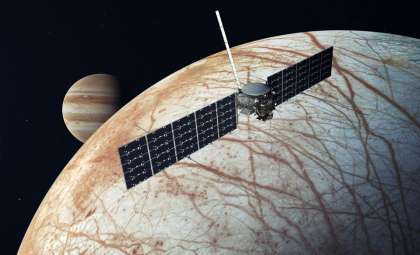
The prospect of underground oceans or saline pools on Europa has fueled ongoing scientific debate. This spider-like formation could reveal how such liquid reservoirs interact with the icy crust, shedding light on the moon’s potential to support life. As NASA’s upcoming Europa Clipper mission prepares for launch, this discovery offers critical direction for future investigations aimed at exploring Europa’s enigmatic ice-covered world.
- Categories:
- Astronomy







0 comments
Sign in to Comment