

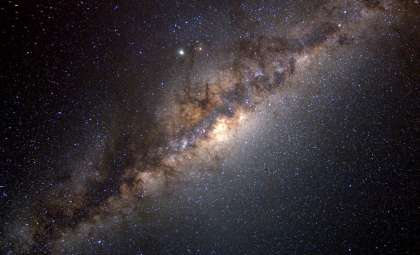
A team of astronomers has pinpointed seven stars in the Milky Way that show indications consistent with being encased by Dyson spheres—hypothetical colossal constructions that advanced extraterrestrial societies might build to capture their star's energy. This remarkable discovery intensifies the ongoing quest to detect intelligent life beyond Earth.
What Are Dyson Spheres?
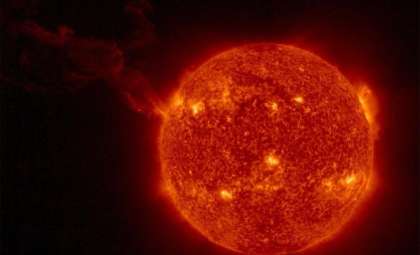
Dyson spheres are theoretical megastructures first envisioned by physicist Freeman Dyson in 1960 that could envelop a star, absorbing a great share of its emitted energy. These could take diverse forms, from a solid shell to a swarm of orbiting collectors capturing stellar power.
The rationale behind this concept is that a technologically advanced civilization would require vast amounts of energy to support its growth and activities. Constructing a Dyson sphere would allow such a society to tap nearly the entire energy output of their host star, greatly enhancing their technological capabilities.

Searching for Infrared Signatures
In a recent investigation, scientists analyzed data obtained from multiple astronomical missions such as the European Space Agency's Gaia observatory, NASA's Wide-field Infrared Survey Explorer (WISE), and the Two Micron All-Sky Survey (2MASS) to identify potential Dyson sphere candidates.
The researchers focused on detecting excess infrared emissions (IEEs), which serve as technosignatures implying the presence of energy-harvesting megastructures. Since a Dyson sphere would re-radiate captured energy as infrared light, these IR signatures can be observed from Earth. Utilizing custom software, the team sifted through observations of over five million stars, isolating seven M-dwarf stars exhibiting the telltale infrared surplus.
Insights on the Identified Stars
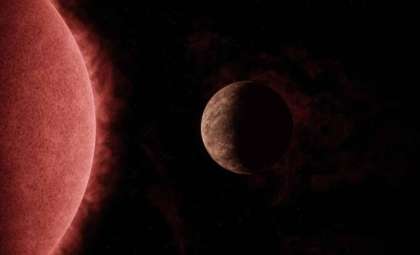
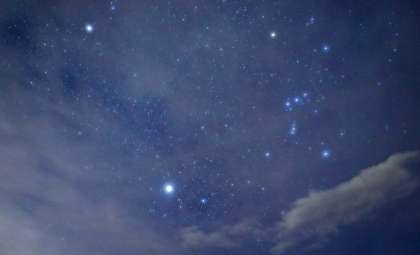
All seven candidates are M-type dwarf stars—smaller, cooler, and less luminous than our Sun—and reside within roughly 1,000 light-years of our solar system. Due to their stable energy output and long lifespans, M-dwarfs are considered promising sites for sustaining advanced life forms over extended periods.
This targeted identification is exciting, as these stars show infrared characteristics not readily explained by natural phenomena, potentially signaling the existence of artificial constructs.
Next Steps for Exploration
Although these observations are compelling, they are preliminary. Future examinations employing powerful telescopes, such as the James Webb Space Telescope, are planned to gather more precise measurements.
Subsequent analyses will look for further evidence, including unusual atmospheric markers or signs of artificial illumination, to better determine the nature of these stars and their environments.
The research will also aim to exclude false positives caused by cosmic dust or debris disks, which can also produce excess infrared radiation.
Implications for the Search for Extraterrestrial Intelligence
Discovering these seven intriguing stars ushers in promising directions in our pursuit of alien civilizations. It underscores the significance of identifying technosignatures in astronomy and motivates the ongoing innovation of sophisticated data analysis techniques.
This work enhances our understanding of potential extraterrestrial detection methods and communication approaches, while expanding the horizon of where and how life beyond Earth might be found. It challenges current perceptions of our cosmic surroundings and our role within the universe.
With continued refinement of observational strategies, the prospect of discovering evidence of advanced alien societies becomes ever more tangible.
The study of Dyson spheres and other large-scale extraterrestrial constructs not only fuels scientific imagination but also drives advancements in astrophysics, deepening humanity's quest to understand life's potential throughout the cosmos. This relentless pursuit embodies our enduring curiosity to explore the mysteries surrounding us.
By investigating these distant suns and their enigmatic signatures, scientists are paving the way toward deciphering the complexities of our galactic neighborhood and our place within the vast universe.
- Categories:
- Astronomy ,
- News ,
- Space ,
- Extraterrestrial life








0 comments
Sign in to Comment