
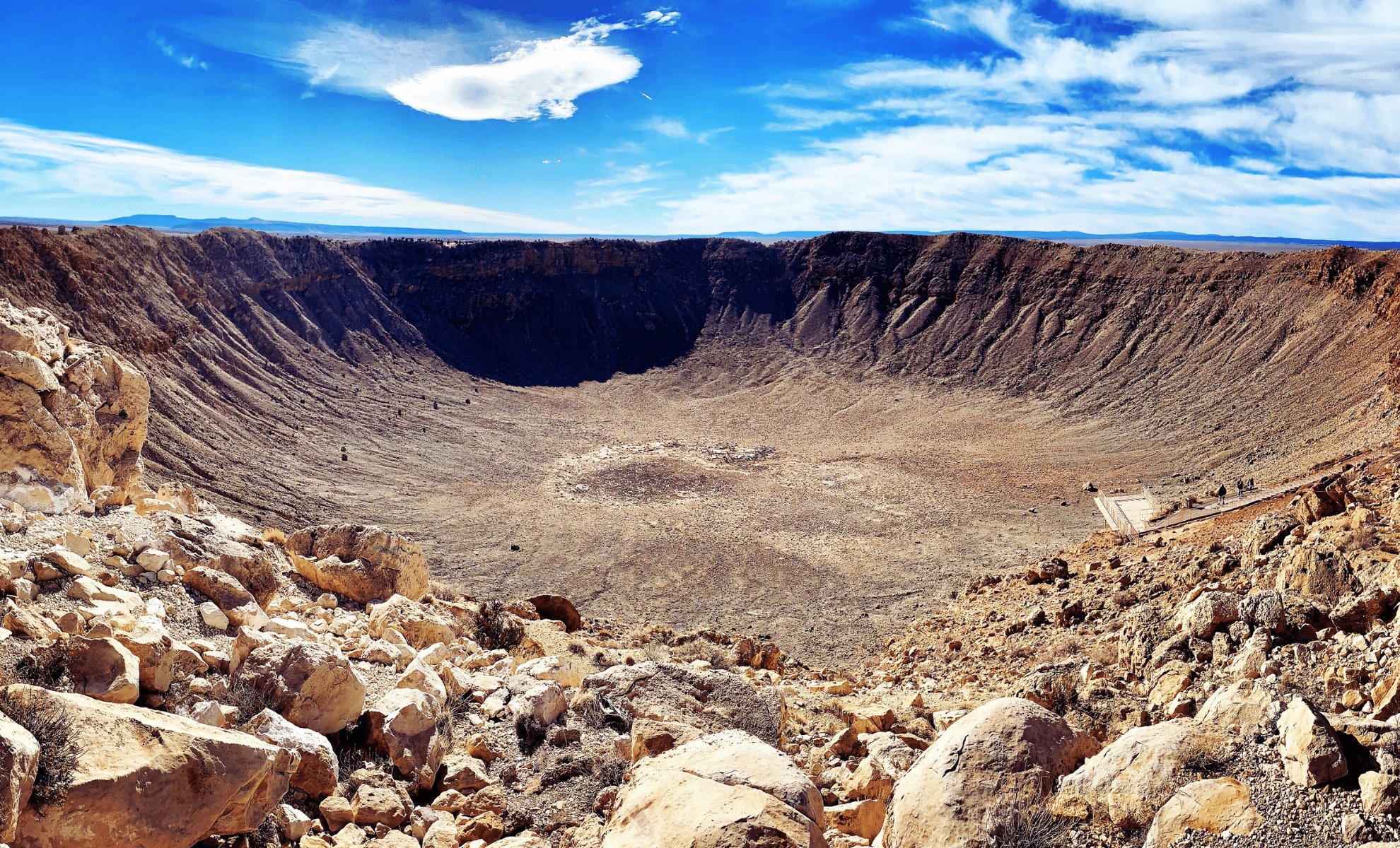
Researchers studying the Sandhills region of North Carolina have identified unmistakable evidence of a meteorite strike and subsequent tsunami from the late Eocene epoch, related to the Chesapeake Bay impact structure. G. Robert Ganis and his team led the investigation, which illuminates the enduring influence of extraterrestrial collisions on Earth's landscape and ecosystems. Their findings, featured in Southeastern Geology, prominently report iridium anomalies and shocked quartz as critical proof of this ancient event.
Paint Hill Area: Earth’s Geological Chronicle
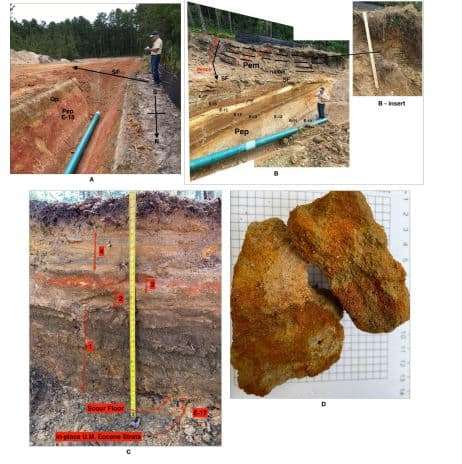
Central to this groundbreaking research is the Paint Hill region in Moore County, North Carolina, where scientists uncovered distinct sedimentary layers revealing the fallout from a meteorite collision. These deposits, found within a shallow channel cut into pre-existing Eocene sands and clays, record a detailed progression from impact to tsunami. Now classified as the Mount Helicon Formation, this sequence includes four primary strata that chronicle the immediate and subsequent geological responses to the extraterrestrial encounter.
Layer 1 comprises 17 inches of dark sandy clay abundant in carbon glass and rock fragments, marked by iridium concentrations far exceeding normal crustal levels. Between 14 and 18 parts per billion of iridium—which is common in meteorites but scarce in Earth's crust—this layer represents the initial fallout as fine debris and carbon-rich matter settled post-impact.

Layer 2, roughly 3.5 inches thick, consists of silt intermixed with small agglutinated pellets akin to accretionary lapilli, structures rarely examined in meteorite events. These pellets indicate intense atmospheric turbulence caused by the collision. As M. S. Huber from the University of Vienna explains, meteorite-formed accretionary lapilli remain poorly understood, making this discovery a vital contribution to extraterrestrial impact research.
Layer 3 contains a 2.4-inch breccia—an unsorted jumble of marine and terrestrial fragments including fossil-rich chert, weathered strata fragments, petrified wood, and compacted ancient soil. This mixture points to a strong water surge sweeping the landscape, likely attributable to the tsunami following the impact. The combination of debris here underscores the violent forces reshaping the area.
Layer 4 presents 6 inches of coarse sand believed to reflect a later tsunami pulse or backwash. Its erosive base and swirling sediment patterns display water oscillations characteristic of tsunami activity, confirming the immense power unleashed during this catastrophic episode.
Connecting the Evidence to the Chesapeake Bay Crater
The deposits discovered at Paint Hill have been directly associated with the Chesapeake Bay impact crater located approximately 235 miles northeast. The U.S. Geological Survey describes this site as "the largest known impact crater in the United States and the seventh largest on Earth." Formed during the late Eocene, this buried crater likely dispersed debris over a vast area and triggered massive inland tsunami waves. The nature of the sediments at Paint Hill perfectly aligns with what experts expect from such a large-scale impact event, substantiating the broad regional effects of the crater.
This link between the Chesapeake Bay impact and the Paint Hill deposits offers vital insights into how extraterrestrial impacts can generate wide-ranging geological disturbances far beyond the impact zone, influencing terrain hundreds of miles away.
Importance of Iridium and Shocked Quartz in Impact Studies
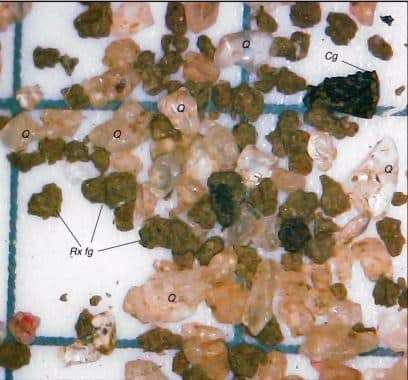
Elevated iridium levels detected within the Paint Hill sediments stand out as a key signature of extraterrestrial influence. As a rare metal on Earth but common in cosmic bodies like meteorites and asteroids, iridium spikes reinforce the meteor origin of the deposits. Similar iridium anomalies have been tied to the Chicxulub event, which is famously linked to the dinosaur extinction 66 million years ago.
The presence of shocked quartz grains further supports the impact hypothesis. These quartz crystals form under extreme pressures generated during meteorite collisions and serve as definitive evidence of such events. While shocked quartz occurrences have been recorded in eastern Georgia, the findings at Paint Hill bolster evidence of the widespread geological imprint left by the Chesapeake Bay impact.
Why the Paint Hill Findings Matter
The uncovering of Paint Hill’s impact-related layers significantly advances knowledge of Earth’s distant past and highlights the influence of cosmic collisions on shaping its surface. The clearly defined stratigraphy not only confirms the connection to the Chesapeake Bay impact but also offers a valuable regional marker within the Mount Helicon Formation for studying Eocene sea-level fluctuations and shoreline shifts.
Ongoing examination of these deposits promises to reveal further details on the impact event and its prolonged effects on the planet. By integrating data from iridium anomalies, accretionary lapilli, and tsunami sediments, this discovery helps bridge gaps in understanding ancient extraterrestrial impacts and serves as a cornerstone for future scientific investigations.
- Categories:
- News







0 comments
Sign in to Comment