

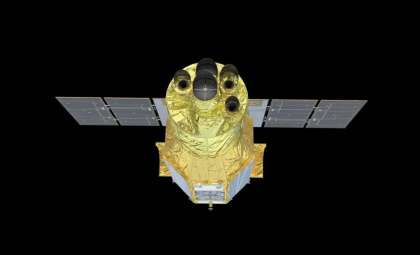
The XRISM (X-ray Imaging and Spectroscopy Mission) satellite, a joint effort by JAXA, NASA, and ESA, has shared its inaugural stunning findings since launching in 2023.
These breakthrough observations provide fresh insights into two of the most intense cosmic phenomena: supermassive black holes and supernova remnants. By precisely measuring the velocity, composition, and thermal conditions of plasma—the ultra-hot gas encircling these extraordinary objects—XRISM has initiated a new era in high-energy astrophysics. The data acquired heralds transformative advancements in understanding black hole growth and the dynamics of exploded star material as it interacts with the surrounding cosmos.
Exploring the Core of a Gargantuan Black Hole
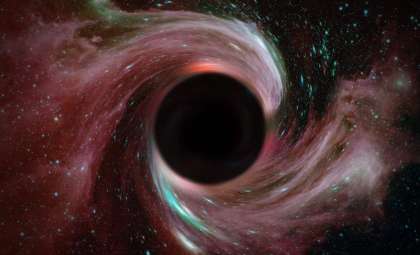
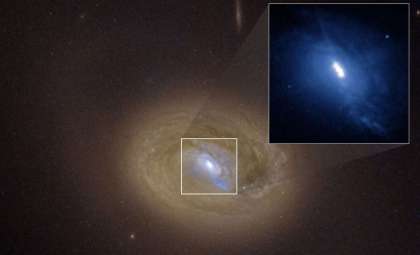
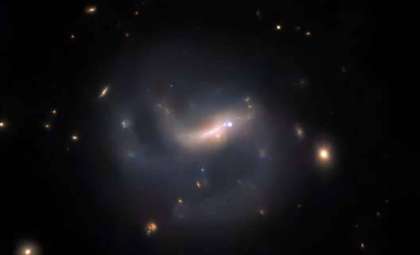
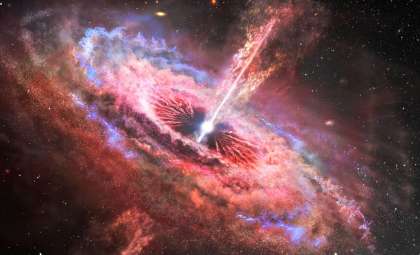
Among XRISM’s landmark achievements is its in-depth study of the supermassive black hole residing in galaxy NGC 4151, situated approximately 62 million light-years from Earth. This black hole, weighing in at about 30 million solar masses, has long captured astronomers’ attention due to its overwhelming gravitational pull. Earlier investigations using radio and infrared data revealed broad traits of the accretion disk—the swirling ring of gas and dust fueling the black hole. However, XRISM’s unparalleled high-resolution X-ray spectroscopy offers a more refined glimpse into the distribution and motion of matter at varying proximities to the black hole.


By examining X-ray signatures from iron atoms, which serve as critical markers in extreme astrophysical environments, XRISM’s research team charted detailed structural features around the black hole across distances spanning from 0.1 light-years down to 0.001 light-years—roughly the distance between the Sun and Uranus. These observations revealed how plasma spirals inward toward the black hole’s event horizon. Matteo Guainazzi, ESA’s XRISM Project Scientist, highlighted the importance of these insights: “These new observations provide crucial information in understanding how black holes grow by capturing surrounding matter.” This analysis marks a significant step toward unraveling the evolution of these cosmic giants.
Moreover, XRISM’s spectroscopic capabilities enabled the study of the doughnut-shaped torus of gas and dust farther out from the black hole. Although previously detected in other wavelengths, XRISM is the first mission able to precisely track how this plasma is sculpted and moves, thanks to its superior sensitivity to X-ray emissions.
Revealing the Secrets of a Supernova Remnant
Beyond black holes, XRISM also examined the supernova remnant N132D in the Large Magellanic Cloud, located some 160,000 light-years away. This remnant is the aftermath of a massive star’s explosion around 3,000 years ago, leaving behind an expanding shell of scalding plasma. Studying remnants like N132D is vital to understanding how elements forged in massive stars are dispersed throughout space.
Using the mission’s Resolve instrument, researchers discovered that N132D is not the simple spherical shape once assumed, but instead boasts a complex doughnut-like form. This revelation challenges traditional models about supernova remnant geometries and offers new perspectives on the explosion aftermath. Through Doppler measurements, XRISM calculated plasma in N132D expanding at an astonishing speed of 2.6 million miles per hour (about 1,200 km/s), exceeding the maximum speed of an F-16 jet fighter by over 2,000 times.
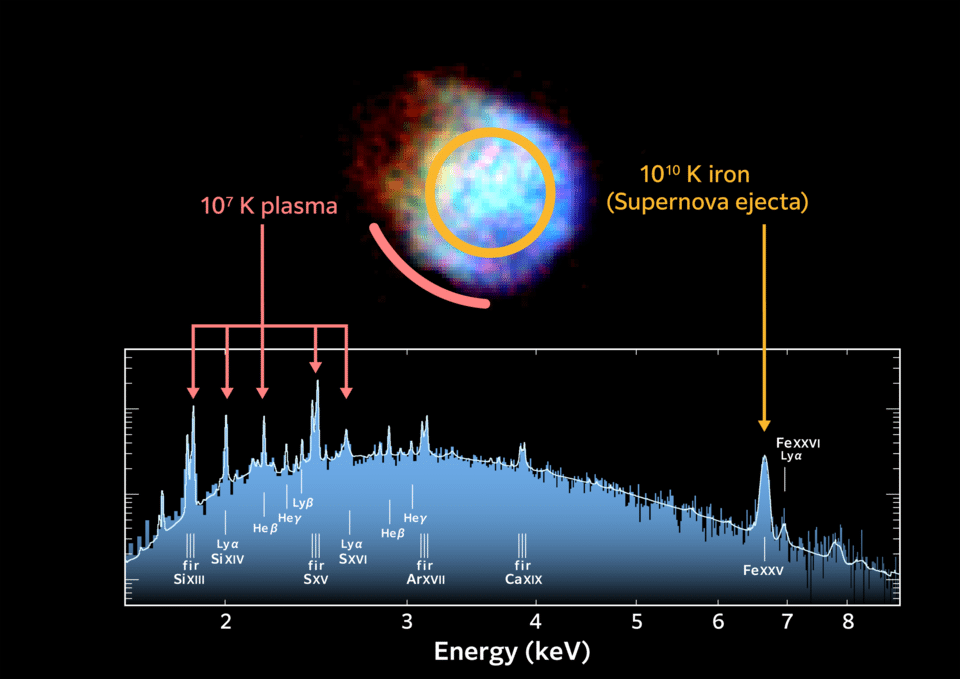
Even more remarkable are the temperatures recorded: iron atoms within the remnant have soared to an extraordinary 10 billion degrees Celsius (18 billion degrees Fahrenheit), hundreds of times hotter than the Sun’s surface. These blazing temperatures arise from shock waves generated during the supernova. While previously predicted by models, this is the first direct measurement of such extremes. ESA’s report on XRISM emphasized the impact of this discovery, noting its role in enhancing our knowledge of how heavy elements like iron form inside dying stars and then scatter across the galaxy—a process key to star and planet formation and the genesis of life-essential elements.
These new findings showcase XRISM’s advanced ability to capture fine details missed by earlier X-ray observatories, which could detect plasma presence but not its velocity and temperature distribution with such precision. XRISM’s sensitivity to subtle energy shifts in X-ray photons produces a richer understanding of supernova remnants’ development and the violent life cycles of massive stars.
Charting the Future Path of XRISM
The initial insights from XRISM highlight its powerful observational talents and suggest a promising future full of groundbreaking revelations. With its unmatched capacity to analyze the high-energy universe, XRISM is poised to deepen scientific comprehension of some of the most extreme cosmic settings. According to Matteo Guainazzi, “They [these observations] showcase the mission’s exceptional capability in exploring the high-energy universe.”
Since its deployment, XRISM has targeted around 60 crucial celestial objects to hone its analytical techniques, attracting substantial interest from researchers worldwide. Over 3,000 proposals for additional investigations have been submitted, with 104 approved for the mission’s first observation cycle. These upcoming studies aim to unveil further secrets about black holes, supernovae, and other energetic phenomena.
Moving forward, XRISM will collaborate with other observatories like ESA’s XMM-Newton X-ray space telescope and prepare the stage for successor missions such as NewAthena, which will exceed current X-ray telescope capabilities. Together, these observatories will create a robust network for exploring the universe’s most intense and enigmatic processes, helping solve enduring mysteries about the cosmos’ most cataclysmic events.
XRISM’s debut findings represent a pivotal leap in X-ray astronomy, positioning the mission to revolutionize our grasp of high-energy processes in space. By delivering intricate three-dimensional maps of extreme cosmic environments, XRISM has already proven its potential to uncover new physical phenomena and deepen our cosmic understanding.
- Categories:
- Astronomy ,
- News ,
- Science ,
- Nasa





0 comments
Sign in to Comment