
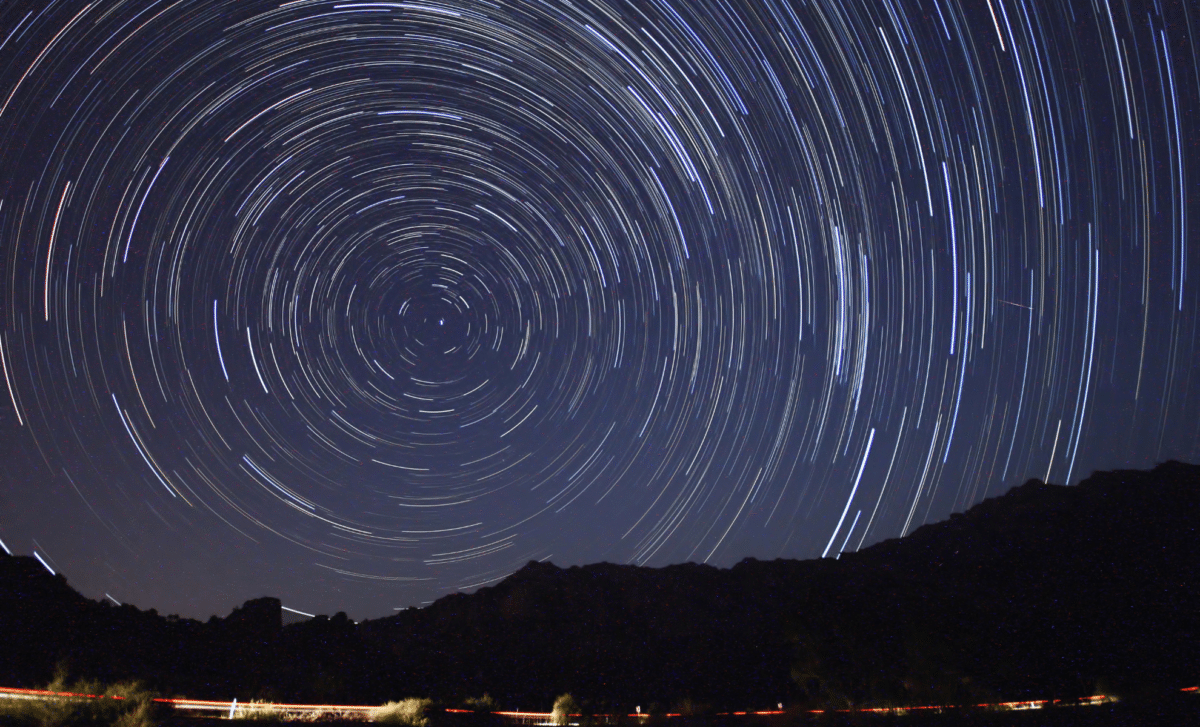
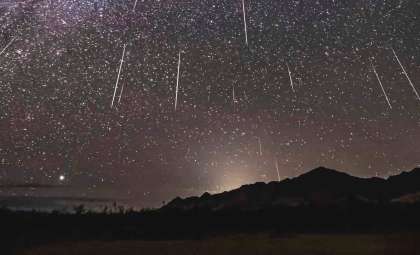
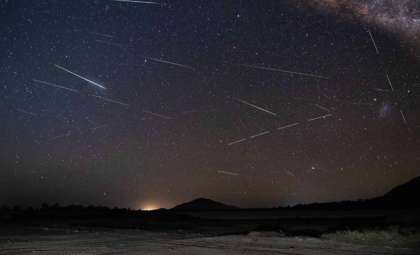
This year’s approaching meteor shower, the June Bootids, is garnering interest due to its history of unpredictable outbursts. Linked to the orbit of Comet 7P/Pons-Winnecke, this lesser-known event occasionally delivers sudden surges in visible meteors, defying expectations and thrilling astronomers and enthusiasts alike.
What Makes the June Bootids So Captivating to Scientists?
Unlike prominent showers like the Perseids and Geminids, the June Bootids typically produce only a handful of meteors per hour under normal circumstances. Despite its usually low rates, the shower’s irregular and spontaneous intensifications have placed it among the most enigmatic phenomena in the meteor calendar, inviting ongoing observation.
The allure arises from its sporadic bursts where meteor counts can leap dramatically following years of quiet activity. Historical records reveal instances when rates suddenly soared, challenging conventional forecasting models and offering fresh insights into how cometary debris disperses and encounters Earth.

Most meteor showers become well-characterized after extensive study, allowing reliable predictions based on comet dust distribution. However, the June Bootids consistently demonstrate that some meteoroid streams are far more intricate, making annual observations essential despite seemingly uneventful forecasts.
Unpredictable Outbursts That Defied Expectations
The June Bootids gained notoriety through unexpected events that astonished both novice and expert observers. A standout moment came in 1998, when the meteor rate unexpectedly soared to nearly 100 meteors per hour, transforming a modest forecast into one of the year's most remarkable celestial shows.
In 2004, observers noted a sustained increase with rates between 20 and 50 meteors per hour, far exceeding typical activity and reinforcing the shower’s reputation for unpredictability.
The shower’s erratic nature was further underscored in 2010 when a predicted surge failed to appear, with observed meteor rates staying below ten per hour. This highlighted the complexities involved in anticipating the behavior of particle streams influenced by gravitational forces and solar radiation over time.
Such dramatic variability is precisely why skywatchers remain vigilant annually; while surprise storms are rare, historical patterns keep hope alive for an unexpected spectacle.
The Comet Behind This Enigmatic Meteor Shower
The source of the June Bootids is the Comet 7P/Pons-Winnecke, a comet orbiting the Sun roughly every six years. As it moves through our solar system, it sheds small particles of ice and dust, leaving a trail of debris along its orbital path.
When Earth crosses these debris trails, particles entering the atmosphere at high velocities burn up and create shooting stars. While this process is common to all meteor showers, the uneven distribution of debris from this comet leads to the June Bootids’ distinctive and unpredictable behavior.
Scientists theorize that denser clusters of particles within the comet’s trail cause occasional bursts of heightened meteor activity. Identifying these denser regions and tracking their evolution remain challenging despite advances in simulation and observation.
As Space.com reports, this uncertainty adds to the shower’s fascination, attracting observers eager for surprise displays even if it seldom becomes mainstream news.
Optimal Timing and Viewing Tips for the June Bootids
The shower’s active period spans the latter half of June, with peak activity predicted between June 20 and June 27. The best vantage points are in the Northern Hemisphere, where the radiant point lies within the constellation Boötes, visible in the evening sky during this window.
While locating the radiant helps identify meteors from this shower, experts suggest scanning a broader part of the sky, as meteors can appear far from their source point. A wide field of view increases the odds of spotting these fleeting flashes.
Dark skies are crucial for detection; urban light pollution can obscure faint meteors, especially when frequencies are naturally low. Observers are encouraged to find rural locations and allow their eyes to adjust to the darkness for at least twenty minutes before watching.
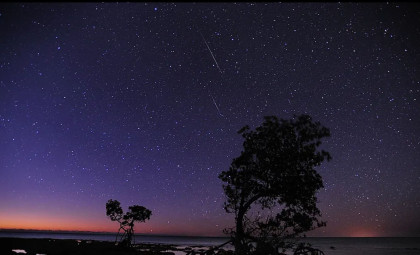
Even if the meteor count remains modest, stargazers can enjoy a rich celestial panorama featuring seasonal constellations, planets, and the Milky Way, making for a rewarding night outdoors.
- Categories:
- News



0 comments
Sign in to Comment