
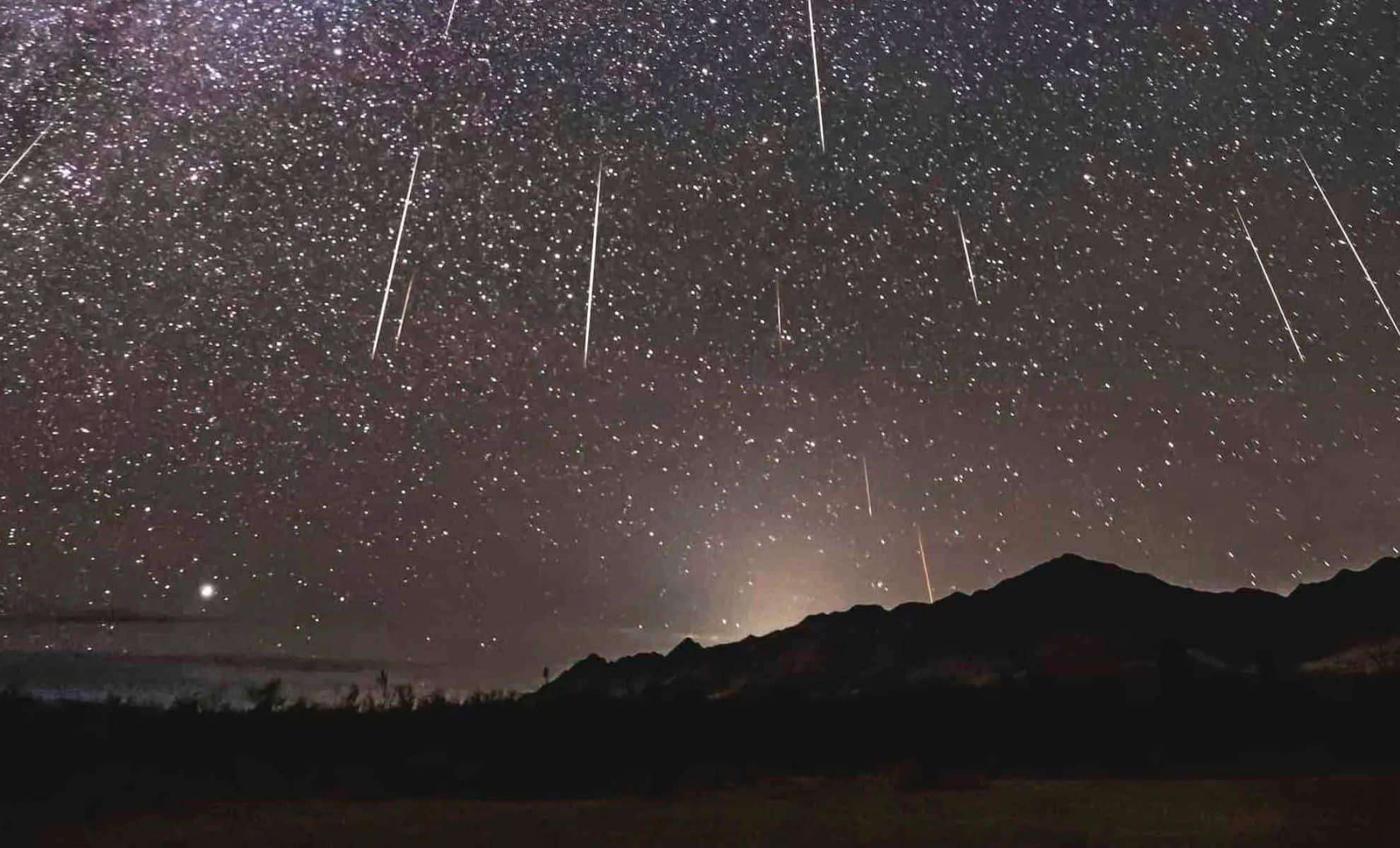
The Geminid meteor shower is quickly approaching, offering one of the year’s most captivating celestial events. Famous for its bright, colorful streaks and high meteor counts per hour, this annual display attracts both dedicated astronomers and casual sky enthusiasts. Unlike many meteor showers that can be hit-or-miss, the Geminids reliably present an impressive show, making them a must-see for anyone interested in the night sky. Their vibrant hues, slower speeds, and distinctive origins make the Geminids a rare and unforgettable cosmic spectacle.
An Extraordinary Meteor Shower
The Geminids are distinct from most other meteor showers, which typically trace back to comets. Instead, this one stems from asteroid 3200 Phaethon, often described as a “rock comet.” As Phaethon nears the sun, intense heat causes it to shed rocky debris. Earth passes through this trail each December, giving rise to one of the year’s brightest and most colorful meteor displays.
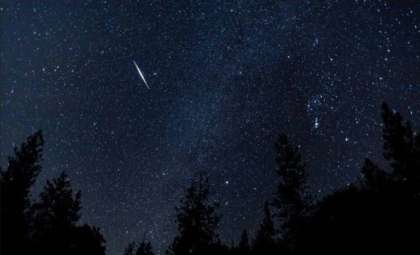
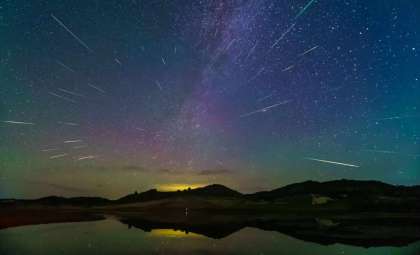
Meteors from the Geminids glow more vividly than those from most other showers. Traveling at roughly 21 miles per second, they move slower than typical meteors, making their dazzling colors easier for watchers to appreciate. Shades of yellow, green, white, and occasionally blue paint the night sky, enchanting observers annually.

NASA’s Meteoroid Environment Office director, Bill Cooke, told Space.com that the Geminids rank “among the top three meteor showers to watch” due to their steady brightness and activity. Cooke notes that even when the moon is bright, the Geminids remain visible, ensuring an enjoyable viewing experience for skywatchers willing to brave the night.
Best Times and Viewing Spots
The Geminid meteor shower spans from November 19 through December 24, with the most intense activity expected in the late night hours of December 13 to early morning December 14. Under ideal conditions, stargazers might witness up to 120 meteors per hour. Though a waxing gibbous moon will brighten the sky during the peak, many meteors should still be visible due to their brightness.
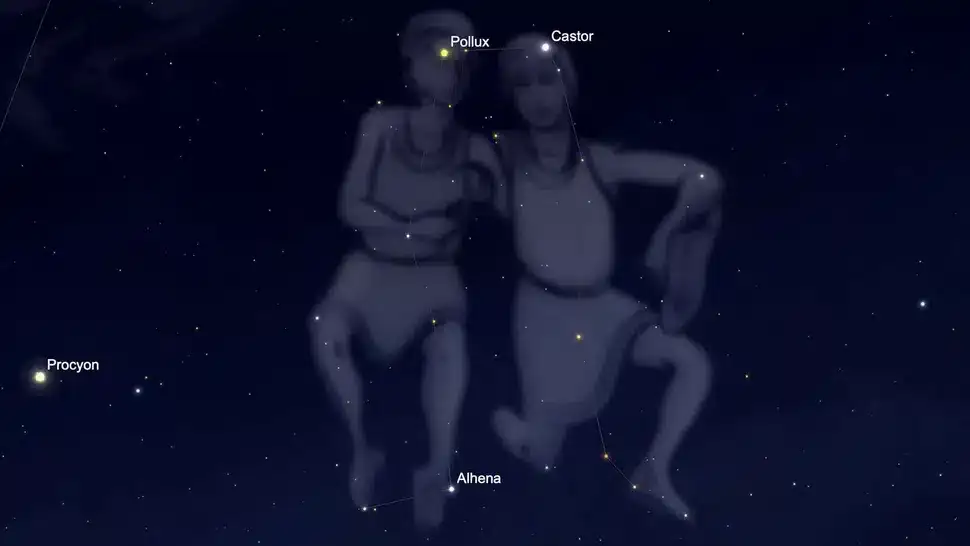
For optimal viewing, seek out dark areas away from city lights with a clear view of the horizon. The meteors appear to radiate from the Gemini constellation, positioned high in the Northern Hemisphere’s night sky. Look for the bright stars Castor and Pollux near Orion’s constellation. While South Hemisphere observers can also see the show, rates will be lower because Gemini stays closer to the horizon.
Begin watching around 10:00 p.m. local time and continue through the early morning hours. Allow your eyes 20–30 minutes to adjust to the dark and minimize exposure to bright lights, including phone screens, to enhance night vision.
A Storied Cosmic Display
First recorded in the 19th century, the Geminid meteor shower has grown into one of the most dependable and eagerly awaited astronomical events each year. Compared to the famous Perseids, the Geminids often showcase brighter and more frequent meteors, winning favor with amateurs and professionals alike.
Asteroid 3200 Phaethon completes its solar orbit every 1.4 years. Scientists believe that its rocky makeup and close solar encounters generate the debris trail responsible for this annual meteor shower.
The Geminids are notable for being active even before midnight, unlike many showers that peak in the early morning. This earlier timing allows families and people of all ages to enjoy the spectacle without staying up late into the night.
- Categories:
- News





0 comments
Sign in to Comment