
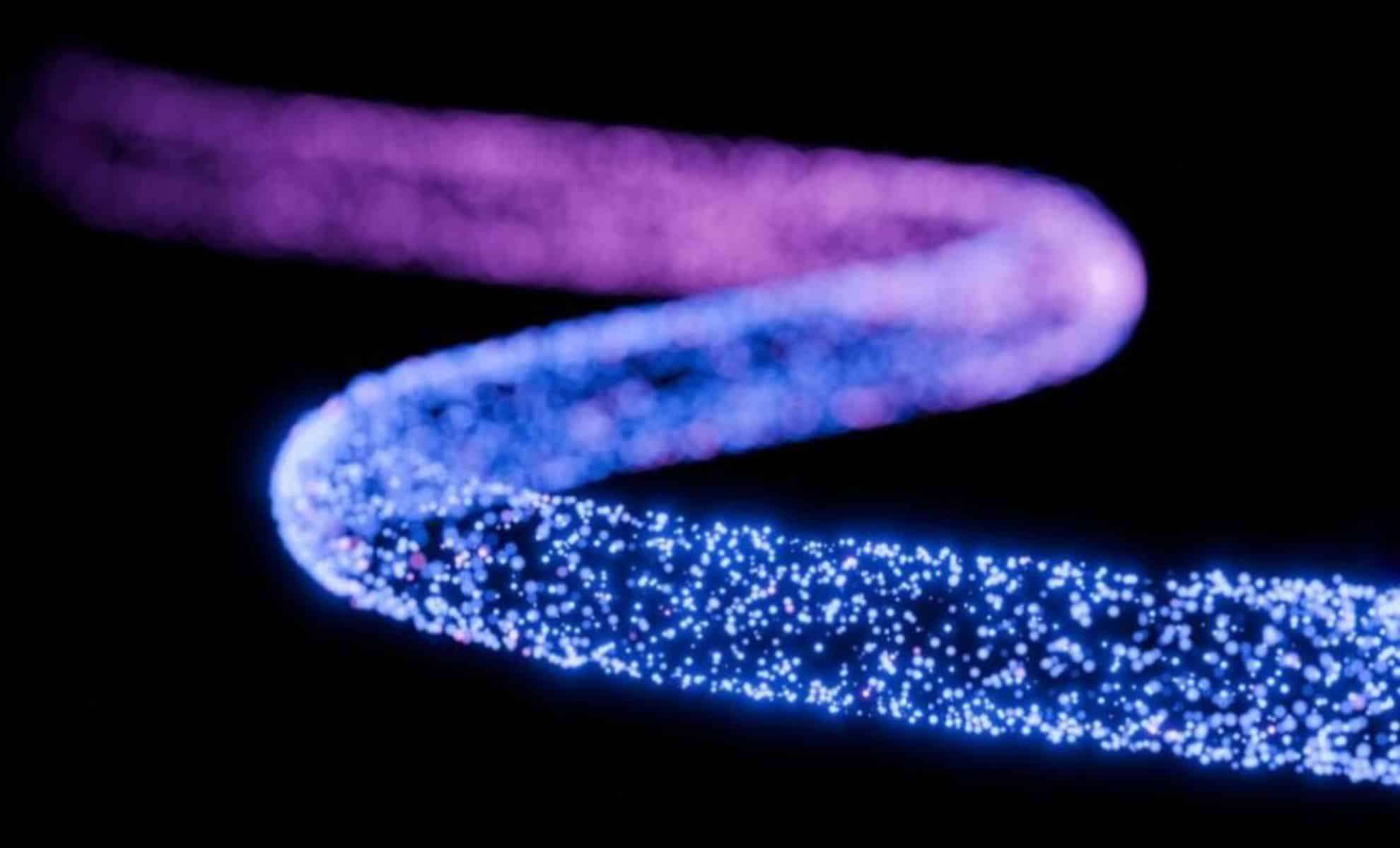
Researchers have made a landmark advancement in communication technology by successfully teleporting quantum information through conventional fiber optic cables. Unlike the science fiction notion of teleporting objects, this feat uses principles of quantum mechanics to instantly and securely transfer data. The process hinges on quantum entanglement, where two particles remain interconnected, enabling information to traverse distances without the particles themselves moving physically.
What makes this accomplishment noteworthy is its real-world applicability. Earlier quantum teleportation attempts were limited to controlled lab environments, but this new demonstration proves that quantum signals can be transmitted alongside classical data within existing network infrastructure. This opens the door towards developing a quantum internet, promising faster and more secure data communication.
Understanding the Mechanism of Quantum Teleportation
Central to quantum teleportation is the intriguing phenomenon of quantum entanglement. Entangled particles maintain instantaneous correlations, no matter how far apart they are, allowing information to transfer without particle movement.

Incorporating quantum communication into traditional networks has been a significant hurdle due to the interference created by classical data signals operating with millions of photons. Such noise can degrade the delicate quantum information, which led to the belief that dedicated infrastructure was necessary for quantum data transmission.
“This breakthrough is thrilling because it was once considered unattainable,” stated Professor Prem Kumar of Northwestern University, head of the research. “Our findings pave the way for combined quantum and classical communication systems running on the same fiber optic cables, facilitating progress to more advanced communication technologies.”
Overcoming Challenges Through Practical Experiments
Kumar’s team tackled interference by pinpointing wavelength windows within fiber optic cables least affected by classical signals. Assigning quantum photons to these wavelengths and employing sophisticated filtering methods allowed the coexistence of quantum and classical data streams.
They conducted an experiment transmitting quantum information alongside routine internet traffic over a 30-kilometer (18.6-mile) fiber optic link. Impressively, the quantum data maintained its coherence despite the simultaneous heavy classical traffic.
“While quantum teleportation has been achieved previously, it usually required pristine lab conditions,” commented Professor Jim Al-Khalili, who was not part of the project. “Quantum-entangled particles can quickly decohere when interacting with their environment, making real-world applications challenging.”
This marks the first verified case of quantum teleportation functioning effectively outside controlled laboratory settings, a pivotal step towards merging quantum technology with existing communication frameworks.
Significance for Future Communication Systems
The demonstration that quantum information can be transmitted via conventional infrastructure is transformative. Quantum communication’s innate security arises because any interception attempts disturb the quantum states, instantly signaling a breach.
“The assumption has been that specialized infrastructure would be needed to transmit quantum signals,” Kumar explained. “By carefully choosing wavelengths, classical and quantum channels can coexist on the same network without additional construction.”
This compatibility reduces financial and logistical barriers, accelerating the adoption of quantum technologies and moving us closer to a fully operational quantum internet. Impacts will ripple into sectors such as quantum computing, highly secure data exchanges, and advanced sensing techniques.
“Utilizing quantum teleportation within existing fiber networks is a major stride toward establishing quantum networks,” Al-Khalili added. “Its applications span quantum encryption, sensing, computing, and the eventual emergence of a genuine quantum internet.”
Future Directions
The timing of this breakthrough is significant, coinciding with 2025’s designation as the International Year of Quantum Technology by the United Nations. The researchers plan to extend their experiments over longer distances and explore more elaborate quantum communication protocols, including entanglement swapping. This method would enable two particles, previously unconnected, to become entangled, potentially enabling extensive quantum networks.
“This research is particularly timely given the UN’s focus on quantum technology in 2025,” stressed Al-Khalili.
Furthermore, the team aims to test these techniques on underground fiber cables mimicking real-world internet setups, tackling practical issues for widespread quantum communication integration.
- Categories:
- News









0 comments
Sign in to Comment