
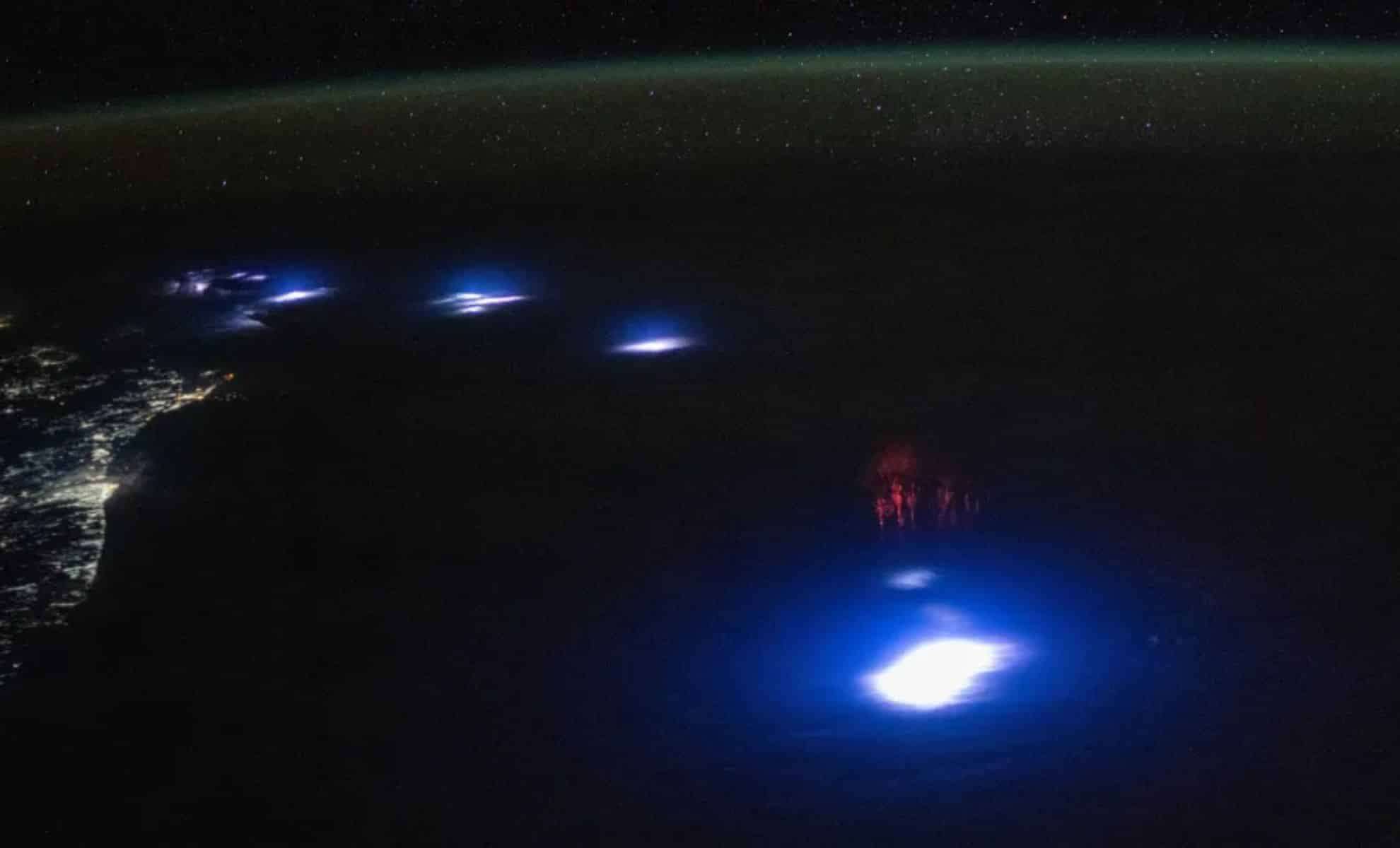
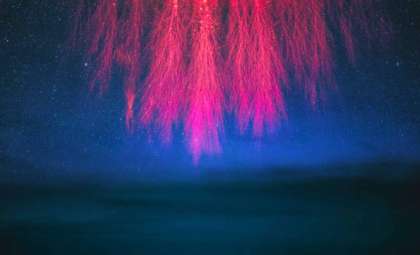
This week, a striking low-light atmospheric event illuminated parts of North America, as NASA astronaut Nichole Ayers photographed an extraordinary red lightning sprite from the orbiting International Space Station (ISS). The glowing phenomenon, often described as resembling a jellyfish, appeared above an intense thunderstorm spanning regions of Mexico and the southern US, including Texas and California.
Lightning Phenomena High Above Storm Clouds
Reported by Space.com, the snapshot taken on July 3 showcases a sprite — a type of Transient Luminous Event (TLE) that occurs in the upper layers of the atmosphere amid powerful thunderstorm activity. These sprites generally go unseen from the ground due to obstruction by clouds and the scattering of light, but from the vantage point of space, their majestic form is unmistakable. Ayers explained, “sprites are TLEs… that occur above clouds and are initiated by intense electrical activity in thunderstorms below.”
Sprites arise when strong electric fields caused by lightning interact with the upper atmosphere. In the photo, the sprite appears to fan out and ascend, resembling a giant jellyfish with multiple branching red light filaments, which accounts for its nickname.

Investigating the Enigmatic Upper-Atmosphere Sprites
First reported by airline pilots in the 1950s but only photographed in 1989, sprites remain mysterious—especially why some lightning bolts produce these luminous displays while others do not. Their signature red glow results from electrical excitation of nitrogen molecules high above the Earth, according to NASA’s Earth Observatory.
Sprites are the most frequently observed TLEs, though other rare phenomena include blue jets which shoot upwards from thundercloud tops, and ELVES, which are fast-expanding doughnut-shaped lights that sometimes resemble brief UFOs. Each type offers clues to the complex electrical environment surrounding storms.
The red sprite photographed by Ayers may have stretched as high as 50 miles (80 kilometers) above Earth’s surface. These towering, ghostly forms are sometimes called carrots because of their trailing tendrils, or compared to jellyfish owing to their wide, dome-like structures and dangling tendrils.
The Unique Perspective of the International Space Station
From their vantage point aboard the ISS, astronauts have an unparalleled opportunity to witness these upper-atmosphere electrical events. Unimpeded by clouds, they can capture transient luminous events with exceptional clarity. Ayers commented, "We have a great view above the clouds," noting that such images aid scientists in improving their understanding of TLE origins and behavior in relation to thunderstorms.
The July 3 sprite photo adds to a growing catalogue of orbital observations. Previous captures include a faint red sprite seen in March accompanying a ‘gigantic jet’ lightning over New Orleans, and in June, another ghostly red jellyfish shape was recorded hovering above a storm, seemingly detached from weather below.
Beyond Earth: Sprites on Other Planets
These strange, high-altitude lightning phenomena are not exclusive to our planet. Similar red sprites have been observed in Jupiter’s atmosphere, with scientists also hypothesizing their presence on Saturn and Venus. These findings suggest a planetary-scale puzzle regarding atmospheric electricity remains to be solved.
Despite their captivating appearance, sprites continue to baffle researchers. As space missions gather more imagery and data, scientists aim to decode the physical mechanisms that create these elusive electrical displays. For now, Ayers’ latest photo stands as one of the clearest and most breathtaking captures of this celestial light show ever taken from orbit.
- Categories:
- News







0 comments
Sign in to Comment