
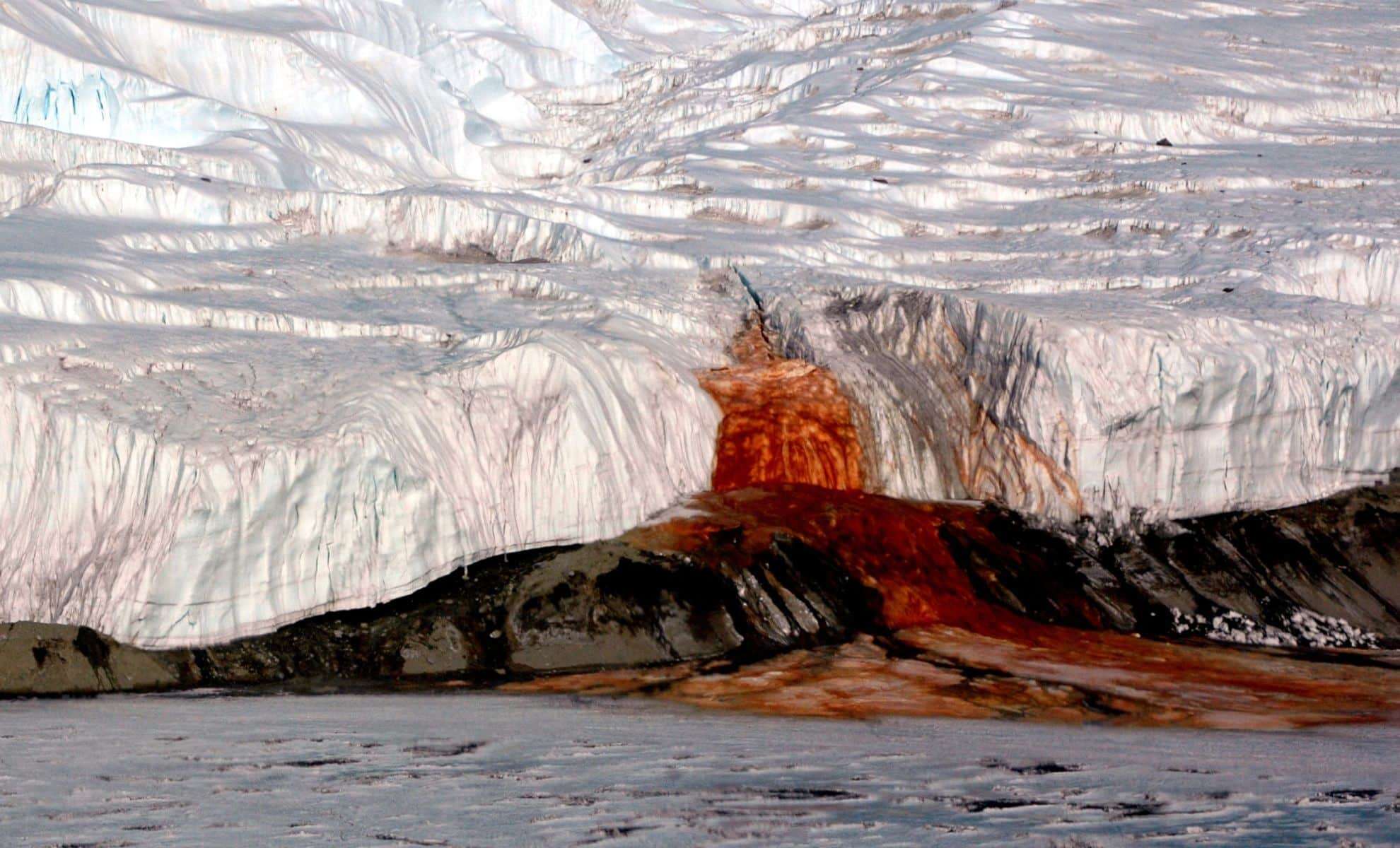
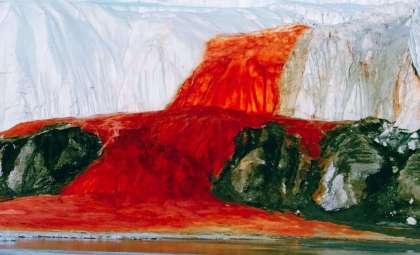
The mesmerizing Blood Falls in Antarctica have intrigued scientists and adventurers for decades. Located in the isolated McMurdo Dry Valleys, this extraordinary phenomenon features vivid red water flowing out of a glacier, puzzling experts since its discovery. After years of investigation and many hypotheses, the true explanation behind this striking natural spectacle has been uncovered.
What’s Behind the Red Hue of Antarctica’s Blood Falls?
Blood Falls was identified in 1911 by geologist Thomas Griffith Taylor, who was captivated by the unusual red liquid oozing from the edge of Taylor Glacier. For a long time, it was believed that red algae caused the coloration, but this idea failed to entirely convince researchers, leaving the phenomenon largely unexplained.
Aside from its color, the fact that the water stayed unfrozen in one of the coldest places on Earth raised additional questions. With average temperatures around -19°C (or -2.2°F), the water’s liquid state was perplexing. These mysterious properties made Blood Falls a compelling focus for scientists determined to understand its origin.

Major Breakthrough in 2003
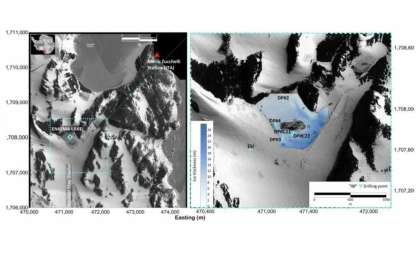
The enigma of Blood Falls was finally unraveled in 2003, when experts from the University of Alaska Fairbanks, including National Geographic explorer Erin C. Pettit, applied advanced radio-echo techniques to analyze the water's makeup. They discovered it had a high salt concentration—roughly twice that of seawater. This explained how the water could flow without freezing in such frigid conditions, since salt lowers water’s freezing point.
Moreover, the team found the water to be rich in iron. When exposed to oxygen, the iron undergoes oxidation, imparting the water with its vivid red color.
Unearthing the Water's Ancient Past
The water’s origin is far older than previously thought. Erin Pettit revealed that it has been trapped beneath the glacier for about 1.5 million years. It initially came from an ancient lake buried under ice sheets. Over time, the glacier’s gradual movement enclosed the lake beneath thick ice, isolating it for millennia.
Eventually, pressure caused the saline, iron-rich water to break through the ice and flow to the surface. Pettit noted that the glacier itself generates enough warmth to keep the water from freezing. “Though counterintuitive, water releases heat as it freezes, warming the surrounding ice,” she explained. This heat, combined with the briny water’s depressed freezing point, allows the liquid to flow steadily.
Taylor Glacier is recognized as the coldest known glacier with continuously flowing water, making Blood Falls one of Antarctica’s most captivating natural phenomena. The longstanding riddle of the “bleeding waterfall” is now solved, revealing a tale of ancient submerged lakes, icy conditions, and unique chemistry that make this site truly remarkable.
- Categories:
- News




0 comments
Sign in to Comment