
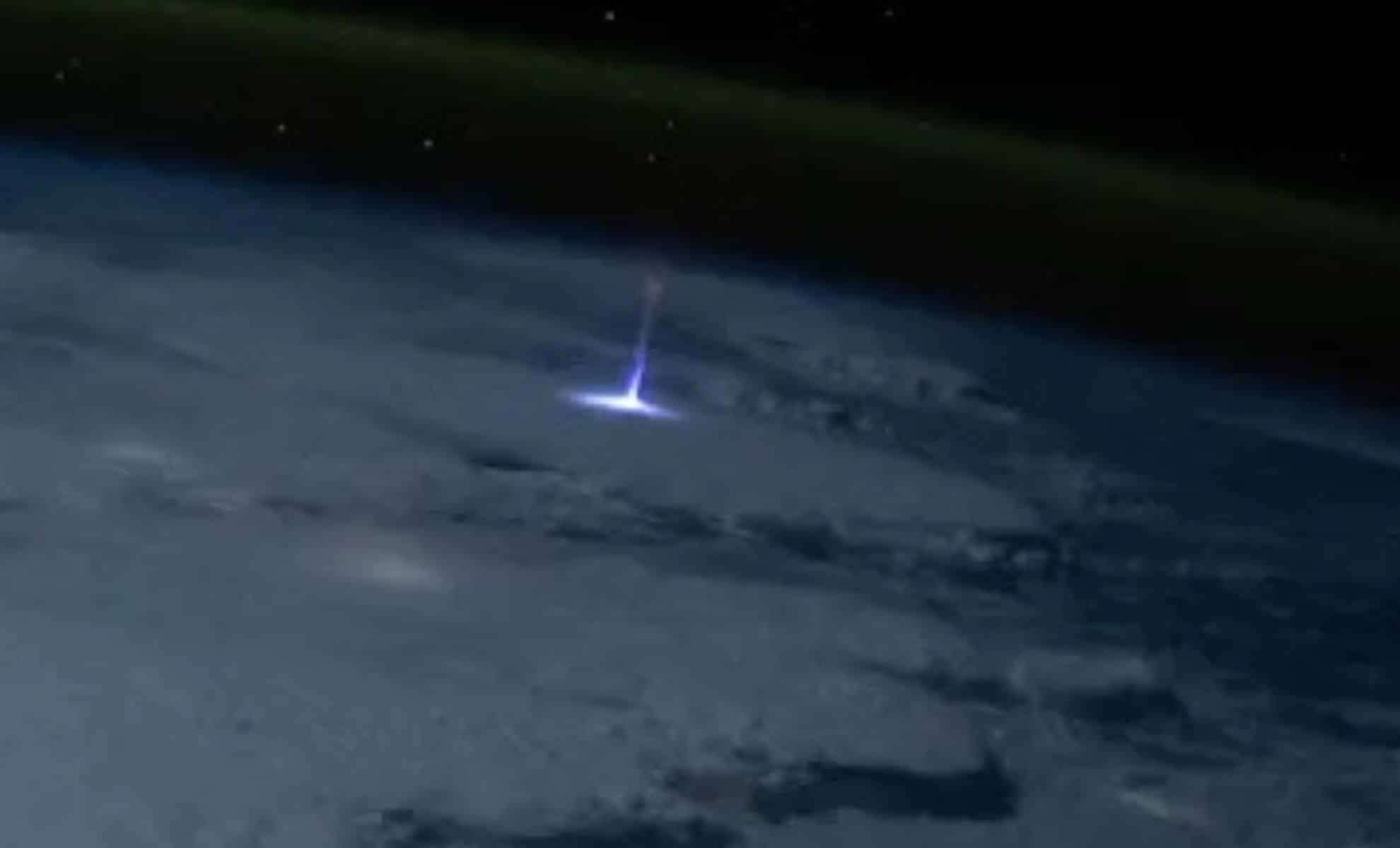
An astronaut aboard the International Space Station (ISS) captured an extraordinary electric display known as a gigantic jet, a towering lightning strike that extends approximately 50 miles upwards into space from a thunderstorm in Louisiana. This remarkable image, taken on November 19, 2024, offers a rare view of one of the tallest electrical discharges in our atmosphere, an enigmatic phenomenon still under scientific investigation.
Unlike conventional lightning that typically flashes downward toward the ground, gigantic jets propel upward, shooting beyond the top of storm clouds and reaching the ionosphere, the charged layer of Earth’s atmosphere. These jets pack immense energy, sometimes up to 60 times that of ordinary lightning, making them among the most fascinating and least understood weather events on our planet.
Space Station Reveals a Rare Atmospheric Wonder
The stunning photo, captured by an unnamed ISS crew member, was uncovered within NASA’s Gateway to Astronaut Photography of Earth archive by photographer Frankie Lucena, who specializes in documenting lightning sprites and other atmospheric phenomena. Lucena shared the discovery with Spaceweather.com, which brought this captivating event to public attention on February 26, 2025.

As reported by Live Science, the exact position of the gigantic jet is uncertain due to clouds, but the ISS’s location suggests it occurred near the coastline of New Orleans. The image is among a set of four lightning shots, with only one capturing this impressive upward lightning event.
Why Are Gigantic Jets So Elusive?
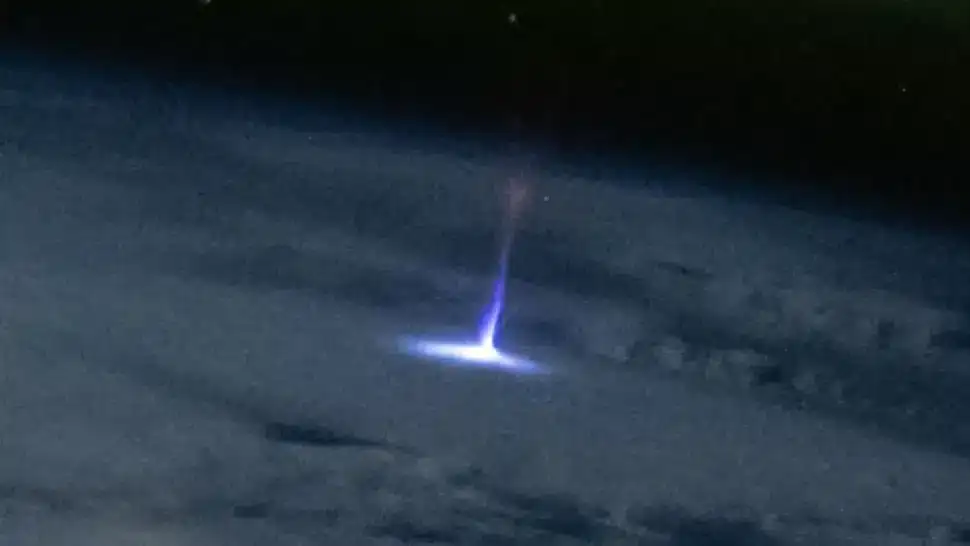
Gigantic jets were first officially recorded in 2001. Although they probably occur nearly 1,000 times annually, only a limited number have been photographed. Their fleeting nature—lasting less than a second—and the remote locations where they emerge make them extremely challenging to observe.
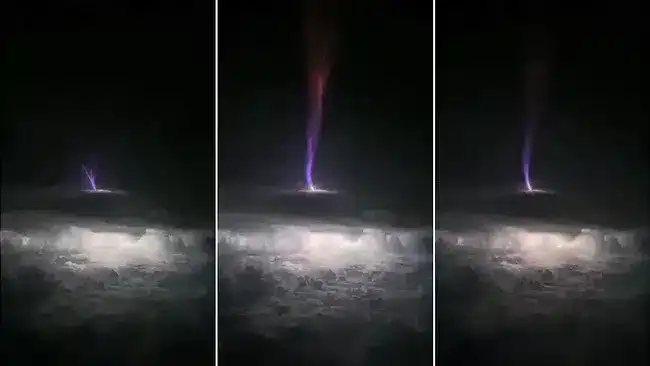
Unlike normal lightning that flashes between electric charges within storm clouds, gigantic jets break through the storm’s upper layers when the electrical balance shifts dramatically. Reaching into the ionosphere—the same atmospheric region that hosts auroras—they often emit a vivid blue light with red, tendril-like lightning structures that look like deep-sea jellyfish.
These upper atmospheric electrical phenomena differ from sprites, which are red flashes appearing above thunderstorms. While sprites are more frequently observed and better understood, gigantic jets remain a puzzle, with scientists continuing to study their formation mechanisms and effects.
The Most Intense Lightning Ever Captured
Gigantic jets are not only awe-inspiring in appearance but also immensely powerful. The record-holding event was over Oklahoma in May 2018, where temperatures soared to 8,000 degrees Fahrenheit (4,400 degrees Celsius), releasing energy 60 times that of a typical lightning bolt.
Since these jets extend into near space, researchers are investigating their potential impact on satellites, radio signals, and space weather conditions. Some theories suggest that gigantic jets might help regulate Earth’s electrical environment, but much remains to be explored.
- Categories:
- News











0 comments
Sign in to Comment