
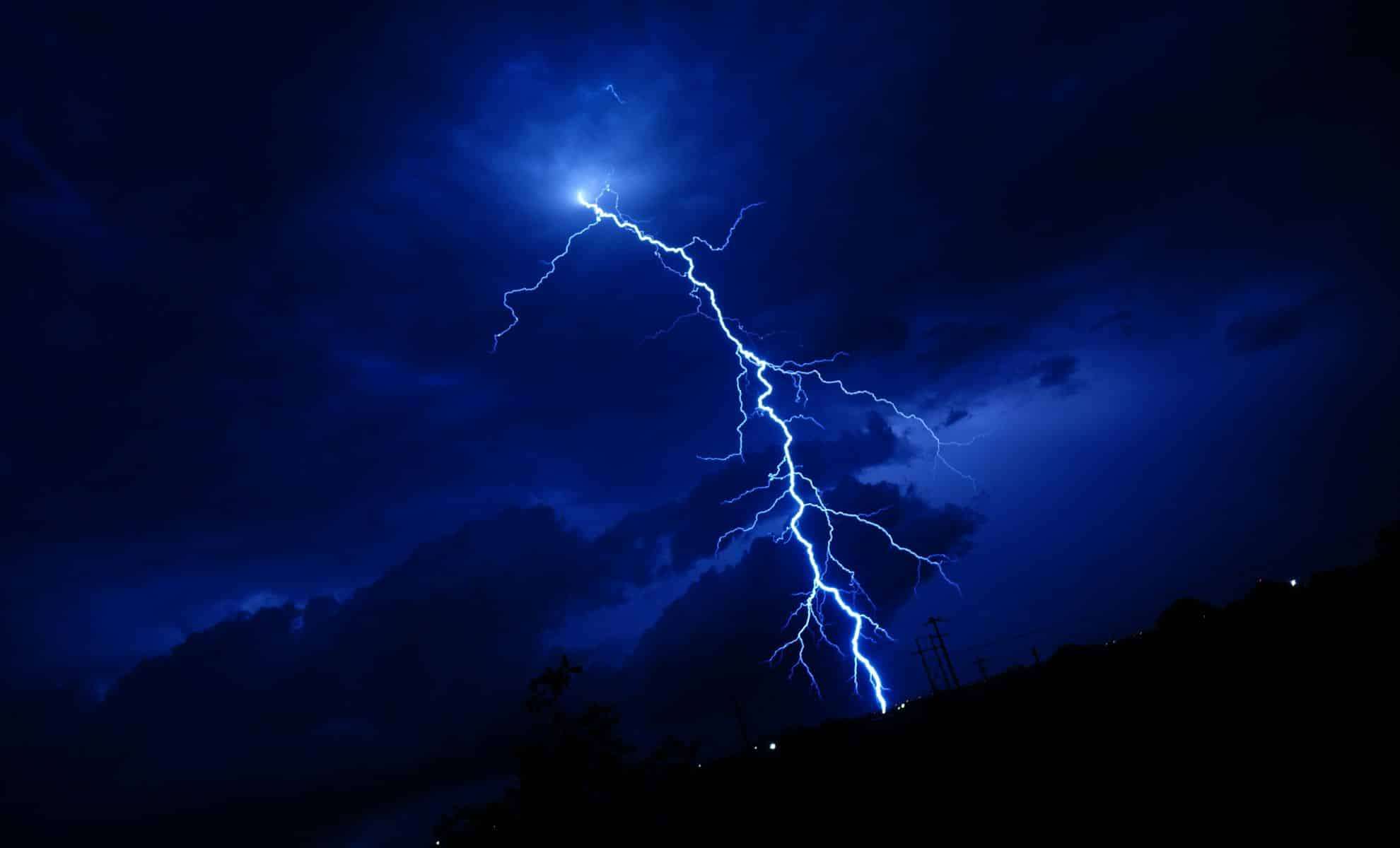
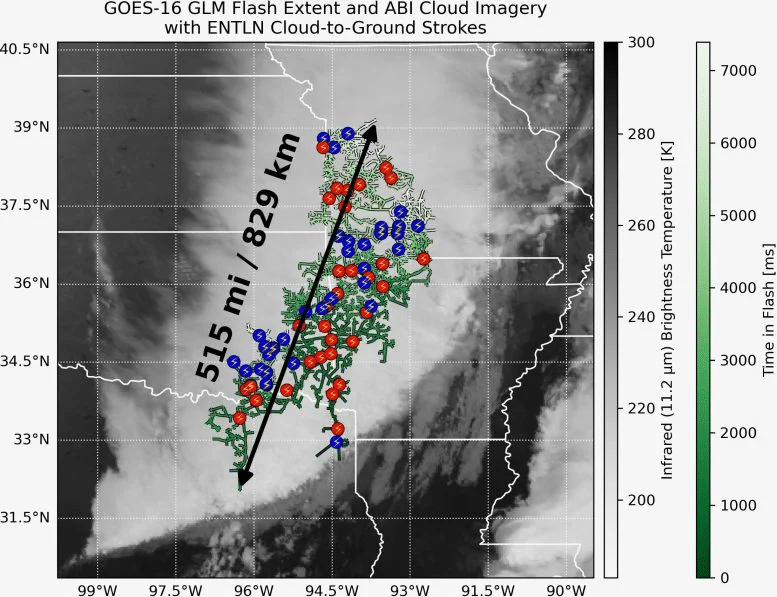
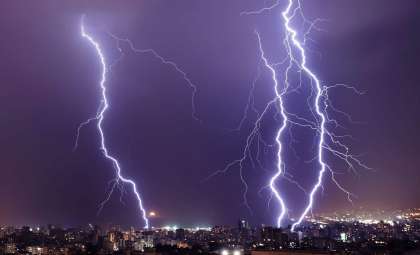
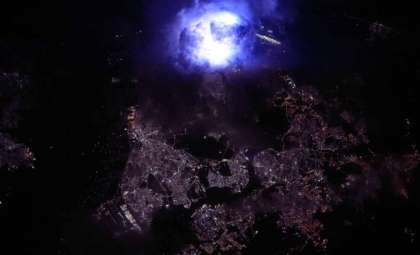
An extraordinary lightning strike extended an incredible 830 kilometers across the Great Plains, stretching from eastern Texas to the vicinity of Kansas City. This unprecedented event established a new global record for the longest continuous lightning flash, significantly surpassing previous measurements. The phenomenon, a single sustained burst of lightning, has provided valuable data to researchers investigating the dynamics of extreme weather events. Detailed in a recent publication in The Bulletin of the American Meteorological Society, this type of rare lightning—termed a megaflash—was observed through advanced satellite technology capable of detecting lightning activities over vast geographic areas.
How Satellites Unveil Extraordinary Lightning Phenomena
The groundbreaking megaflash was recorded amid a robust thunderstorm in October 2017, though its significance only emerged following a thorough reevaluation of archived satellite datasets years later. Analysts determined that this bolt exceeded the previous record of 768 kilometers set in April 2020 by a substantial margin of 61 kilometers.
Randy Cerveny, a distinguished professor at Arizona State University specializing in geography and urban planning, remarked, “We refer to these as megaflash lightning events, and we are just now unraveling the processes behind their formation and occurrence.”

Historically, lightning monitoring depended on terrestrial antenna networks that inferred strikes using radio emissions. While effective to some extent, those systems lacked the spatial coverage and accuracy necessary to map extensive lightning discharges fully. The deployment of satellite-based lightning sensors beginning in 2017 transformed the discipline by enabling continuous, continent-wide observation of lightning with millisecond precision.
The NOAA GOES-16 satellite, positioned in geostationary orbit, detects approximately one million lightning events daily. It leads a constellation of four NOAA satellites equipped with geostationary lightning mapper instruments, complemented by similar satellites operated by European and Chinese agencies.
Decoding the Complex Nature of Megaflash Lightning
Lightning characteristics vary widely. While typical strikes traverse under 16 kilometers, flashes exceeding 100 kilometers earn the classification of megaflashes. Michael Peterson from the Georgia Tech Research Institute, who authored the study, notes that these gigantic lightning events occur in fewer than 1 percent of all thunderstorms. They typically develop within long-duration storm systems lasting over 14 hours and cover expansive areas comparable to that of New Jersey.
These sprawling lightning bolts frequently split into five to seven separate ground strikes along their course. Their vast size is powered by extensive storm formations that create the electrical conditions essential for prolonged lightning activity.

The Distant Threats Lightning Can Pose Beyond Thunderstorms
Although megaflashes spanning hundreds of kilometers are infrequent, lightning strikes occurring 16 to 24 kilometers away from their originating storm remain common and can be fatal. Cerveny cautions, “Many people underestimate how far lightning can travel from its parent thunderstorm.” Annually in the U.S., lightning causes 20 to 30 fatalities and injures numerous others, often striking before the storm’s peak or after it has begun to subside.
This lingering danger underlies recommendations to wait at least 30 minutes after the last thunderclap before engaging in outdoor activities. “The storm responsible for a lightning flash doesn’t need to be directly overhead,” Cerveny emphasized, highlighting the importance of remaining vigilant even as skies start to clear.
- Categories:
- News






0 comments
Sign in to Comment