
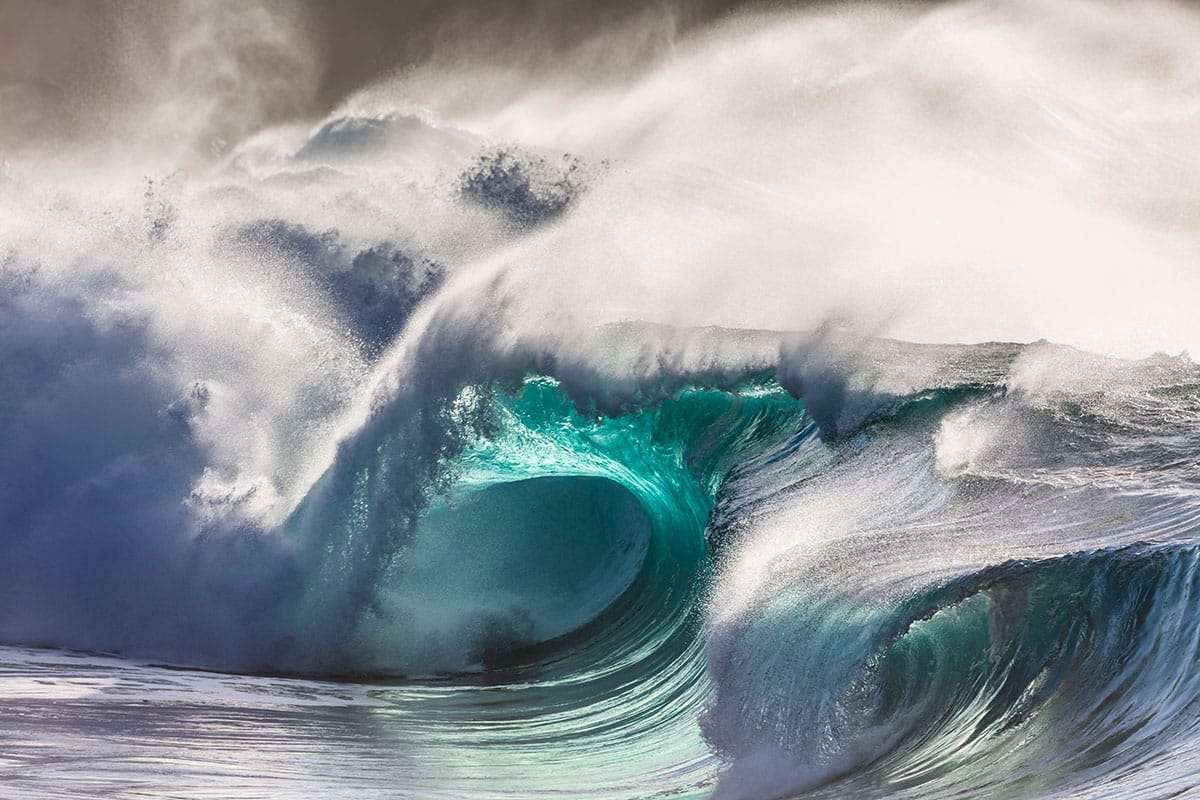
In November 2020, a solitary buoy off British Columbia's coast recorded an extraordinary ocean event. It detected the Ucluelet wave, an immense 58-foot surge that smashed previous height records. To visualize its scale, imagine a towering structure as tall as a four-story building emerging suddenly from the water.
This wave’s uniqueness stems from its rarity. Experts estimate that such a phenomenon occurs roughly once every 1,300 years. This remarkable incident has ignited interest among researchers and marine enthusiasts, sparking fresh investigations into the elusive phenomenon of rogue waves.
What truly sets the Ucluelet wave apart is not just its towering height, but how disproportionately large it was compared to the surrounding ocean surface. Johannes Gemmrich, a physicist at the University of Victoria, described it as “likely the most extreme rogue wave ever documented” relative to nearby wave sizes. This observation is motivating scientists to unravel the underlying processes that give rise to such outlier waves.

Rogue Waves: Ocean’s Unpredictable Giants
Rogue waves are the ocean’s unpredictable giants, breaking standard wave patterns and catching sailors by surprise. Unlike regular waves, these unexpected, massive swells appear suddenly and can pose serious threats to vessels and offshore installations.
The scientific community began acknowledging rogue waves as genuine after the 1995 Draupner wave struck an oil platform off Norway, standing at 85 feet tall. This event marked the first definitive proof that these formidable waves are a natural oceanic occurrence rather than myths.
Understanding these waves is vital for preventing disasters at sea. Their spontaneous nature and destructive strength have been linked to many shipwrecks and disappearances, particularly incidents documented during the 1970s.
Wind’s Influence: Key to Rogue Wave Creation
Recent studies highlight wind as a crucial factor in rogue wave generation. A mission to Antarctic waters by the University of Melbourne employed state-of-the-art technology to capture detailed 3D ocean surface images, providing new insights. Under the leadership of Professor Alessandro Toffoli, researchers discovered that rogue waves are most prone to form in the early phase of wave development, when wind impact is strongest.
Professor Toffoli explains, “The wind creates chaotic conditions where waves of varying sizes and directions overlap.” This turbulent interaction can trigger the rapid growth of a single massive wave at the expense of neighboring ones.
The wind’s impact on waves can be summarized as:
Enhancing Ocean Safety Through Scientific Insight
The detection of the Ucluelet wave coupled with ongoing rogue wave research is advancing maritime safety strategies. Innovators like MarineLabs are deploying sensor buoys designed to collect vital data on deep-sea dangers. This intelligence plays an essential role in:
- Securing marine operations
- Protecting offshore wind installations
- Improving oil platform safety measures
- Enhancing coastal safety protocols
Scott Beatty, CEO of MarineLabs, emphasized the significance by stating, “Capturing this once-in-a-millennium wave… is a thrilling indicator of the power of coastal intelligence to transform marine safety.”
As climate change potentially escalates wave heights in regions such as the North Pacific, precise wave forecasting and early alert systems grow increasingly vital. Incorporating wind dynamics into predictive models marks a major breakthrough for anticipating rogue waves.
This ongoing drive to improve safety for maritime activities and coastal communities reflects a deeper acknowledgment of the ocean’s volatile nature. By leveraging advanced technologies, comprehensive data, and enhanced scientific understanding, experts are working diligently to safeguard those navigating the seas.
- Categories:
- Climate change








0 comments
Sign in to Comment