
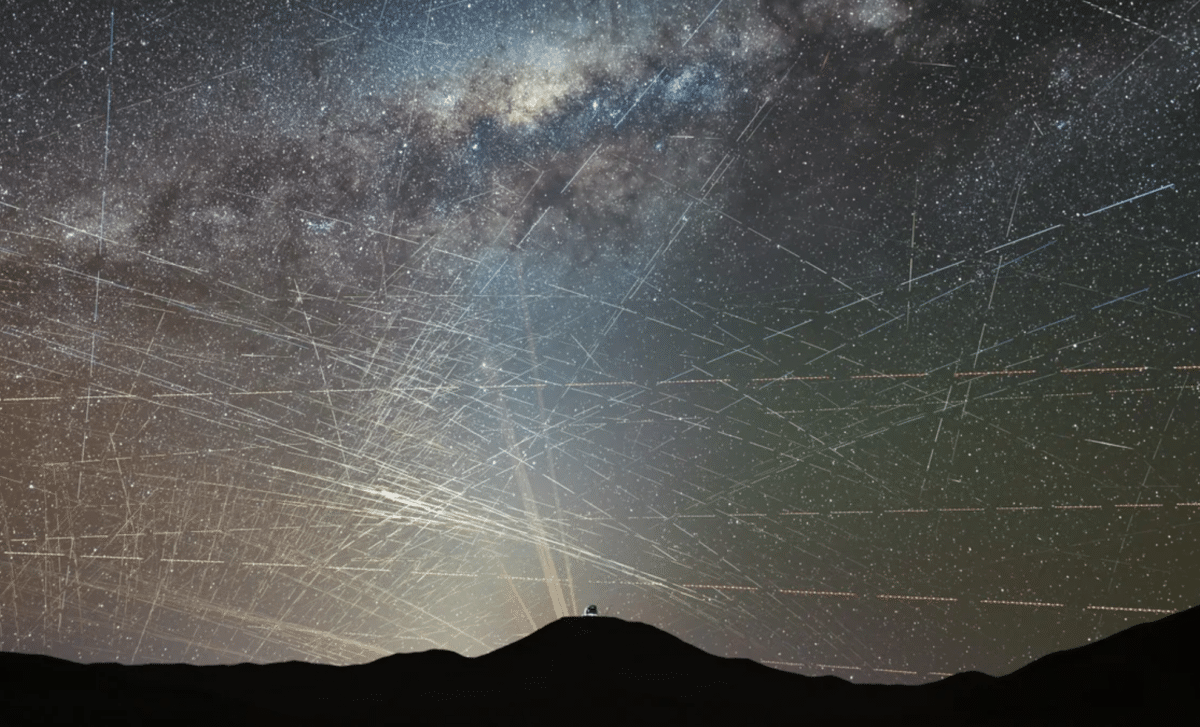
Advancements in astronomical research depend not only on cutting-edge telescopes but also on responsible management of the increasingly crowded space surrounding Earth. Recent research reveals that plans for deploying ultra-reflective satellites could significantly boost artificial illumination in the night sky, potentially compromising many scientific observations. This study, published in Astronomy & Astrophysics, highlights the urgent need to balance commercial satellite ventures with safeguarding the invaluable resource of a dark sky for astronomy.
Study Highlights Sharp Increase in Artificial Night Sky Brightness
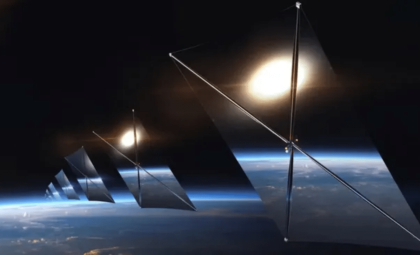
The report, appearing in Astronomy & Astrophysics, evaluates the potential impact of launching numerous highly reflective satellites intended to direct sunlight toward Earth. While the idea has garnered interest for various uses, astronomers warn that the resulting increase in sky brightness could severely hinder scientific work. Olivier Hainaut, Operations Director at the European Southern Observatory (ESO) and lead author, stresses that these effects go well beyond occasional image disruptions.
“We can reach conditions where basically, there is no point in operating the telescopes anymore because all the data will be corrupted. All. 100 percent,” Olivier Hainaut, the director of operations at ESO and lead author of the study, told Space.com.
Add Cosmo Herald as a Preferred Source

The issue extends beyond mere satellite visibility in the sky. The reflected sunlight from these satellites raises the baseline brightness of the night, decreasing the contrast necessary for astronomers to detect faint galaxies, stars, and potentially habitable planets. Observatories rely heavily on exceptionally dark skies, as even minimal increases in ambient light can drown out delicate, distant cosmic signals. Protecting these conditions becomes increasingly difficult as Earth's orbital zone grows more congested.
Why Modest Light Increases Pose Major Challenges
Observing faint astronomical objects relies on capturing extremely weak light signals from far away. Additional light pollution necessitates longer telescope exposures, lowering the efficiency of observations and driving up costs. Hainaut explains the direct correlation.
“If you increase the light pollution, it means that you will see fewer natural stars and you will see more of these satellites,” said Hainaut. “For telescopes that means increasing exposure times. If you have a 10 percent increase in light pollution, you have to increase all the exposure times by 10 percent. It scales directly. For a 100 percent increase in light pollution, you have to increase all the exposures by 100 percent.”
These consequences ripple across all branches of observational astronomy. Longer exposure durations reduce the number of targets observed in a night, jeopardizing the productivity of major observatories already strained for telescope time. Research on phenomena ranging from black holes to the earliest galaxies and the search for Earth-like worlds would face significant setbacks. Even the most advanced technologies designed to erase satellite trails cannot counteract the widespread effect of a brighter sky background.
Satellites Outshining Venus Spark Alarms
A particularly alarming aspect highlighted by the researchers is the expected brilliance of these reflective satellites. Unlike current communication satellites, these would purposefully reflect sunlight to an extreme degree, rendering them extremely luminous in the night sky.
“What they propose would make our observations close to impossible. These are super bright satellites.”
Hainaut further explains how visible these spacecraft could become.
“Even outside the beam, the satellite will appear brighter than the planet Venus, which is the brightest object in the night sky after the moon,” said Hainaut. “If they were to launch 50,000 of these space mirrors, there would be many hundred or even a few thousand of these super bright objects visible to observers anywhere on Earth.”
He also highlights the cumulative effects of such large constellations.
“If you increase the light pollution, it means that you will see fewer natural stars,” said Hainaut. “And you will see more of these satellites.”
At the same time, Hainaut acknowledges that current commercial satellite providers have taken deliberate engineering steps to reduce their satellites’ ground visibility.
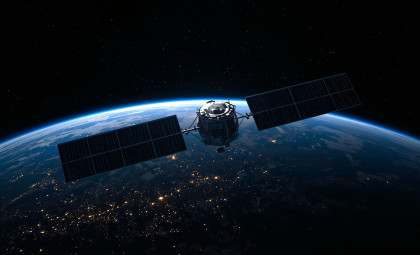
“From the available information, we see that these satellites have been optimized to minimize the impact as seen from the ground,” Hainaut said. “The reflective surfaces are tilted away from Earth and the satellite itself is very narrow, pointing to Earth with its small end.”
These mitigation methods show that minimizing disruption to astronomy is feasible, though deliberately reflective satellites introduce a far more complicated problem.
Experts Stress the Issue Reaches Beyond Astronomy
This conversation is no longer confined to astronomers alone. Many experts believe the preservation of the night sky is becoming a broader public concern. Robert Massey, Deputy Executive Director of the Royal Astronomical Society, states the research echoes worries that have been mounting for some time.
Robert Massey, the Deputy Executive Director of the Royal Astronomical Society, said Hainaut’s findings were “not hugely surprising.”
Massey points out that the consequences extend beyond scientific circles.
“For astronomy, this would obviously be catastrophic,” Massey told Space.com. “It’s very difficult to imagine how you could mitigate that on this scale. But I am also concerned about the public impact. The public has not signed up for having an entirely transformed sky.”
He also draws attention to regulatory challenges connected to commercial satellite launches.
“If it’s agreed by the FCC, this will be deeply regrettable,” Massey said. “This will say that we are in a world where large corporations can determine the view of the sky above our heads, just as they can transform the environment on Earth. But the transformation of the environment on Earth is subject to pretty tight regulations.”
The issue now moves into the arena of international policy, where regulations drafted decades ago did not foresee the scale of today's private space enterprises.
“We now have to wait for the FCC to decide, because ultimately, the Outer Space Treaty was written at a time before we envisioned access to space by private entities.”
As satellite networks expand and new designs are introduced, astronomers stress that decisions made now will influence the trajectory of space science for generations. The challenge has evolved from simply deploying more satellites to ensuring humanity can explore space without compromising the dark night sky that has long served as a window into the cosmos.
- Categories:
- Space





0 comments
Sign in to Comment