
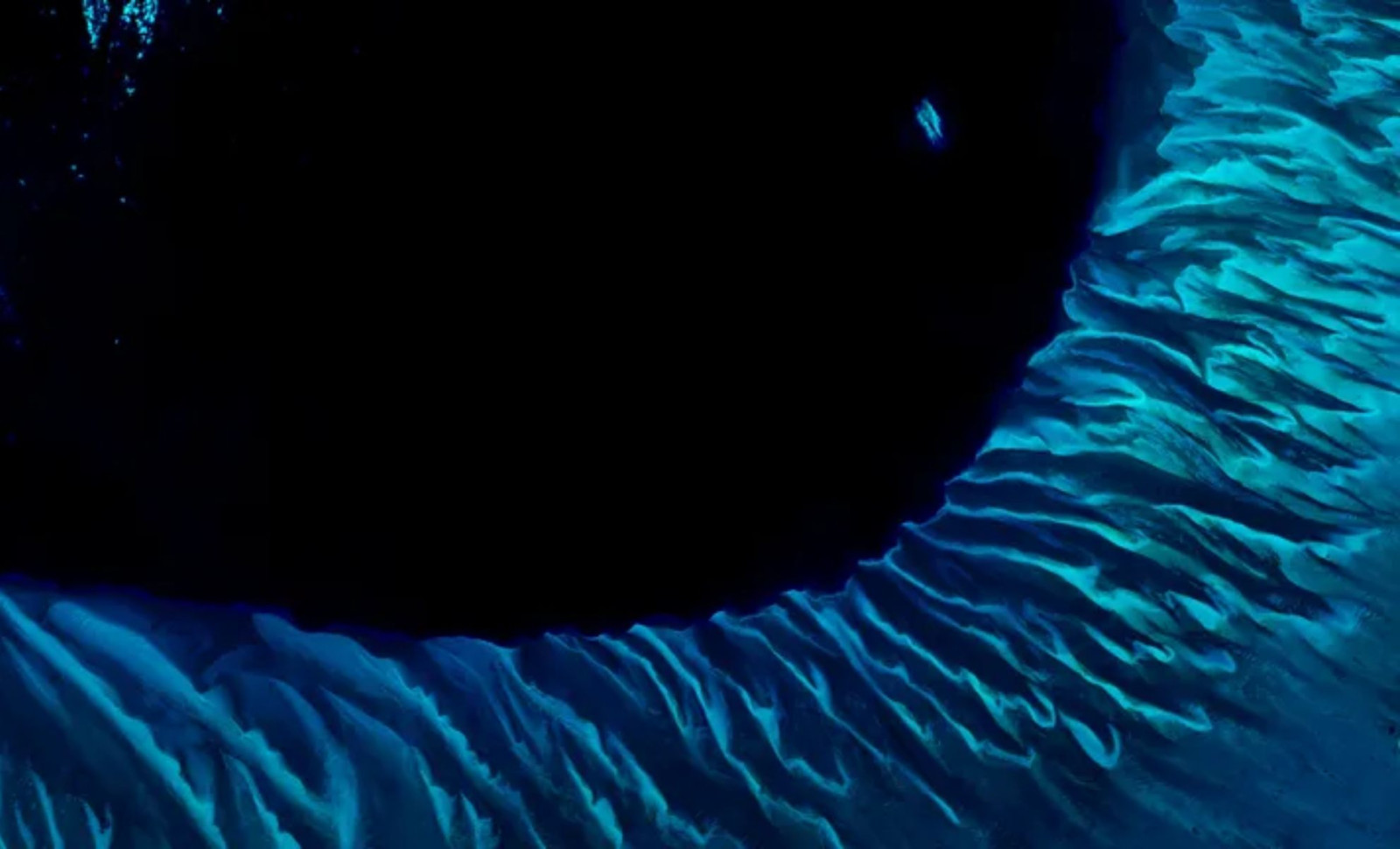
A widely recognized satellite image from NASA Earth Observatory continues to captivate viewers nearly 20 years after its initial release. Beyond its stunning visuals, the photograph of the Great Bahama Bank serves as a significant record of a marine environment that has shown exceptional stability over time.
First featured as NASA Earth Observatory’s Image of the Day in 2002, this image returned to prominence after winning the Tournament Earth 2020, outshining many more recent satellite captures. Oceanographer Serge Andréfouet, who originally highlighted the image’s uniqueness, expressed no surprise at its enduring appeal.
The photo was taken during the Millennium Coral Reef Mapping Project, a NASA-backed initiative aimed at advancing global coral reef knowledge at a time when reef maps had scarcely changed since the 1800s.

Ancient Forces Shaping a Shallow Marine Landscape
The vibrant patterns seen across the Great Bahama Bank result from long-term geological processes and the constant flow of water over the seabed, rather than temporary natural events.
NASA Earth Observatory describes how this bank was exposed during previous ice ages and gradually submerged by rising sea levels. Currently, the platform lies under shallow waters reaching depths of just around two meters (seven feet) in places. The seafloor consists mainly of white carbonate sand and limestone, formed from coral skeletons. Similar deposits played a role in forming Florida's peninsula.
The visible curved formations are underwater sand ripples shaped by strong currents moving near the sea floor. Differences in sand and seagrass density, combined with changes in water depth, produce the distinct blue and green hues visible in the image.
The Satellite Image That Drew Global Fascination
This renowned photo was captured on January 17, 2001, by the Enhanced Thematic Mapper Plus (ETM+) sensor on board Landsat 7, utilizing spectral bands 1, 2, and 3.
NASA notes that the satellite’s blue band enhanced detection of shallow water features beyond what was possible with earlier satellites. This advanced capability was especially useful for examining coastal and reef areas. For Serge Andréfouet, the image stood out immediately.
“There are many nice seagrass and sand patterns worldwide, but none like this anywhere on Earth,” he said. “I am not surprised it is still a favorite, especially for people who see it for the first time.”
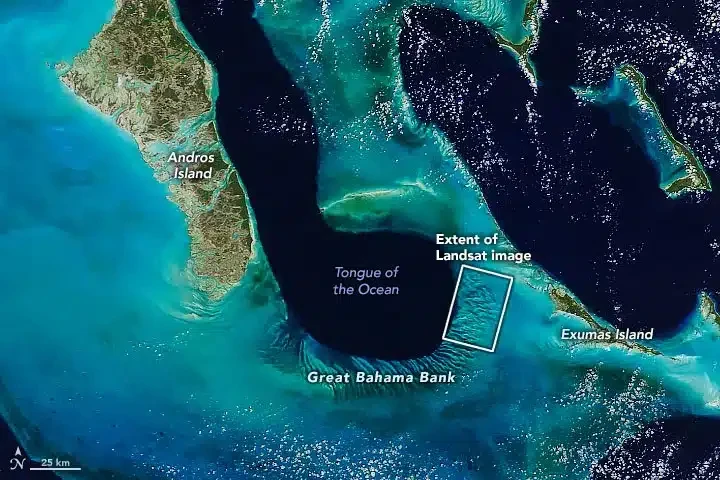
Over time, this picture has been widely shared across websites, publications, and even at social events. When Landsat 8 revisited the exact spot on February 15, 2020, the underwater patterns appeared largely unchanged.
A Pivotal Image in Coral Reef Studies
The shallow expanse of the Great Bahama Bank abruptly transitions to the Tongue of the Ocean, a deep basin plunging roughly 2,000 meters (6,500 feet). This area supports more than 160 species of fish and corals and lies adjacent to Andros Island, home to one of the planet’s largest fringing reefs.
A broader perspective was captured on April 4, 2020, by the Moderate Resolution Imaging Spectroradiometer (MODIS) aboard NASA’s Terra satellite, emphasizing the contrast between the bright shallow bank and the surrounding darker waters.
Originally part of the Millennium Coral Reef Mapping Project, this effort compiled more than 1,700 Landsat 7 images. NASA reports that Landsat 7 was the first to effectively capture both coastal and open ocean features. Today, reef maps created from satellite data are combined with sea surface temperature measurements to identify vulnerable coral bleaching zones and monitor reef health on a global scale.
- Categories:
- Science








0 comments
Sign in to Comment