
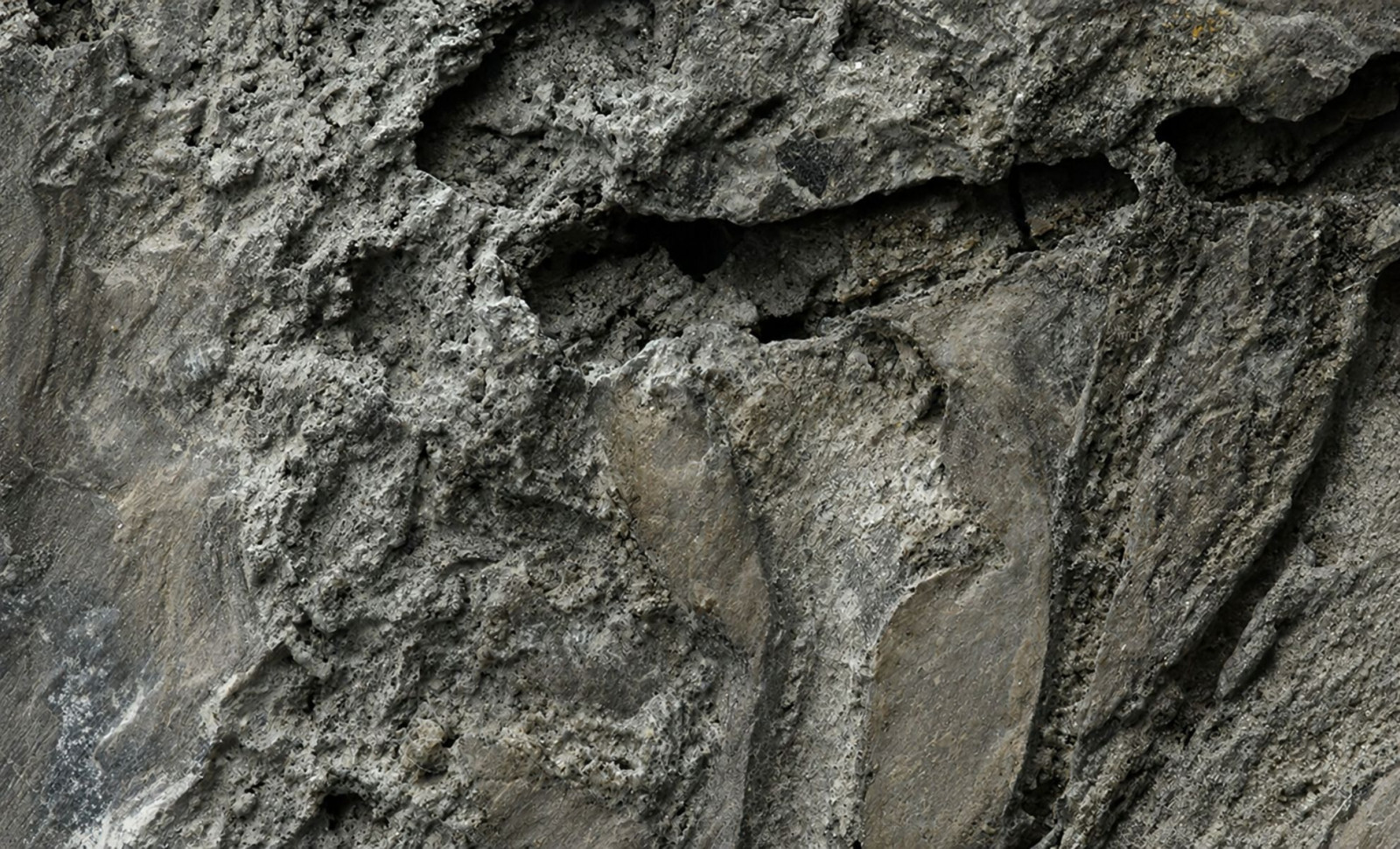
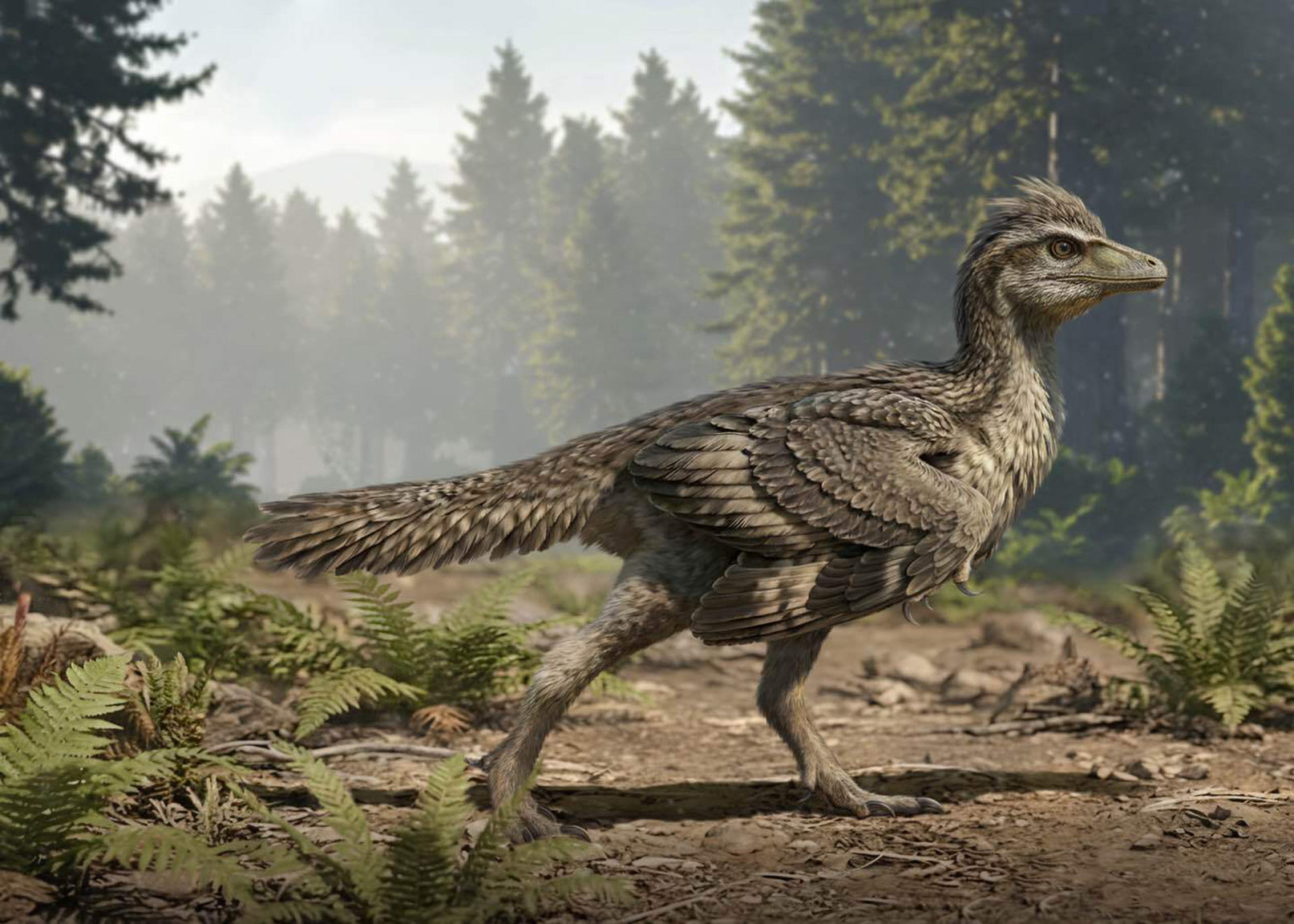
A newly identified avian species from the Late Jurassic era offers critical insight into a key phase of bird evolutionary history. Named Zhengheornis buyu, this small bird sported a reduced tail length yet lacked the fused tailbone characteristic of modern birds. The fossil was discovered in southeastern China and detailed in Science Advances.
The study indicates that early birds first developed shorter tails followed by the emergence of the pygostyle—a fused structure supporting tail feathers in today’s birds. While contemporary birds uniquely feature this short tail ending in a pygostyle that anchors tail feathers for flight, their dinosaur ancestors possessed long, vertebrae-rich tails. How this transformation occurred has been elusive due to the rarity of fossils capturing the intermediate stage.
Scientists have debated whether tail shortening and pygostyle formation were simultaneous or sequential events. The anatomical traits of Zhengheornis buyu provide compelling new evidence that these adaptations happened in distinct steps.

A Crucial Link Uncovered in China
The Zhengheornis buyu holotype was unearthed in 2024 from the Nanyuan Formation near Yangyuan village, in Fujian Province’s Zhenghe County. Published in Science Advances, the fossil dates back approximately 148 to 150 million years, placing it toward the closing phase of the Jurassic Period. This species represents the fourth bird identified from the Zhenghe Fauna, a site also home to Fujianvenator, Baminornis, and an incomplete bird specimen known only by a preserved wishbone.
Dr. Zhonghe Zhou, paleontologist at the Institute of Vertebrate Paleontology and Paleoanthropology at the Chinese Academy of Sciences, explained that birds with long and short tails appear almost simultaneously in the fossil record, with no clear transitional forms documented.
This has led many evolutionary scientists to speculate that a bird with a short but unfused bony tail may have never existed—until now.
A Short Tail Yet Without the Pygostyle
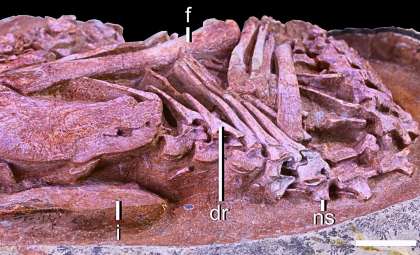
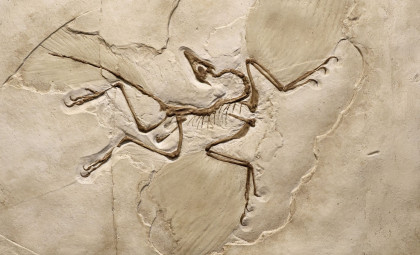
Zhengheornis buyu is remarkable for its unique tail structure. It possessed only 15 tail vertebrae, significantly less than the 23 to 24 seen in Archaeopteryx and far fewer than the 30-plus vertebrae typical of several other early avian relatives. Despite the reduced tail length, its vertebrae were not fused into a pygostyle. Intriguingly, the last two tail vertebrae were box-shaped—a trait previously observed only in the distant dinosaur relative Caudipteryx.
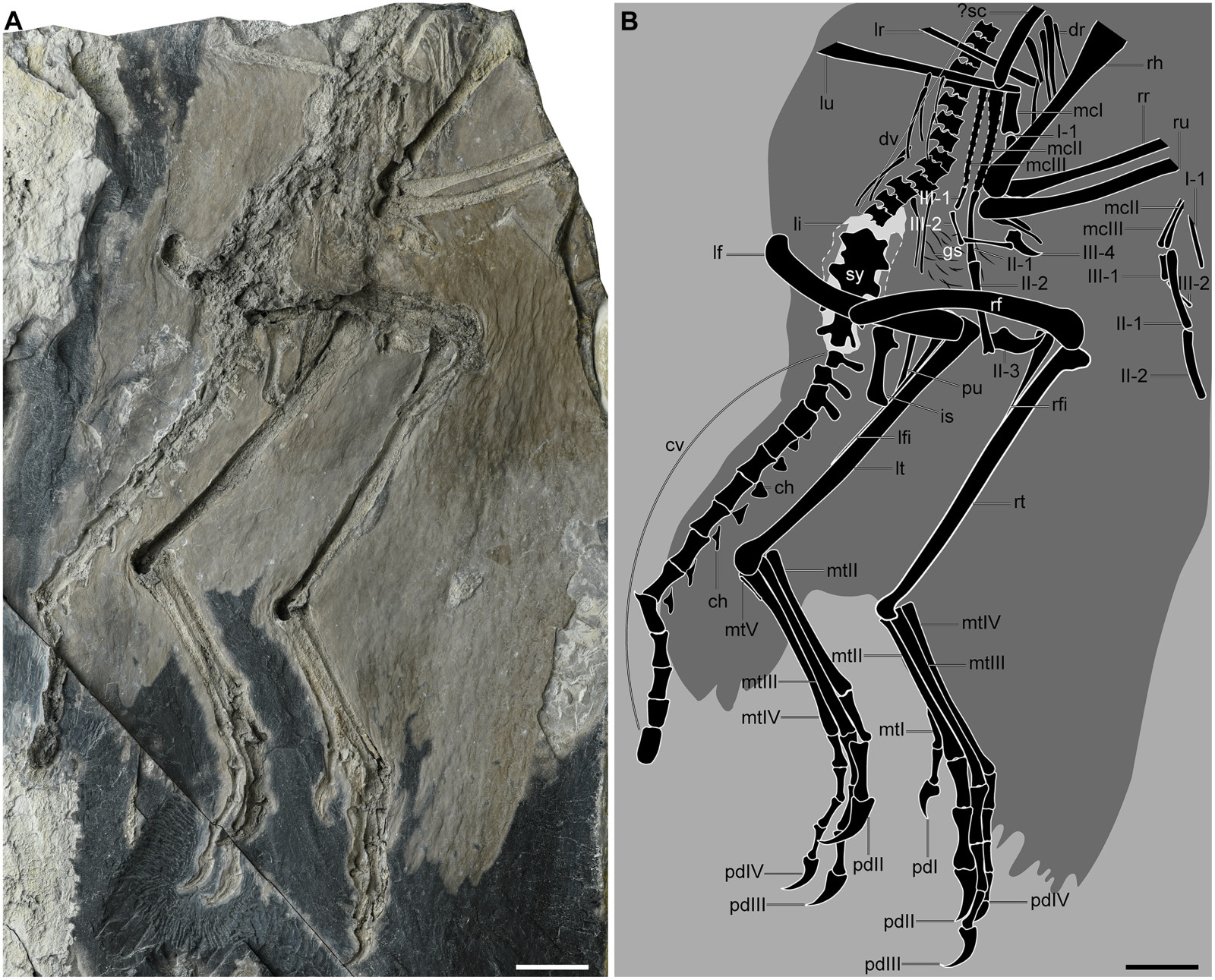
Dr. Min Wang, a co-author from the Chinese Academy of Sciences, emphasized that this unusual blend of features indicates tail shortening and vertebral reduction happened before the evolution of the fused pygostyle in early birds.
“This anatomical mosaic proves a stepwise evolutionary path: the vertebral reduction and shortening preceded pygostyle fusion in early bird evolution,” the authors described.
One of the Smallest Known Early Birds
The research team estimated the bird’s weight based on the size and girth of its femur, concluding it weighed between 74 and 163 grams. This places Zhengheornis buyu smaller than the specimen long considered the tiniest Archaeopteryx.
According to the researchers, this holotype is the smallest adult non-pygostylian theropod discovered so far. Yet its skeletal features do not definitively suggest whether it led a primarily arboreal or terrestrial lifestyle.
The study also reveals notable differences among the various bird species within the Zhenghe Fauna in terms of body size, skeletal structure, and ecological behavior—from the generalist Zhengheornis buyu to the cursorial Fujianvenator.
These findings also indicate that by the end of the Jurassic, early birds had already experienced significant diversification, helping to settle long-standing disagreements regarding the timing of avialan adaptive radiation.
- Categories:
- Science








0 comments
Sign in to Comment