
Archaeologists have identified a row of wooden piles beneath the Aare River, confirming the presence of a Roman bridge that had eluded historians for decades. Dating back to the 4th century C.E., this structure offers the first tangible evidence of a river crossing that once connected a key Roman route in the area now known as Solothurn, Switzerland.
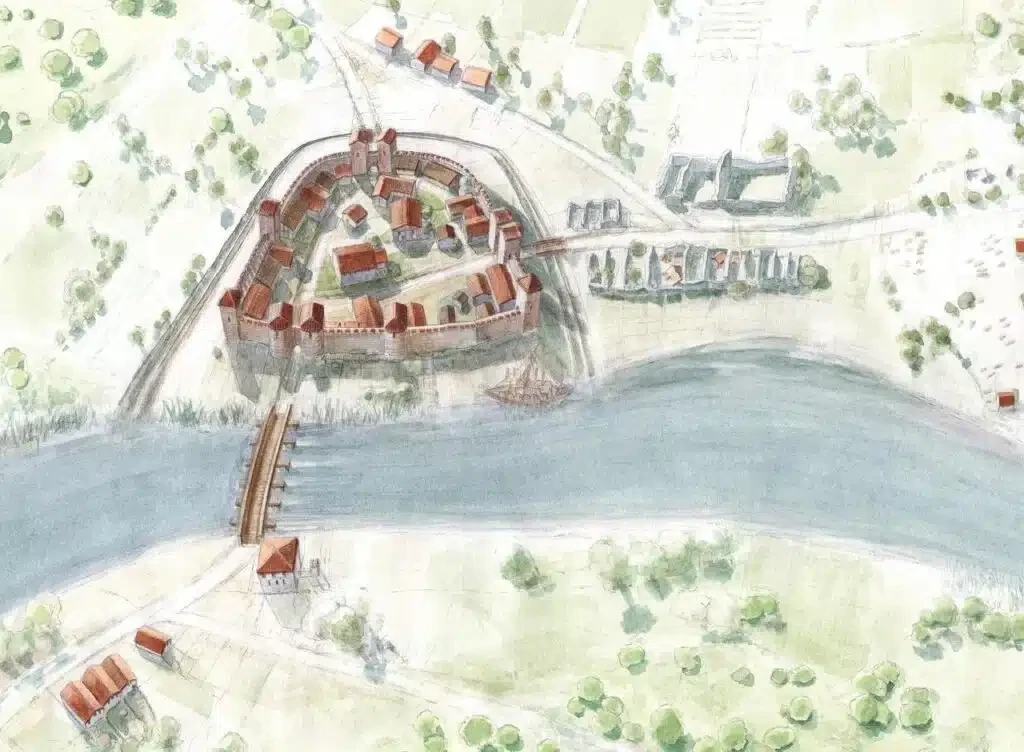
Scholars long hypothesized that a Roman road linking northern Italy with the Rhine frontier crossed the Aare at ancient Salodurum (modern Solothurn). While remnants of the roadway were found on both riverbanks, the bridge itself had never been located—until now.
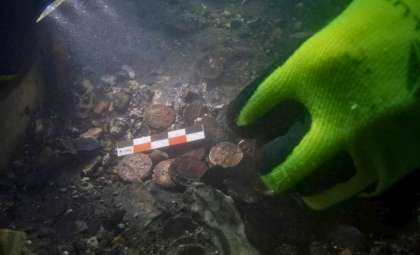
This breakthrough was achieved during underwater excavations conducted as part of renovations on the adjacent Wengi Bridge. Divers from the Swiss Office for Monument Conservation and Archaeology uncovered wooden piles submerged beneath the riverbed, conclusively pinpointing the Roman bridge’s location.

Wooden Foundations of the Bridge Revealed by Divers
The findings lie just upstream of the existing Wengi Bridge, approximately 32 feet from the southern shore of the Aare. Explorations of the river bottom revealed a series of wooden stakes preserved under sedimentary layers.
Each pile is about six feet in length and lines up parallel to the river’s flow. Experts believe these timbers once upheld a bridge used by travelers crossing the Aare nearly 1,700 years ago.
Samples taken from the wood were dated to the 4th century C.E., placing the construction squarely within the Late Roman era, according to the Swiss Office for Monument Conservation and Archaeology. This discovery delivers the first physical proof of the ancient Roman crossing at Salodurum after years of conjecture.
Clues Pointing to the Bridge’s Existence Were Abundant
Though the bridge had long remained undiscovered, multiple hints supported its existence. Roman roads found on either side of the Aare suggested travelers needed a crossing to continue, while the geographical context reinforced this theory. The river narrows sharply here, forming a natural span ideal for bridging.
The settlement’s name itself provided further indication: Salodurum derives from a Celtic term meaning “narrow river,” emphasizing its historical role as a strategic crossing during the Roman period.
At the time, local communities in the region evolved from open settlements into fortified hubs called castra. These were connected by Roman roads facilitating travel from northern Italy to the Rhine frontier via routes traversing the Great St. Bernard Pass, the Swiss Plateau, and Jura region.
Ancient Timbers Survived Despite Modern River Works
Remarkably, the wooden piles survived potential damage during river engineering performed in 1969 that deepened the Aare near Solothurn. Positioned alongside the present-day Wengi Bridge, these remnants were shielded from significant construction disturbances.
For now, the wooden supports will remain submerged. Further underwater investigations are planned, as researchers suspect the discovered piles may represent only a fraction of the original bridge’s foundations. Additional finds could shed light on how this ancient structure integrated with Salodurum’s Roman road system.
- Categories:
- News





0 comments
Sign in to Comment