
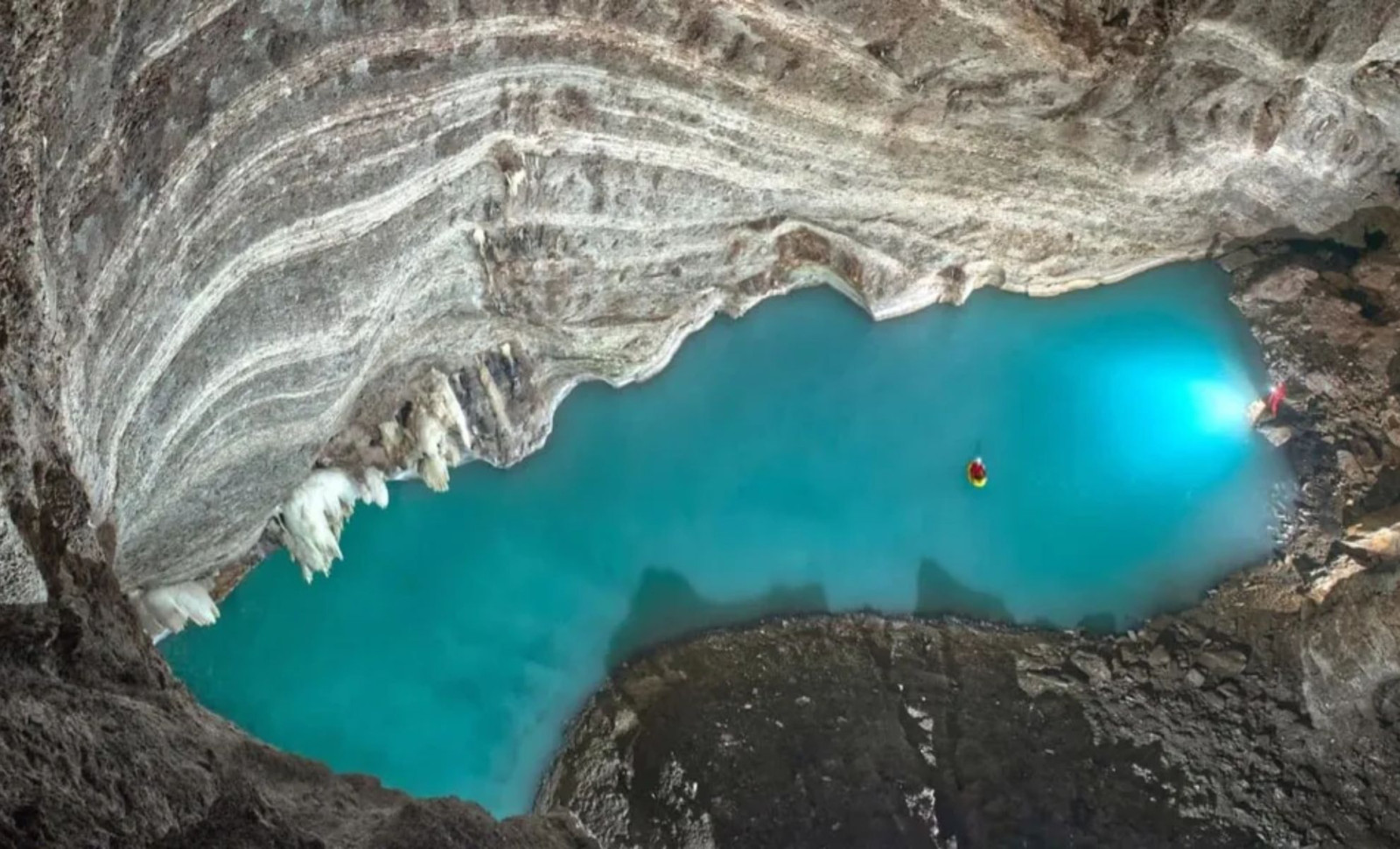
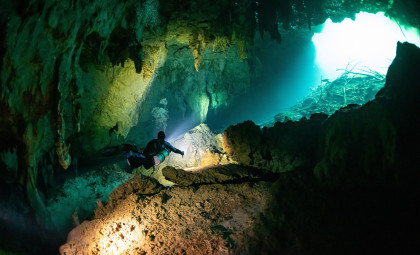
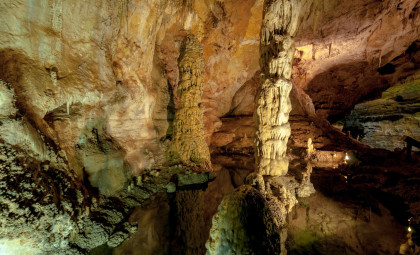
Scientists have officially identified a massive underground thermal lake buried far below southern Albania as the largest of its kind globally. Situated within Atmos Cave near the border with Greece, this thermal lake is filled with warm, mineral-laden water inside a cave system sculpted by geothermal processes.
The initial entrance to the extensive cave network was made in 2021 during investigations of thermal springs in Albania’s Vromoner area. The Neuron Foundation highlights that multiple expeditions along with comprehensive surveys were essential to accurately chart the site and verify the lake’s unprecedented size.
Steam Clouds Uncover an Invisible Phenomenon
The breakthrough discovery originated from a surprising sign. While examining the local limestone formations, Czech scientists observed a plume of steam emerging from the ground, indicating the presence of heated water underground.

This clue led the team to explore a pit exceeding 328 feet in depth. At the bottom, a strong thermal water source was found supplying a giant subterranean lake. Expedition leader Marek Audy shared the experience in a statement from the Neuron Foundation:
“At its bottom, we discovered a strong thermal inflow and a vast lake,” adding that: “In order for Czech science to present this phenomenal discovery, it was necessary to conduct scientific research and precise measurements.”
The Neuron Foundation estimates the lake lies about 330 feet underground, while scientific documents record the depth near 420 feet inside Atmos Cave. Despite these slight differences, it is clear that exploring the lake involved traversing a deep and technically demanding cave environment.
Accessing the lake necessitated specialized rope descents, atmospheric gas monitoring, and advanced mapping technology. The lake was subsequently named Lake Neuron in honor of the foundation that supported critical expedition equipment.
Cutting-Edge Technology Confirms Its Immense Dimensions
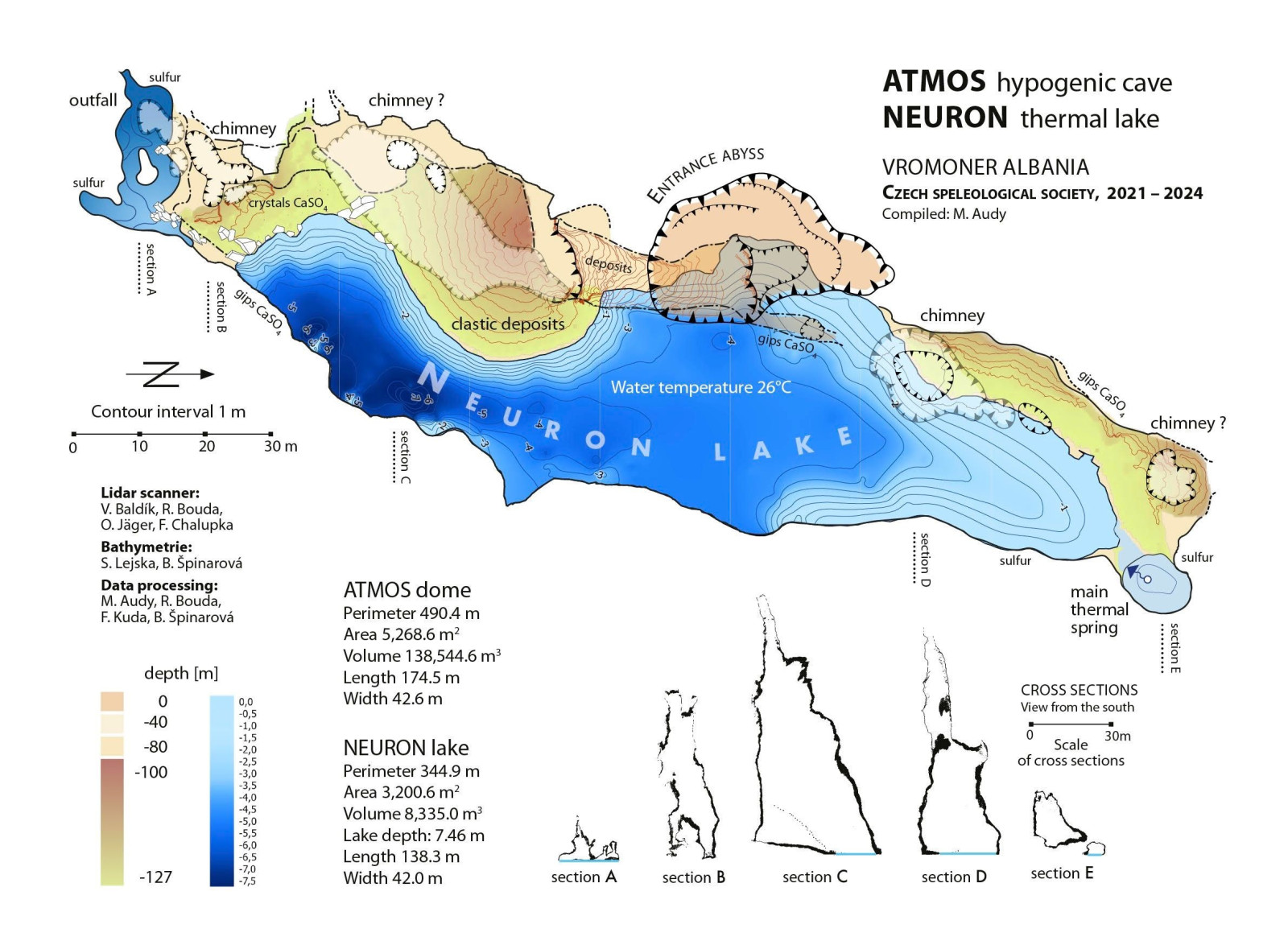
Finding the lake was just the beginning. Researchers returned with a LiDAR mobile scanner and sonar gear to perform high-definition measurements of Atmos Cave along with nearby Sulfur, Breška, and Kobyla cave systems.
According to the published report, Lake Neuron extends about 460 feet in length and 138 feet in width. The perimeter measures nearly 1,130 feet, with a surface covering close to 34,450 square feet. The lake reaches a maximum depth of about 25 feet and holds an estimated volume of roughly 294,300 cubic feet of warm mineral water. Its temperature remains steady around 79°F year-round.
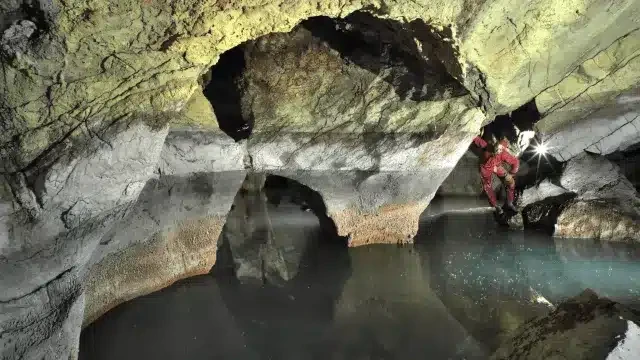
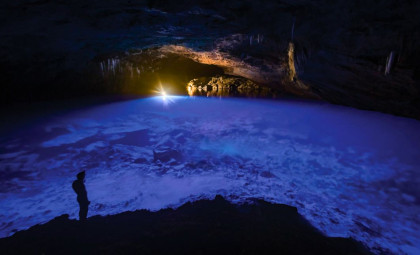
These discoveries establish Lake Neuron as the largest subterranean thermal water reservoir documented to date, with the caveat that many underground sites worldwide await full exploration.
An Exceptional Hypogene Cave System Under Ongoing Study
This underground waterbody attracts interest due to the distinctive formation of Atmos Cave itself. The report clarifies that the cave formed through hypogene processes, where rising mineral-rich waters shape the cave rather than surface rivers carving through rock.
The presence of hydrogen sulfide in the thermal springs within the Vromoner Valley is notable. When this gas interacts with oxygen in groundwater and cave air, it can oxidize into sulfuric acid, which erodes limestone and transforms parts of it into gypsum. This chemical action slowly creates large subterranean chambers like the one that holds Lake Neuron.
Scientists also studied connections between the underground lake and the region’s groundwater. Tracer experiments indicate water flows toward various springs in the valley, though the Old Spa Spring seems to originate differently. The total spring discharge from the area amounts to about 53 gallons per second.
Fieldwork continues with ongoing geological, hydrological, and biological investigations. According to available reports, efforts are underway with local officials to incorporate these unique hypogene caves into the protected boundaries of Vjosa National Park.
“It’s something that could have a huge impact on understanding underground ecosystems and geological processes,” said Audy. “We want to look at other parts of the cave, learn more about the geology and biology of this area.”
- Categories:
- Science

0 comments
Sign in to Comment