
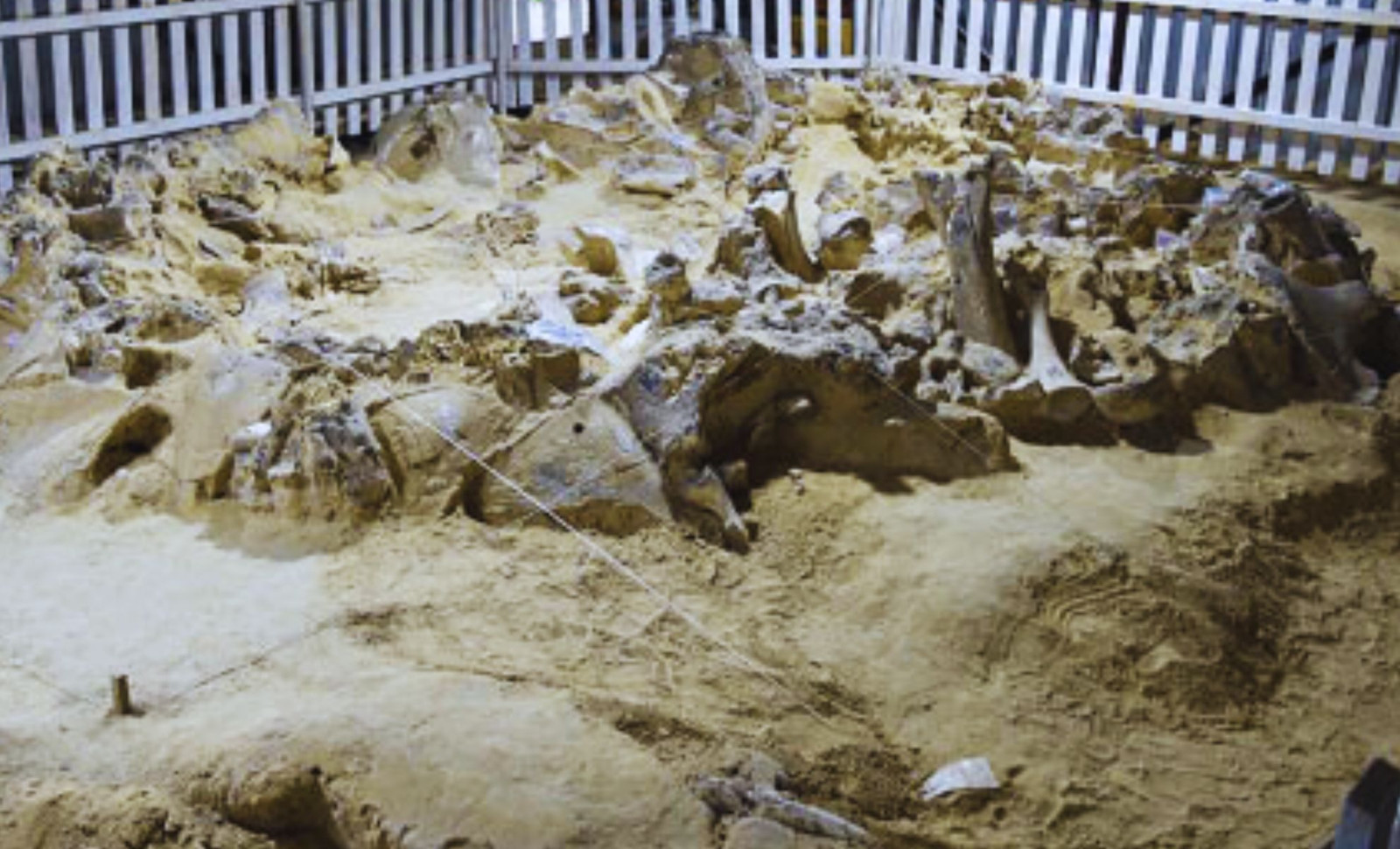
Recent research has refined the dating of one of the most iconic mammoth bone constructions worldwide by analyzing tiny mammal fossils. Findings reveal the Mezhyrich shelter in Ukraine was likely occupied for as long as 429 years, lending further support to the idea it served as a permanent home.
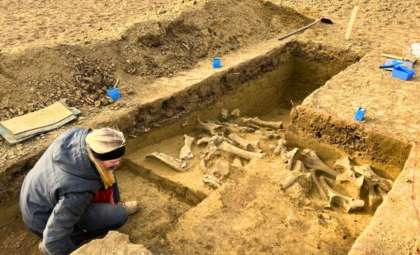
Located in Ukraine’s Cherkasy region, the Upper Paleolithic site of Mezhyrich contains four circular dwellings fashioned from numerous mammoth bones and tusks. These unique structures, spanning between 12 and 24 square meters, have intrigued archaeologists as some of the earliest built habitats linked to prehistoric hunter-gatherers.
Their exact function has been debated, with theories ranging from living quarters to food storage, burial grounds, ceremonial sites, or monuments. A new study published in Open Research Europe sheds new light, providing chronological data that supports the premise of at least one as a residential shelter.

A Singular Ice Age Habitat
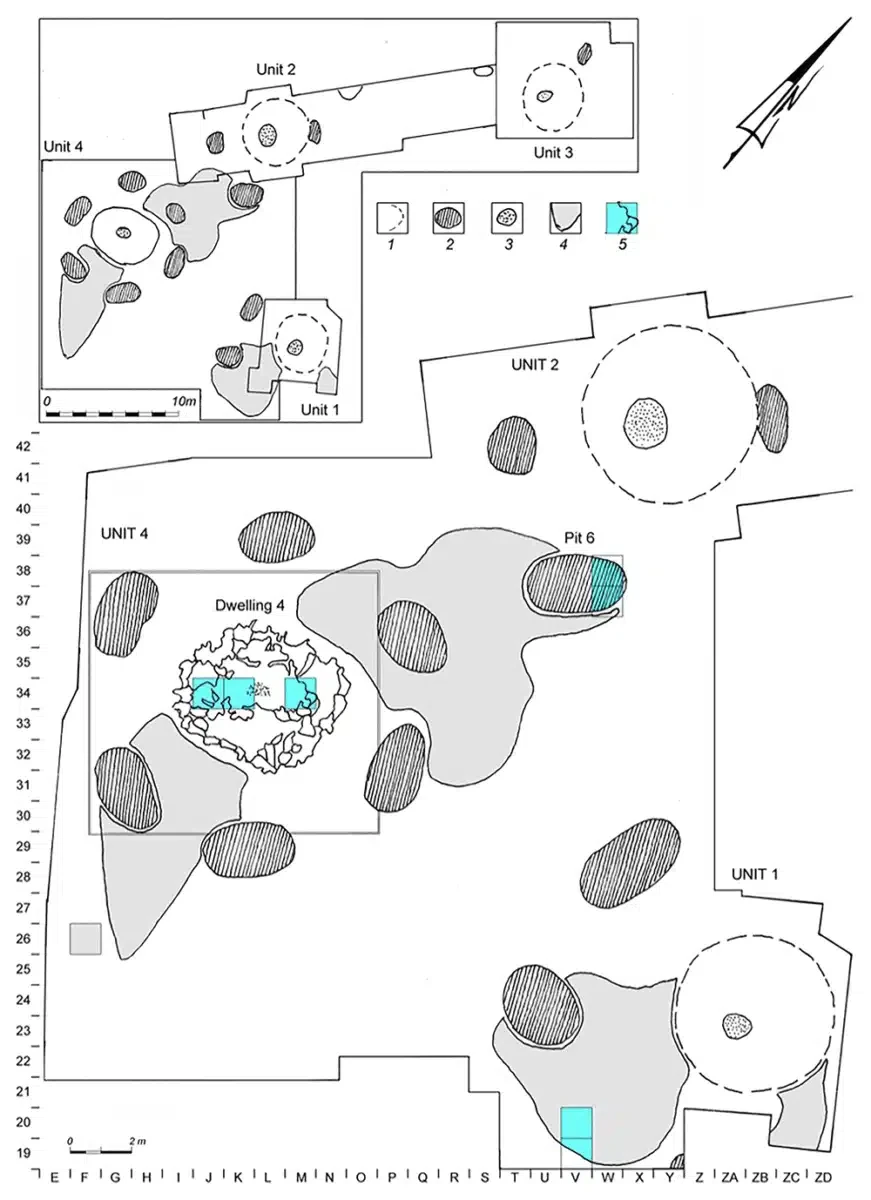
The investigation focused on MBS 4, one of the four mammoth bone enclosures at Mezhyrich. Researchers highlight it as the sole structure containing well-preserved artifacts embedded within datable layers.
The area around MBS 4 yielded stone hunting tools, ivory and bone adornments, and various signs of prolonged occupation. These included processed animal remains, workshop zones rich in cultural debris, and distinctive activity sectors, all arranged around the mammoth bone framework. As described by the authors:
the site featured “delimited activity areas with butchered animal remains and workshops with dense cultural layers, each delimited into economical settlement units with the mammoth bone structure as the focal point.”
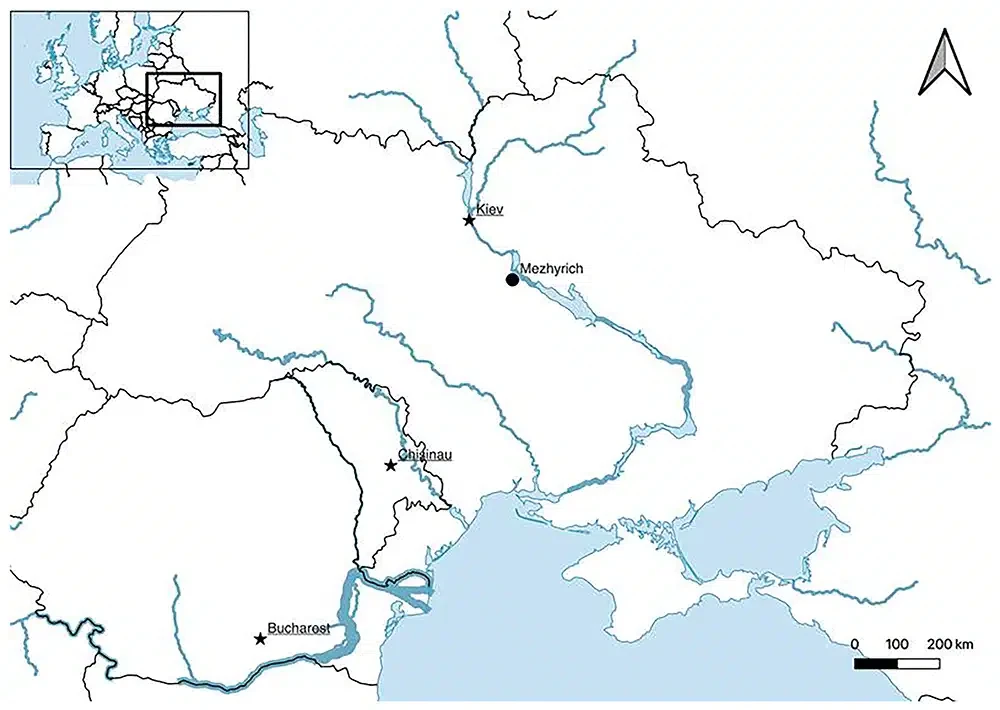
Under the guidance of archaeologist Wei Chu from Universiteit Leiden, the team emphasizes the significance of open-air Paleolithic sites throughout East-Central Europe. These sites preserve tools, faunal remains, and environmental data crucial for reconstructing human activities during the Late Pleniglacial, a time of major climatic shifts.
Dating Using Small Mammal Fossils
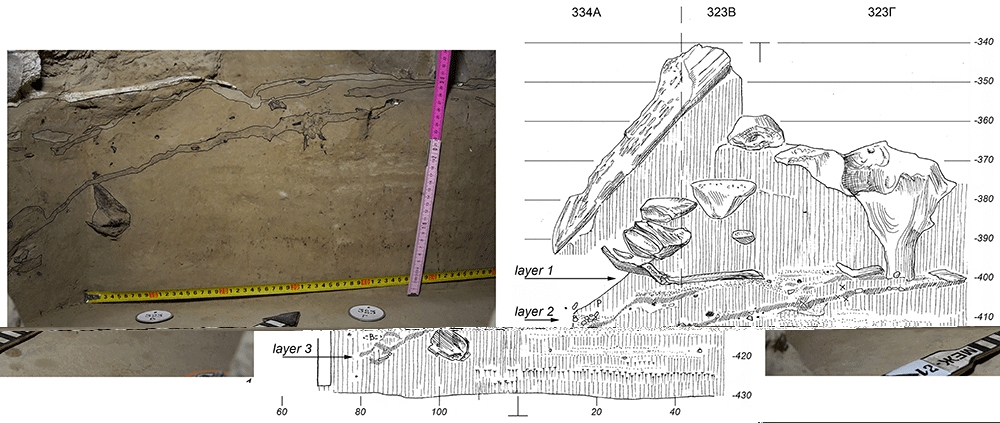
Rather than dating the mammoth bones themselves, researchers analyzed small mammal remains found in the archaeological deposits linked to MBS 4. This method allowed for a more accurate timeline estimation of the structure’s use.
The findings date MBS 4 to about 18,248 to 17,764 years ago, with indications the site was utilized for up to 429 years. This helps outline the frequency and duration of human visits.
The study labels MBS 4 as dating to “the harshest phase of the last Ice Age.” It also challenges previous assumptions about settlement patterns:
“The occupation span was short; possibly a single or few visits over centuries.This suggests that these bone-built shelters were practical solutions for survival rather than permanent settlements.”
Strengthening the Home Hypothesis
This refined timeline bolsters interpretations that MBS 4 operated primarily as housing, rather than simply being a bone accumulation linked to rituals, food storage, or burials.
The researchers conclude that the shelter was regularly maintained and repeatedly inhabited over hundreds of years rather than representing a momentary occupation. They describe Mezhyrich as “a stable, long-term settlement,” although likely visited intermittently over centuries. The mammoth bone dwellings offered essential protection during the severe Ice Age environment.
“They show how communities thrived in extreme environments, turning the remnants of giant animals into protective architecture. As dating methods become more precise, sites like Mezhyrich continue to challenge our assumptions about prehistoric life.”
- Categories:
- Science





0 comments
Sign in to Comment