

The global focus on low-glycemic sweeteners is intensifying amid increasing cases of diabetes and obesity, which are reshaping health strategies worldwide. Once dominated by synthetic sugar substitutes, this field faces skepticism due to concerns about their long-term metabolic effects and regulatory inconsistencies. As confidence wanes in artificial sweeteners, interest pivots toward naturally derived compounds that offer beneficial biochemical properties.
Most natural sugar alternatives fall short of sucrose in taste and functional qualities. Those that approach sucrose’s profile are often costly or unstable during food manufacturing. Consequently, large-scale commercial use remains uncommon. This disconnect between nutritional research and industrial application continues to challenge reformulation initiatives, despite consumer demand and regulatory encouragement.

The core challenge lies in satisfying three critical factors: the sweetener must be suitably sweet, safe, and economically viable at scale. Achieving any two is realistic; securing all three simultaneously has been unattainable. Naturally occurring sugars with low metabolic impact exist mainly in scarce quantities, making extraction and cost a major hurdle until recent advances.

Today, a rarely utilized sugar called tagatose is emerging due to a bioengineering breakthrough announced in 2025 that has significantly improved its production efficiency. This advancement could elevate tagatose from obscurity to a leading role in the future landscape of dietary sweeteners.
Regulatory Shifts Redefining Sugar Classification
In December 2023, the FDA issued a supplemental ruling mandating that tagatose be listed as an added sugar on nutrition labels, but allowing a reduced caloric value of 1.5 kcal per gram instead of the standard 4 kcal. This interim regulation acknowledges that sugars with distinct metabolic pathways like tagatose contribute less energy than conventional carbohydrates and justifies different labeling standards pending further guidance.
A 2018 review determined that only about 20% of ingested tagatose is absorbed in the small intestine, with the remainder fermented in the colon, evoking minimal increases in blood glucose. Multiple clinical trials from 2018 to 2023 with diabetic and prediabetic patients showed significant reductions in HbA1c and fasting glucose levels. Dosing between 7.5 and 15 grams thrice daily yielded statistically meaningful glycemic improvements over time.
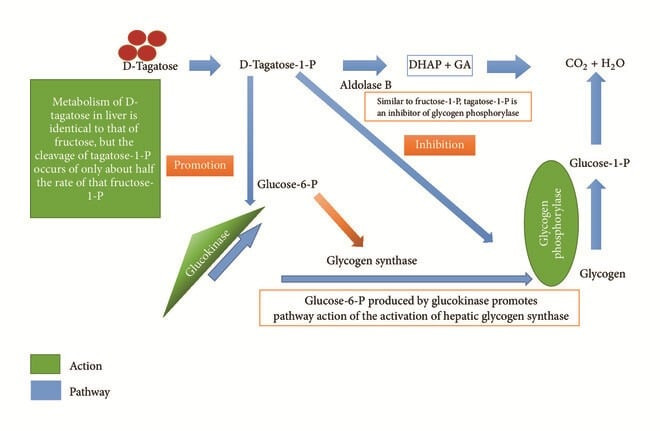
Additional health benefits have been reported, including higher HDL cholesterol and lowered VLDL and LDL levels. These positive changes are linked to processes such as the inhibition of digestive enzymes, enhanced liver glycogen storage, and stimulation of glucagon-like peptide 1 (GLP-1). Coverage by ScienceAlert and clinical analyses highlight tagatose’s promising role in managing blood sugar and appetite.
From Experimental Innovation to Manufacturing Feasibility
Despite evidence supporting its benefits, tagatose production at scale has confronted persistent obstacles. Naturally found in trace amounts in fruit and dairy, extraction methods were inefficient. Chemical synthesis processes have demanded lengthy multi-step reactions with low yields. Previous commercial attempts by companies like Arla Foods and SweetGredients failed due to high costs and unstable supply, as documented in tagatose’s production history.
Researchers at Tufts University published a novel technique in Cell Reports Physical Science, where they bioengineered Escherichia coli bacteria to convert glucose into tagatose through a two-step enzymatic process. The first enzyme, galactose-1-phosphate-selective phosphatase (Gal1P), sourced from slime mold, transforms glucose into galactose, which is subsequently converted into tagatose by a bacterial enzyme. This pathway is essentially the reverse of the conventional galactose degradation process.
Lead bioengineer Nik Nair commented, “Our team engineered E. coli to function as miniature factories producing tagatose.” This innovative approach achieved conversion rates of up to 95%, a significant improvement over earlier yields ranging from 40% to 77%.
Still, scaling up the process remains a key challenge. While laboratory tests show promising efficiency, industrial-scale consistency and cost competitiveness await validation. Investments in bioreactor technology, feedstock optimization, and refinement methods will be crucial before mass-market adoption. Presently, no major multinational food company has publicly committed to large-scale tagatose product launches.
Emerging Demand Amid Unanswered Health and Market Questions
Monitoring tagatose’s clinical tolerance continues. At consumption levels above 30 grams, some users experience mild gastrointestinal symptoms like bloating and diarrhea, likely due to fermentation in the gut. These side effects tend to be temporary and dose-related but highlight the importance of consumer guidance and labeling. Both the FDA and the World Health Organization currently recognize tagatose as safe within approved consumption limits.
The future regulatory landscape is still evolving. The FDA acknowledges the scarcity of comprehensive data on novel sugars and has postponed establishing definitive labeling policies for ingredients with unique metabolic characteristics. Current policy for tagatose remains provisional and contingent on further scientific and consumer research.
Key uncertainties persist, including potential glucose feedstock supply pressures if demand rises, long-term metabolic impacts on healthy populations, and consumer acceptance changes as awareness of rare sugars increases. Ongoing studies are also exploring tagatose’s possible prebiotic roles, interactions with the gut microbiome, and applications in functional foods.
- Categories:
- Science













0 comments
Sign in to Comment