
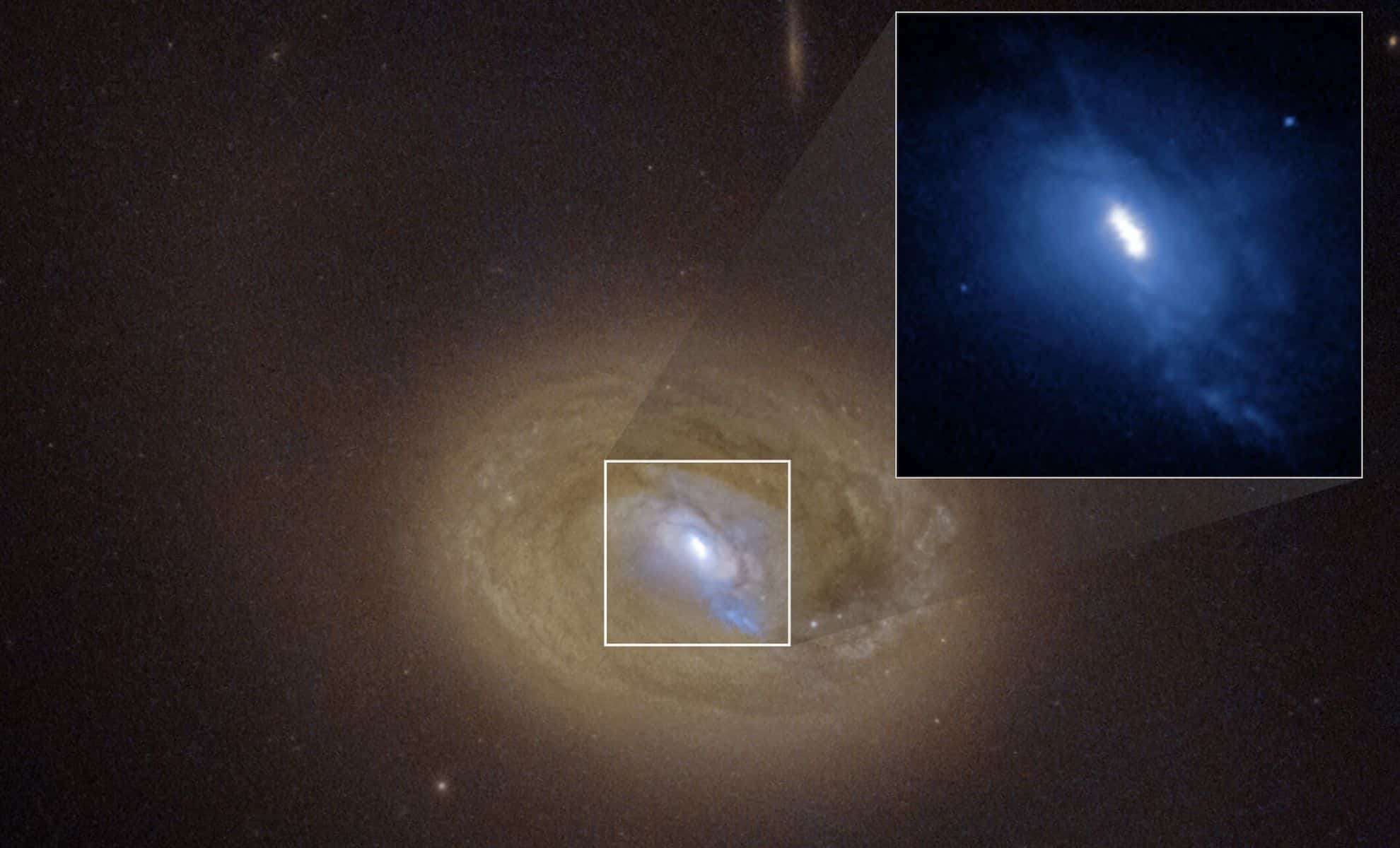
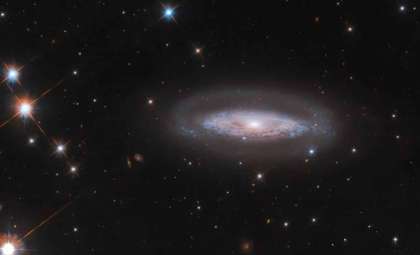
NASA’s Hubble Space Telescope along with the Chandra X-ray Observatory have unveiled the nearest known pair of supermassive black holes observed to date.
These two immense black holes lie within the galaxy MCG-03-34-64, separated by merely 300 light-years, and are destined to collide and merge eventually. This finding sheds light on the mechanics of galactic mergers and the behavior of active galactic nuclei (AGN), since both black holes are consuming surrounding gas and dust, causing them to emit strongly across diverse wavelengths.
Understanding the Importance of Supermassive Black Hole Duos
Supermassive black hole pairs were likely more abundant during the early epochs of the universe, especially amid frequent galaxy collisions. Yet, most previously identified pairs have been much farther away and more challenging to examine thoroughly. This pair, at a distance of about 800 million light-years in MCG-03-34-64, is the closest known system allowing detailed multi-wavelength studies, including optical, X-ray, and radio observations.

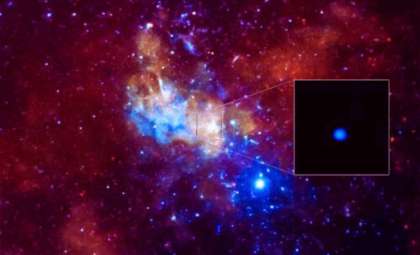
Anna Trindade Falcão, lead researcher from the Center for Astrophysics | Harvard & Smithsonian, described the discovery as serendipitous. “Our initial observations weren’t aimed at finding a tightly bound black hole pair,” she stated. “Observing the galaxy with Hubble revealed three luminous spots suggesting unexpected activity at the center. Subsequent analysis with Chandra detected two discrete X-ray sources, confirming the presence of two supermassive black holes in close quarters.”
At just 300 light-years apart, this is the tightest confirmed supermassive black hole binary. Most known AGN binaries exist at greater separations, making this pair a rare resource for investigating gravitational influences and the final stages leading to black hole mergers. The inflow of gas fueling their AGN behavior offers astronomers a chance to study these phenomena near to us.
Insights into Galactic Collision Mechanics and Evolution
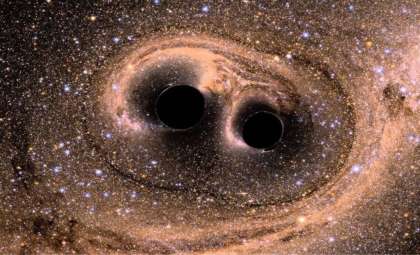
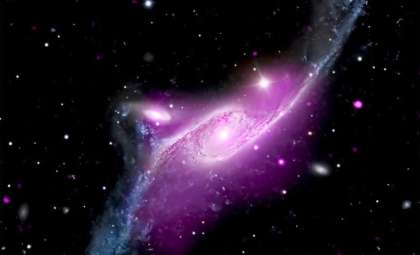
This black hole pair sits in the cores of merging galaxies that have drawn these gravitational behemoths ever closer. Eventually, their orbital dance will culminate in a merger event blasting intense energy into space. Such mergers release powerful gravitational waves, fluctuations in spacetime famously predicted by Albert Einstein and directly observed by facilities like LIGO.
Nevertheless, the gravitational waves produced by the merging supermassive black holes have frequencies far below the sensitivity of LIGO. Upcoming missions such as LISA (Laser Interferometer Space Antenna), anticipated to launch in the mid-2030s, are specifically designed to detect these longer-wavelength waves. Featuring three spacecraft spread millions of miles apart, LISA will open a new window into supermassive black hole mergers.
Falcão highlights that while the final coalescence will span roughly 100 million years, ongoing observations today offer valuable insights. “The gravitational pull between these black holes is extraordinary,” she said. “As they continue spiraling inward, we expect to witness extraordinary phenomena, including possible future observation of their gravitational waves.”
Probing Active Galactic Nuclei Phenomena
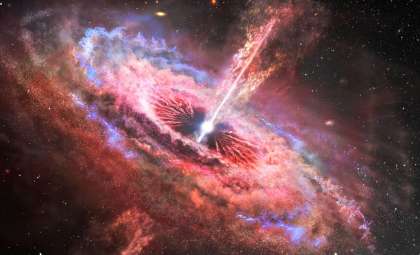
The supermassive black holes in MCG-03-34-64 stand out not only for their closeness but also because they function as highly active AGN. Their consumption of ambient gas and dust generates intense radiation making them visible across the electromagnetic spectrum. AGN are among the universe’s most energetic events and significantly influence their host galaxies’ evolution.
Hubble’s observations revealed three luminous spots near the galaxy’s core, with two identified as supermassive black holes through Chandra’s detection of intense X-ray emission. “The X-ray data showed two prominent high-energy sources,” Falcão explained. “This emission is a defining trait of AGN and confirmed the presence of these two closely spaced black holes.”
The AGN are powered by matter accreting onto the black holes, generating extreme heat and bright radiation. Their interactions also produce energetic jets that further influence surrounding gas, offering clues into the lifecycle of AGN binaries. Such pairs were likely more prevalent in earlier cosmic history, making this nearby example key to understanding AGN’s role in galaxy development.
The Enigma of the Third Bright Spot
While two luminous centers have been identified as black holes, the nature of the third bright spot detected by Hubble remains unclear. It might be a gas cloud energized by jets emitted by one of the black holes. These high-speed plasma jets can excite nearby gas, causing bright emissions across multiple wavelengths.
Astronomers continue to study this third source: “We have multiple theories regarding this bright spot’s origin, but additional data is needed to determine its exact nature,” Falcão remarked. “It could be a gas cloud or something else entirely; further observations will unravel this mystery.”
Implications for Cosmology and Future Gravitational Wave Observations
This supermassive black hole pair discovery marks an important advance in exploring galactic mergers and black hole interactions. It demonstrates the advantage of integrating data from telescopes like Hubble and Chandra to examine different wavelength regimes. Studying this system helps improve models of galaxy formation and assesses the influence of AGN on cosmic evolution.
Looking forward, missions such as LISA will be essential in detecting gravitational waves from merging supermassive black holes, opening fresh avenues in cosmology. These observations will deepen comprehension of the universe’s most extreme phenomena and answer critical questions about black holes and their cosmic significance.
Meanwhile, the discovery of this black hole pair in MCG-03-34-64 highlights the dynamic nature of the cosmos, where galaxies collide, black holes unite, and spacetime is curved by the universe’s most powerful forces.
- Categories:
- Astronomy ,
- News ,
- Space ,
- Nasa



0 comments
Sign in to Comment