
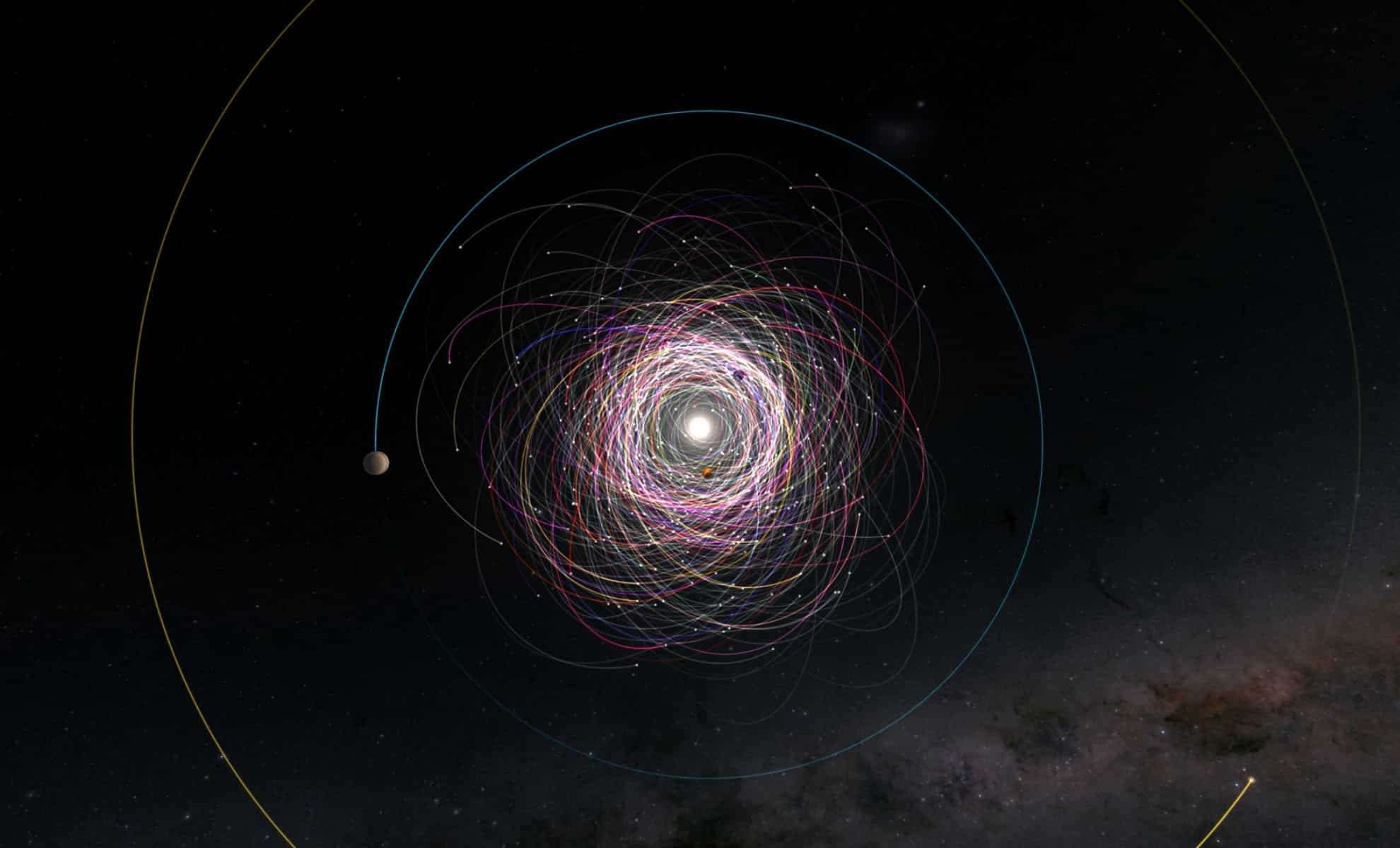
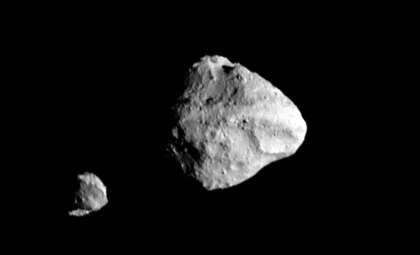
The European Space Agency’s Gaia mission, best known for mapping stars in our galaxy, has now uncovered hundreds of asteroid moons previously unknown to science.
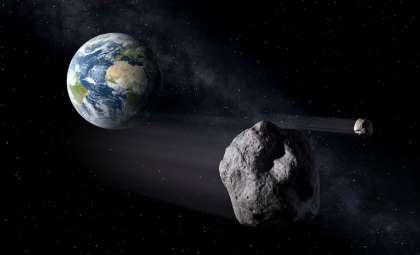
According to the third Gaia data release, the tally of known binary asteroids—objects with small moons orbiting them—has almost doubled. This revelation offers fresh insights into the intricate nature and evolution of our solar system, challenging earlier ideas about the frequency of such binary systems.
Hidden Moons Revealed Through Gaia’s Astrometric Precision
Originally designed to track star positions and movements, Gaia has demonstrated remarkable skill in detecting asteroids as well. By observing minute positional variations in over 150,000 asteroids, Gaia revealed the gravitational effects caused by orbiting mini moons. This effort has led to the discovery of 352 new binary asteroid systems, boosting the number from the previous 500 known instances.

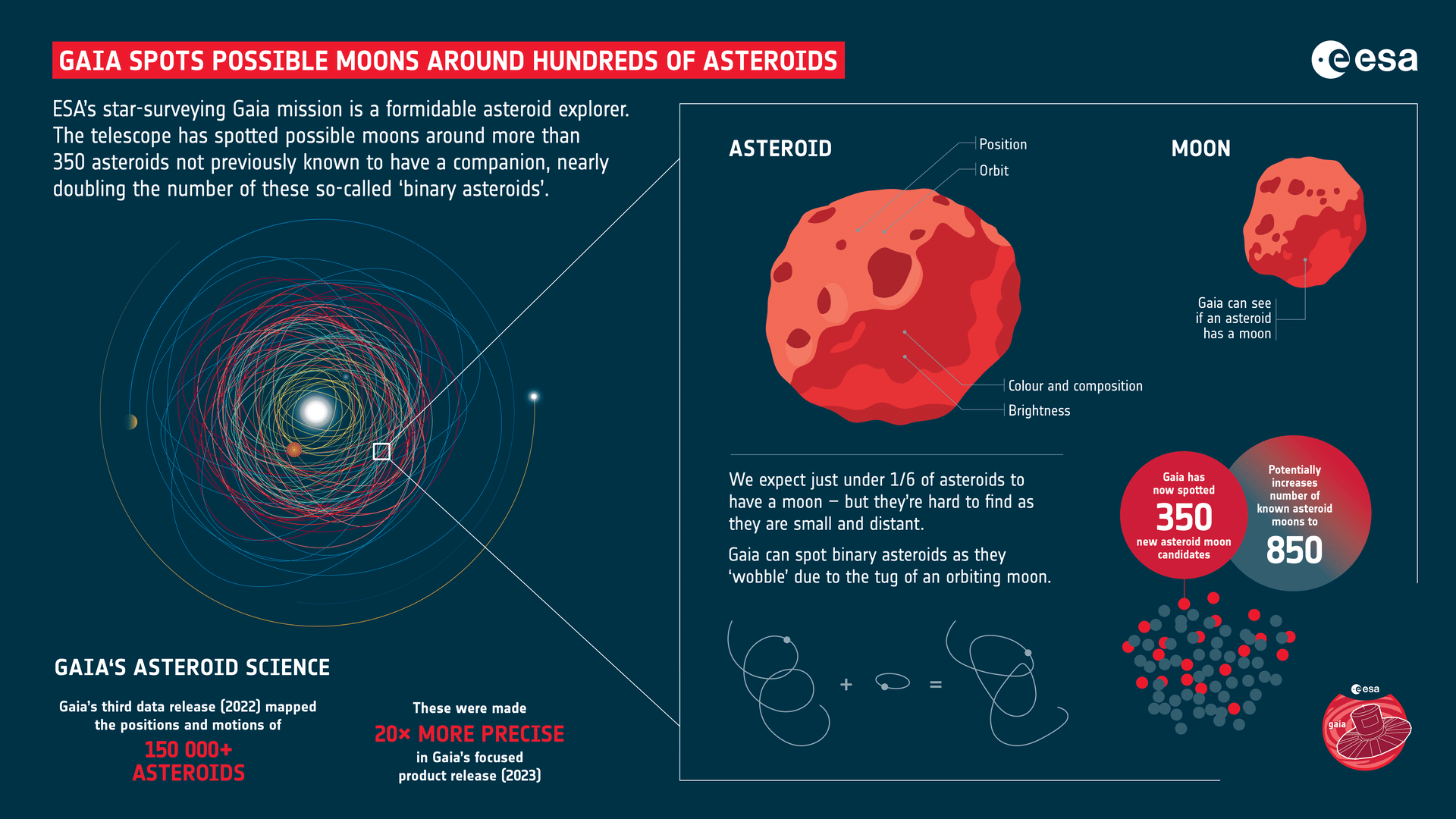
Spotting these asteroid moons is particularly difficult because their diminutive size and distance from Earth make them nearly invisible to most observation techniques. Luana Liberato of the Observatoire de la Côte d’Azur, France, who spearheaded this research, stated, “Binary asteroids are notoriously hard to detect due to their small sizes and vast distances from us.
Even though we estimate that just under one-sixth of all asteroids might have moons, until now only around 500 out of the million known asteroids were identified as binary systems.” This new findings hint that countless more asteroid moons exist, suggesting that binary configurations are more prevalent than once believed.
Insights into Solar System History from Asteroid Moon Discoveries
The uncovering of so many asteroid moons holds significant value for understanding planetary formation and solar system development. Asteroids are considered primordial remnants from the era when planets were formed, so studying their properties helps reveal early cosmic conditions. In particular, binary asteroids provide a rare chance to investigate the gravitational and physical interactions that lead to companion moon formation.
Gaia’s advanced astrometric techniques have transformed a sometimes overlooked field by enabling these detections. As further data is scrutinized, astronomers anticipate uncovering even more binary pairs, deepening knowledge about how these intriguing systems come into being and change over time. This breakthrough highlights how precision measurements in astronomy can spark significant scientific discoveries.
Recognizing these binary asteroid systems also carries practical benefits for upcoming space ventures such as asteroid mining and planetary defense. Given that moons can considerably influence an asteroid’s motions and responses, understanding these binary pairs is crucial for mission planning involving approaches or deflections.
Advancing Research on Asteroid Moon Origins
The new revelations from Gaia’s latest catalogue represent a major leap forward but also open fresh lines of inquiry. Scientists aim to delve deeper into how these binary systems formed. Leading theories propose moons may arise from a parent body breakup or result from gravitational capture during close asteroid encounters.
As Dr. Liberato highlighted, “This discovery suggests there are many more asteroid moons yet to be found.” Further examinations of Gaia’s data combined with other telescope observations will clarify formation mechanisms and interactions between these moons and their hosts. This research promises to expand understanding of the solar system’s history and the forces shaping it over billions of years.
The Gaia mission’s achievements also emphasize the necessity for ongoing support of space observation investments. Successor missions building on Gaia’s precise measurements could uncover even smaller celestial bodies and phenomena, fueling more breakthroughs that reshape our cosmic perspective.
- Categories:
- Astronomy ,
- News ,
- Space




0 comments
Sign in to Comment