
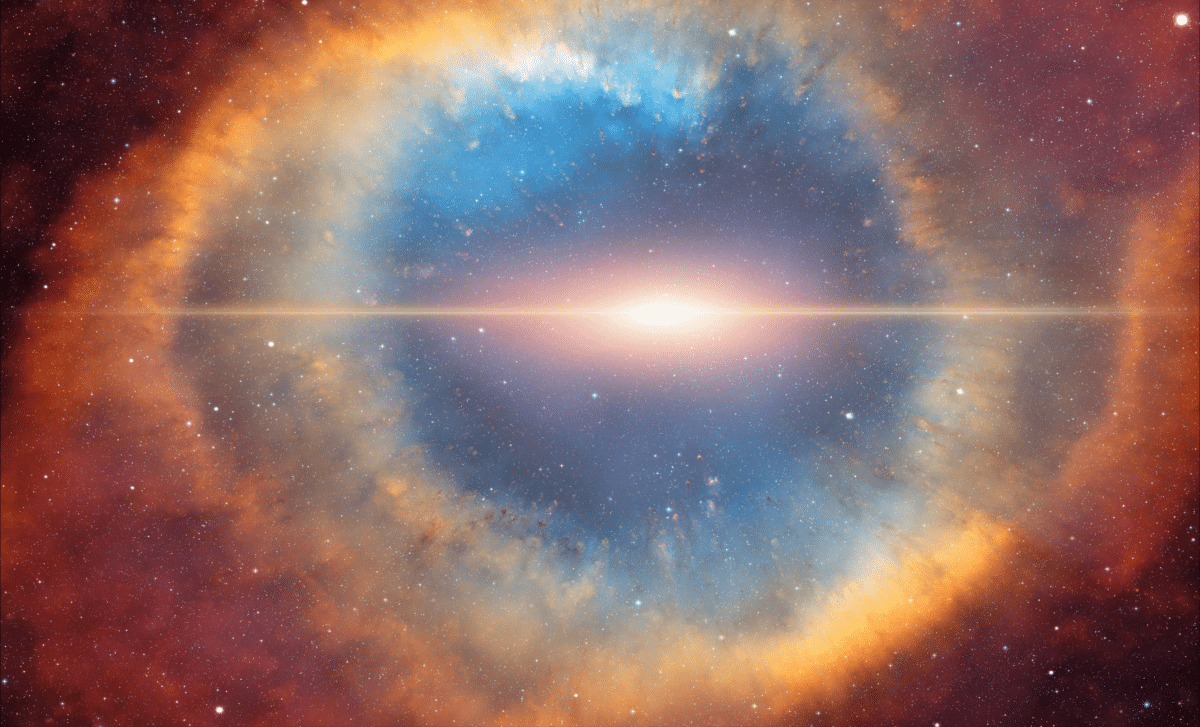
For many years, scientists have sought to detect one of the universe's faintest phenomena: a relic neutrino glow produced by supernova explosions spanning cosmic time. After almost 5,000 days of data gathering, the Super-Kamiokande team has uncovered its most compelling signal yet of this elusive Diffuse Supernova Neutrino Background (DSNB). This milestone could reshape our insights into star formation, black hole emergence, and the cosmic chemical timeline.
An Ancient Cosmic Whisper Across Billions of Years
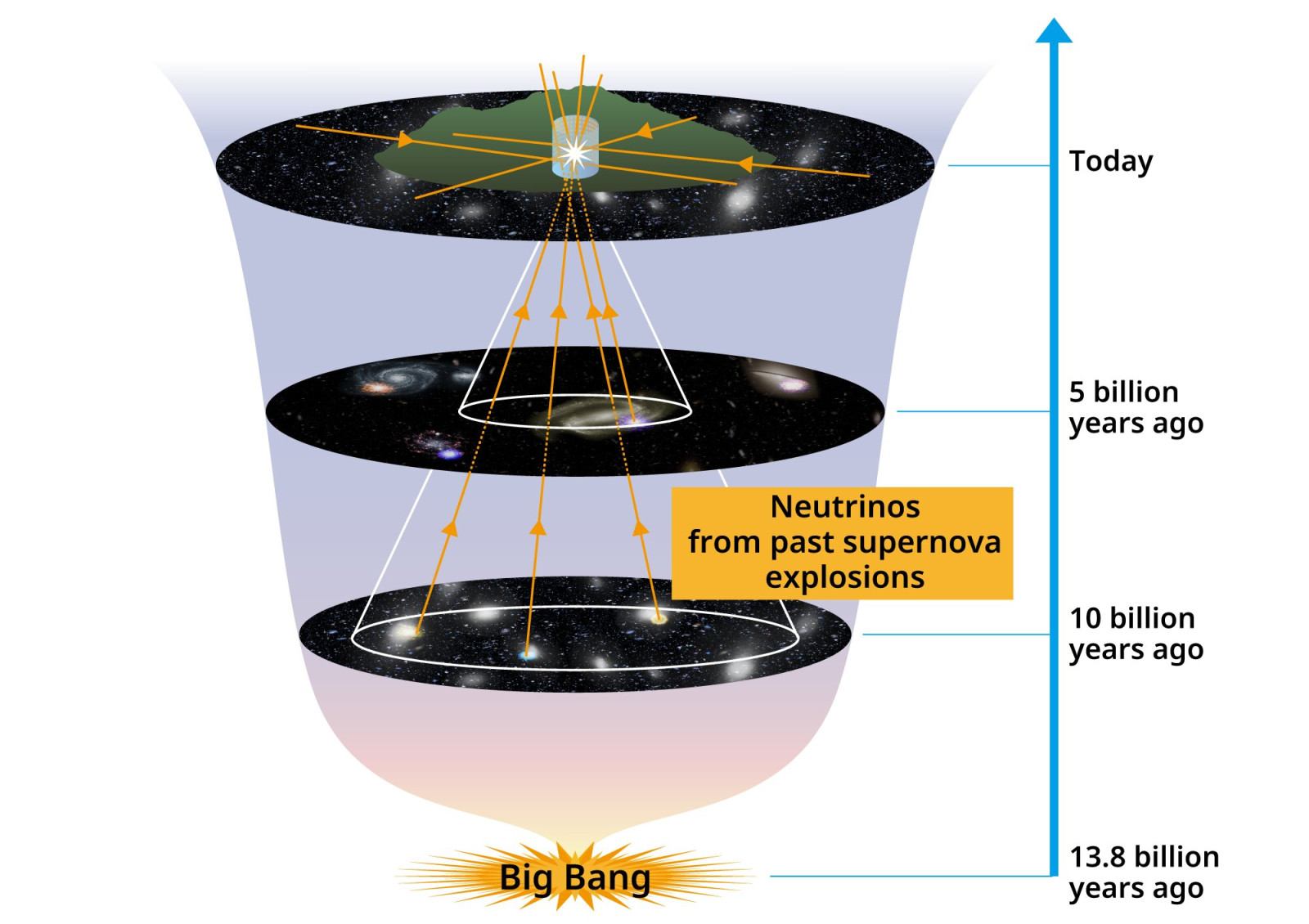
Massive stars end their lives in extraordinary core-collapse supernovae at an impressive rate across the cosmos. While the brilliant flashes of these explosions capture attention, they release vast quantities of neutrinos—tiny, nearly non-interacting particles that travel unimpeded through matter. Over billions of years, these neutrinos have filled space, creating a subtle background that has evaded detection. Unlike photons, neutrinos pass through galaxies, dust, and planetary bodies almost without disturbance, carrying pristine information from star deaths throughout cosmic history.
Capturing this background would enable researchers to quantify the cumulative tally of stellar explosions and validate models predicting star birth and element synthesis. Such findings would unlock a distinctive perspective on the universe’s transformation from its earliest stars to its current complex composition. Because neutrinos interact so rarely, even huge detectors can only observe a few candidate events over many years, making this pursuit one of the most taxing in particle astrophysics.

Super-Kamiokande’s Hunt for the Universe’s Quiet Neutrinos
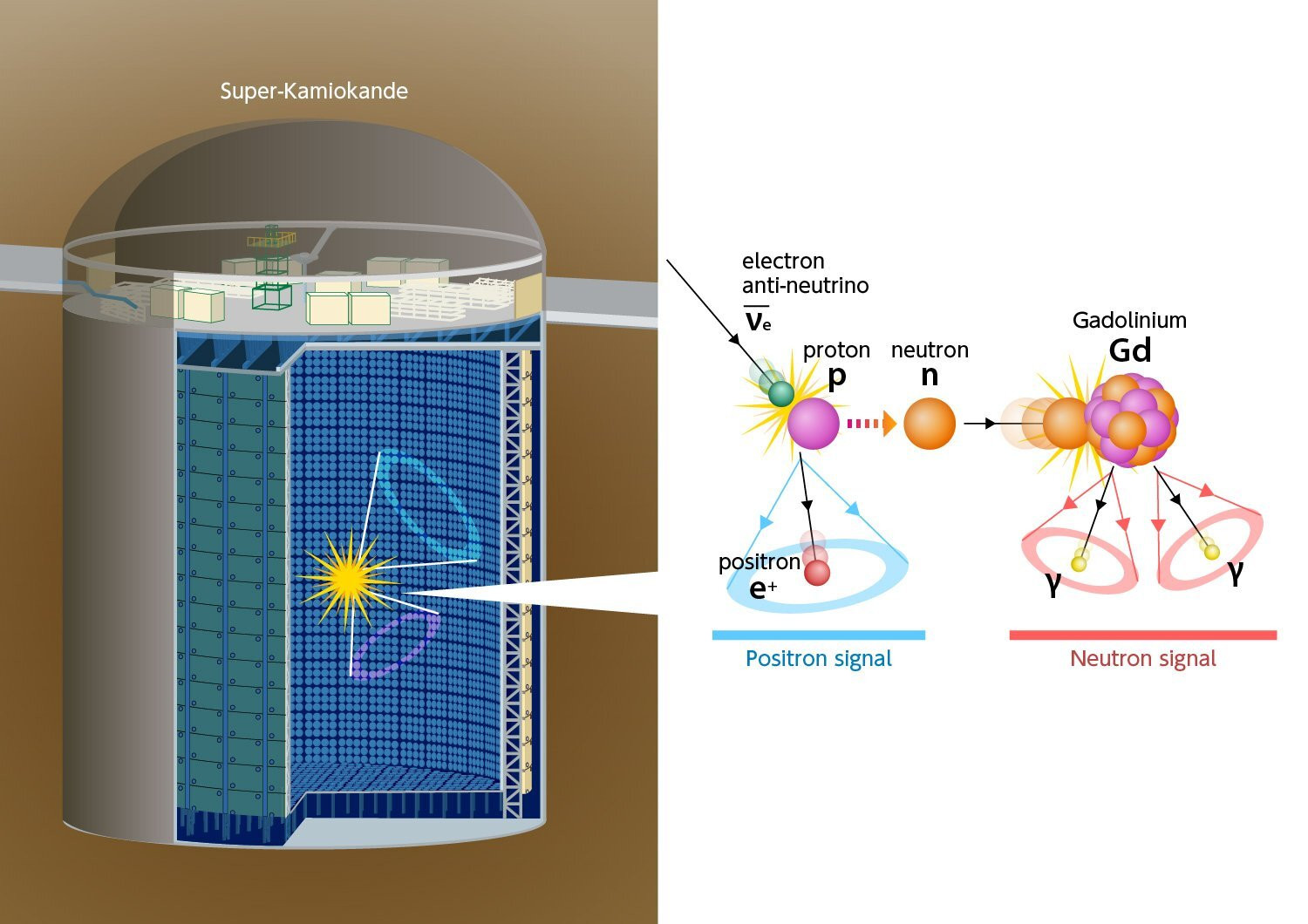
Situated near 1,000 meters underground in Gifu Prefecture, Japan, the Super-Kamiokande detector ranks among the planet’s top neutrino observatories. At its core sits a colossal 50,000-ton water tank lined with around 13,000 sensitive photomultiplier tubes. When neutrinos interact with water molecules, tiny flashes of Cherenkov light are produced and recorded. For this analysis, scientists combined data from two phases, both before and after adding gadolinium, an element that enhances identification of electron antineutrinos by making neutron capture signatures easier to detect.
This advancement markedly cuts down background noise mimicking genuine neutrino hits. The findings were unveiled at Neutrino 2026: XXXII International Conference on Neutrino Physics and Astrophysics at the University of California, Irvine. The international collaboration includes about 250 researchers affiliated with around 60 universities and institutes.
A Compelling Hint, Yet Below Discovery Threshold
Analyzing nearly 5,000 days of data, the team observed a notable surplus of events with energies between 13.3 and 81.3 MeV. The statistical significance reached 2.6 sigma, or roughly 99.5% confidence, indicating that the excess is unlikely a mere fluctuation. However, this falls short of the stringent 5-sigma mark needed for formal discovery claims. As such, scientists cautiously refer to the observation as an indication, not conclusive proof. Nevertheless, this represents the strongest evidence to date that we may be closing in on detecting the long-sought neutrino background from historic core-collapse supernovae.
If forthcoming data amplify this signal, astronomers will gain a powerful new means to chart massive star explosions across billions of years, probe the birth of neutron stars and black holes, and track the dispersal of heavy elements in galaxies. This particle-based approach would complement traditional electromagnetic studies, enabling a clearer reconstruction of the universe’s stellar saga through nearly unchanged cosmic messengers.
Looking Ahead: The Promise of Hyper-Kamiokande
This achievement marks a critical step, yet the team is already preparing for the next phase. Upcoming analyses will merge ongoing Super-Kamiokande results with data from its larger successor, Hyper-Kamiokande, which promises greatly enhanced sensitivity to these rare signals. “We plan to integrate continuous observations at Super-Kamiokande along with the future Hyper-Kamiokande detector to boost detection capabilities further,” explains Yosuke Ashida, assistant professor at Tohoku University.
With expanding datasets and improving detector technology, researchers anticipate confidently distinguishing authentic cosmic neutrinos from background noise. A confirmed detection would not only mark a milestone neutrino discovery but also provide the first direct measurement of the cumulative neutrino output from all stellar explosions throughout time, shedding new light on massive star life cycles, compact object formation, and the chemical progression of the universe.
- Categories:
- Astronomy





0 comments
Sign in to Comment