
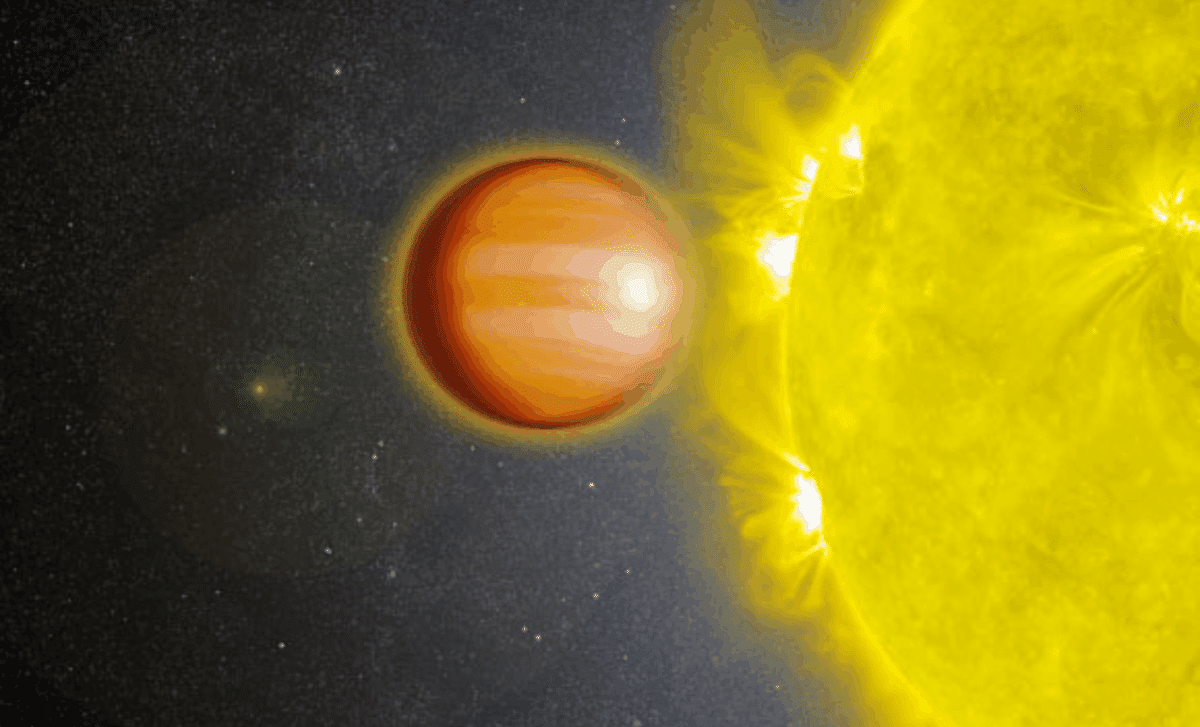
Astronomers have broken new ground in the study of distant worlds by constructing the first ever three-dimensional atmospheric map of an exoplanet. This pioneering research, detailed in Nature Astronomy, surpasses the constraints of earlier two-dimensional models, offering fresh insights into the atmosphere of the scorching gas giant WASP-18b. Leveraging the unparalleled capabilities of the James Webb Space Telescope (JWST) alongside an innovative analytical approach, scientists now possess the tools to visualize exoplanetary environments in 3D.
Introducing 3D Eclipse Mapping: A Game-Changing Method
For quite some time, researchers faced significant challenges in deciphering exoplanet atmospheres due to interference from the overwhelming brightness of their host stars, which limited traditional observational methods. The new study, published in Nature Astronomy (2025), unveils a technique called 3D eclipse mapping. This strategy enables astronomers to track exoplanets as they move behind their stars, detecting minuscule fluctuations in starlight caused by the planet’s atmospheric layers partially blocking the light. This approach grants scientists a far more accurate and sharp perspective of these remote planets.
Ryan Challener, a principal investigator from Cornell University, highlights,

“Eclipse mapping allows us to image exoplanets that we can’t see directly, because their host stars are too bright.”
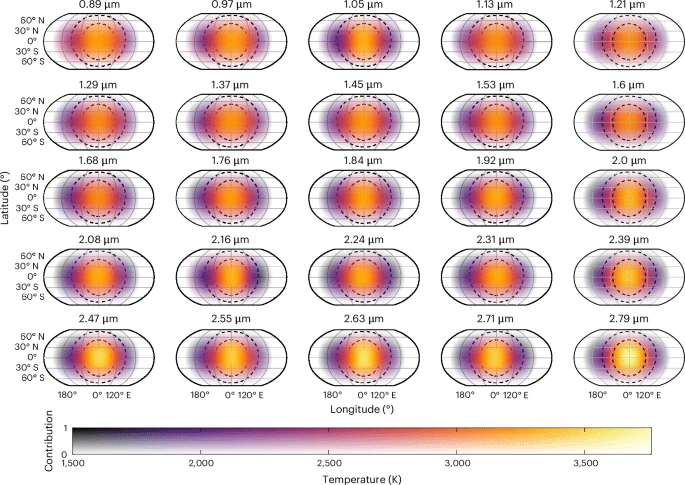
By meticulously analyzing brightness variations, researchers generate intricate maps detailing the temperature landscapes of exoplanet atmospheres. These visualizations aid in exploring atmospheric circulation, climatic phenomena, and chemical makeup.
Challener points out the complexity: "you’re detecting subtle light shifts as small sections of the planet vanish and reappear," demanding exceptional precision and analytic sophistication. Despite these hurdles, this technique is revolutionizing exploration of distant exoplanets.
Dissecting the Atmosphere of WASP-18b
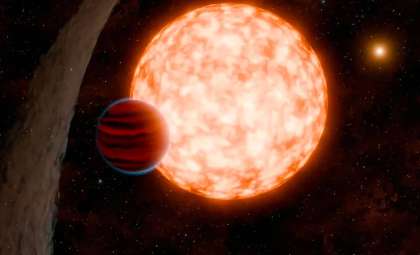
WASP-18b, a blazing-hot Jupiter situated roughly 400 light-years away, served as the perfect candidate for this trailblazing technique. Its atmosphere reaches scorching temperatures near 5,000 degrees Fahrenheit, ideal for examining thermal properties of exoplanetary atmospheres. Using the Near-Infrared Imager and Slitless Spectrograph (NIRISS) aboard the JWST, the team collected multi-wavelength data to develop a 3D atmospheric model of the planet.
Gathering information across different wavelengths enabled the team to probe varied atmospheric strata. As Challener elaborates,
“If you build a map at a wavelength that water absorbs, you’ll see the water deck in the atmosphere, whereas a wavelength that water does not absorb will probe deeper.”
This layered method delivers a more comprehensive profile of temperature and composition at distinct heights, unveiling insights never accessible before.
The 3D visualization of WASP-18b uncovered intriguing temperature shifts. Its dayside, perpetual due to tidal locking with its star, revealed a pronounced hotspot receiving maximum stellar radiation, surrounded by a cooler band likely shaped by atmospheric winds unable to evenly distribute heat. These temperature contrasts offer vital clues about the planet’s meteorology and atmospheric behavior.
The Transformative Role of the James Webb Space Telescope in Exoplanet Studies
The JWST has dramatically elevated our capacity to analyze exoplanet atmospheres. Unlike earlier observatories that provided limited detail for these remote worlds, the JWST enables highly accurate scrutiny of atmospheric components. Challener emphasized,
“With this telescope and this new technique, we can start to understand exoplanets along the same lines as our solar system neighbors.”
This breakthrough means scientists can now investigate exoplanets with comparable depth and detail to the study of familiar worlds such as Jupiter and Saturn, establishing a new era in planetary science.
The proven success of 3D atmospheric mapping on WASP-18b hints at a future in which similar studies can be conducted on numerous distant planets.
“This new technique is going to be applicable to many, many other planets that we can observe with the James Webb Space Telescope,” said Challener.
As observations expand, astronomers will assemble increasingly rich and dynamic atmospheric profiles, enhancing our grasp of planetary diversity throughout the cosmos.
- Categories:
- Astronomy




0 comments
Sign in to Comment