
In 2023, a particle detected deep beneath the Mediterranean Sea may have originated from a cosmic accelerator located billions of light-years away. New research published in the Journal of Cosmology and Astroparticle Physics reveals that this elusive neutrino carried energy levels far surpassing those generated by the most powerful human-made particle colliders, pointing to an extraordinary astrophysical source.
2023 Neutrino Event Leaves Scientists Perplexed
Known as “ghost particles” due to their elusive nature, neutrinos are rarely captured. This unique neutrino was detected by an underwater observatory in the Mediterranean Sea. Its defining feature was not only the extreme energy it possessed but also the absence of associated electromagnetic emissions like gamma rays or X-rays. These puzzling factors sparked intense scientific debate, with theories ranging from exotic astrophysical explosions to decays related to primordial black holes. Although previous assumptions favored an exploding black hole, the newest study instead highlights an alternative high-energy source: a blazar.
Understanding Blazars and Their Astrophysical Importance
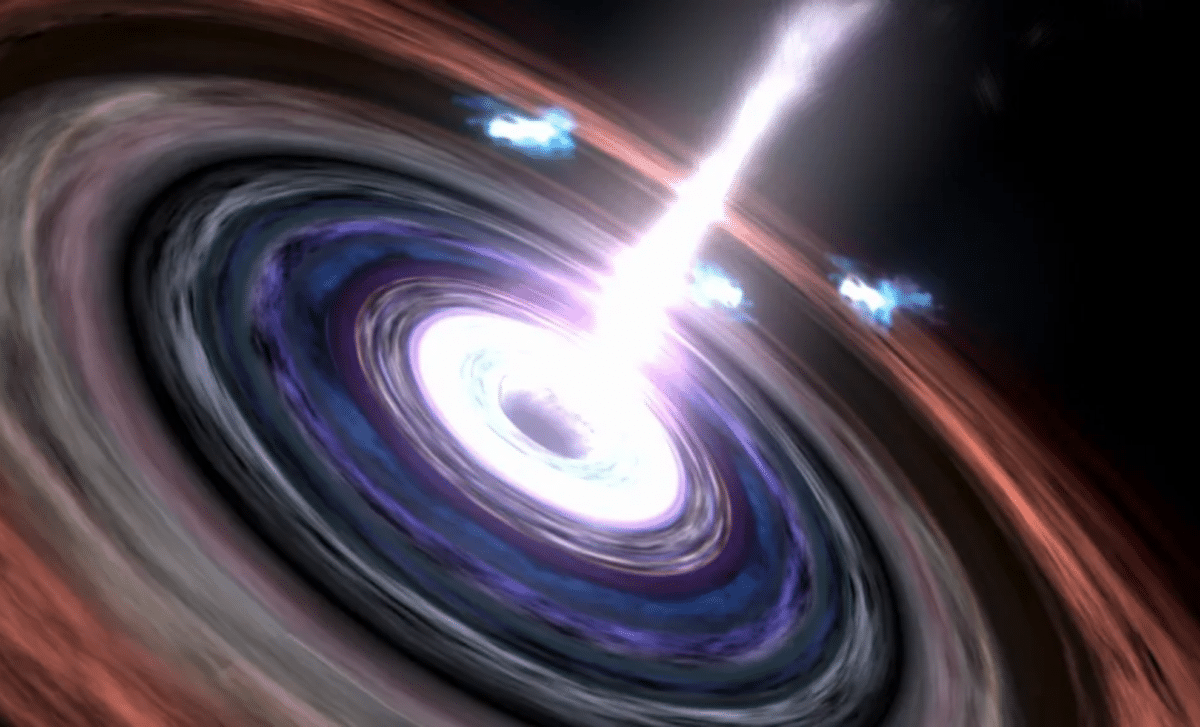
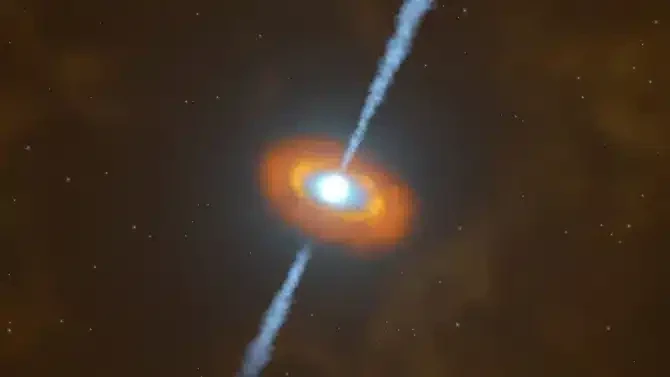
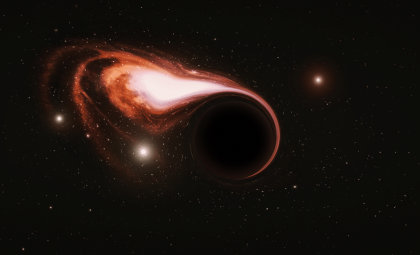
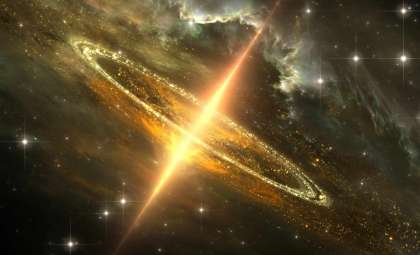
A blazar is a subtype of active galactic nucleus (AGN), found at the centers of certain galaxies and powered by supermassive black holes. These giants consume material from a surrounding accretion disk, releasing powerful jets of energy perpendicular to the disk’s plane. When one of these jets aligns directly with Earth, we observe a blazar—an incredibly bright source emitting intense radiation along a narrow beam. Despite their spectacular luminosity, blazars are observable only when their jets point at us. Researchers now suggest that the 2023 neutrino gained its phenomenal energy by traveling along one such blazar jet, enabling it to reach our planet with unparalleled power.

Interacting Blazars as Engines for High-Energy Neutrinos
The study published in the Journal of Cosmology and Astroparticle Physics examines a group of interacting blazars and proposes that their gravitational and electromagnetic interactions could generate neutrinos of exceptional energy. This scenario accounts for both the particle's intensity and its unusual energy profile. Using detailed simulations, the scientists demonstrated how collective emissions from multiple blazars might produce neutrinos matching the characteristics of the 2023 detection. Such rare cosmic alignments could reveal a previously unidentified natural particle accelerator operating in the universe.
Implications of a Single High-Energy Particle Discovery
The capture of one extraordinarily energetic neutrino presents a challenge to current theories in particle physics and astrophysics. Generating neutrinos with such immense energies would require colliders the size of Earth, emphasizing the extreme scales accessible through cosmic processes. Scientists now face the challenge of deciphering not only the generation process behind this particle but also understanding the astrophysical conditions that enable such powerful accelerators to exist. Future detections may help determine if clusters of blazars frequently produce such neutrinos or if the 2023 detection was a rare cosmic coincidence.
- Categories:
- Astronomy




0 comments
Sign in to Comment