
Scientists have successfully examined ancient air pockets encased within 1.4-billion-year-old salt crystals found in northern Ontario, Canada. This groundbreaking study offers the first direct data on oxygen and carbon dioxide concentrations in the atmosphere during the Mesoproterozoic era.
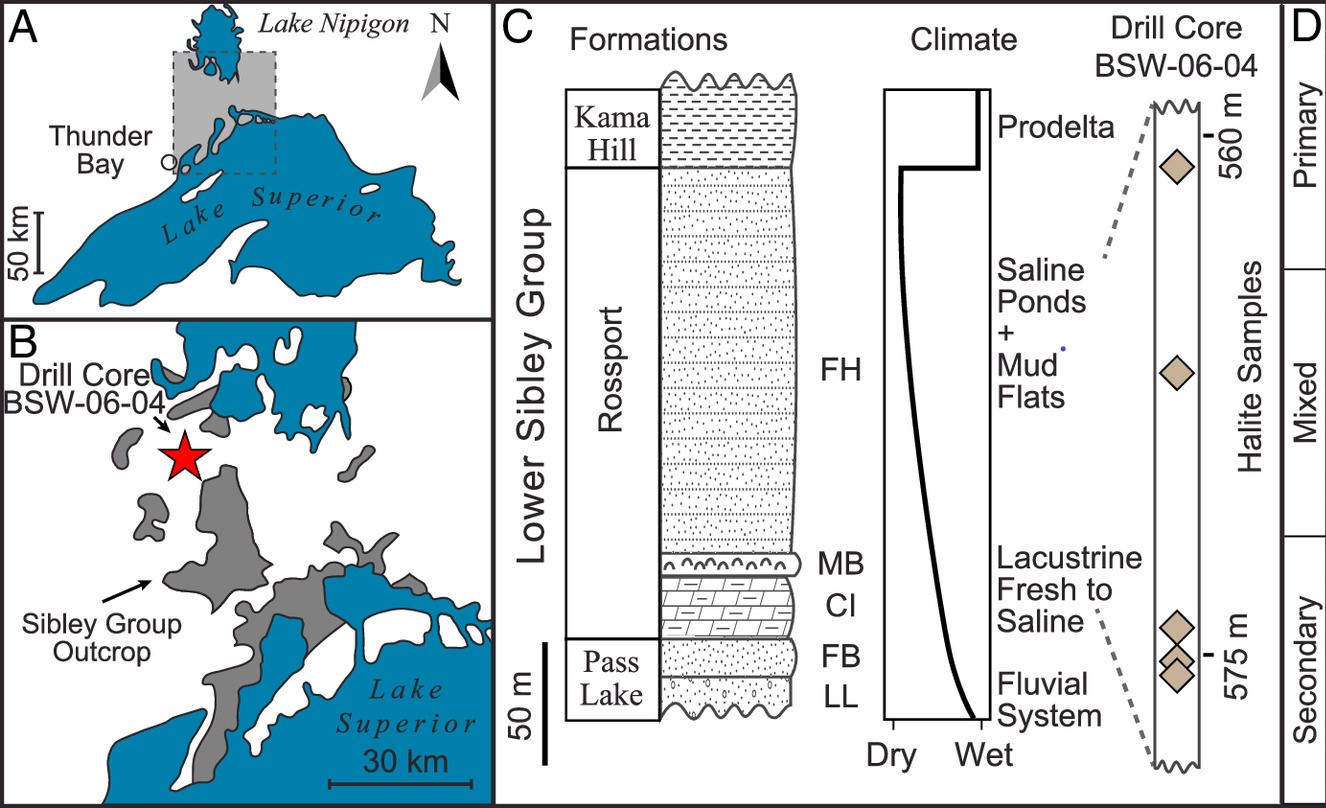
After years of meticulous effort, the team extracted and analyzed gases from halite crystals containing fluid inclusions of Earth’s primordial atmosphere. These insights are revolutionizing our comprehension of the Mesoproterozoic period, often labeled the “Boring Billion” for its perceived evolutionary stagnation.
Revealing the Air Composition of the Mesoproterozoic Era
The Mesoproterozoic, spanning roughly from 1.8 to 0.8 billion years ago, is traditionally viewed as a period with minimal geological and biological advancement. Despite this, the era witnessed notable atmospheric shifts, characterized by low oxygen levels and gradual evolution. Previous knowledge relied mainly on indirect atmospheric proxies.

The study, featured in the Proceedings of the National Academy of Sciences, bridges this knowledge gap by directly measuring gases trapped in halite crystals. The researchers found oxygen concentrations to be about 3.7% of present-day levels, surprisingly elevated for that period.
Carbon dioxide levels were discovered to be tenfold higher than preindustrial times, suggesting a warmer and more balanced climate than previously believed.
Deciphering Ancient Atmospheric Gases
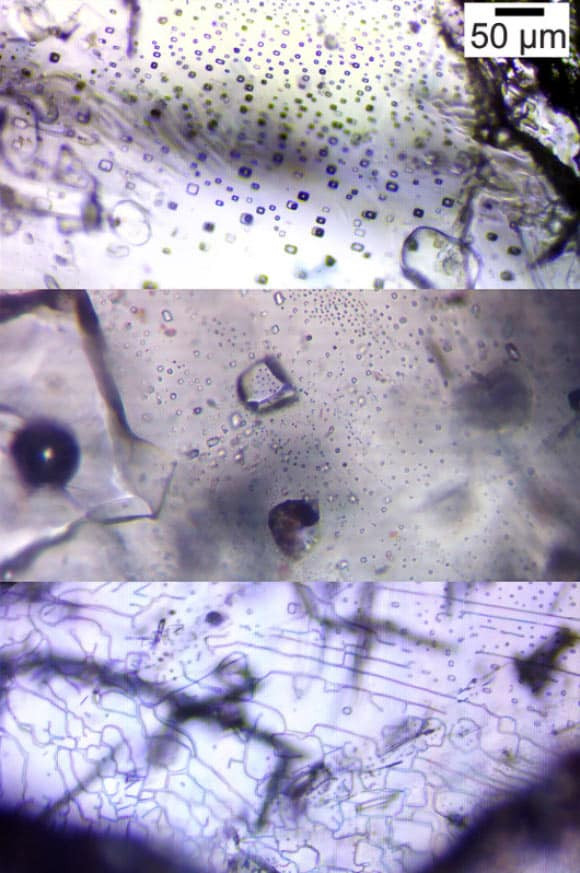
Extracting precise measurements of ancient gases poses significant challenges. Halite crystals contain both air bubbles and saline water, complicating the isolation of pure gas samples. Since these gases exist in both liquid and gaseous phases, accurate analysis is demanding.
“The carbon dioxide measurements we obtained have never been done before,” said Professor Morgan Schaller, who led the study. “We’ve never been able to peer back into this era of the Earth’s history with this degree of accuracy. These are actual samples of ancient air!”
Thanks to new techniques, researchers successfully isolated the trapped air bubbles to analyze gas composition precisely. Graduate researcher Justin Park reflected on the achievement:
“It’s an incredible feeling to crack open a sample of air that’s a billion years older than the dinosaurs”.
A Climate More Temperate Than Previously Thought
One of the pivotal revelations from this work indicates that the Mesoproterozoic climate was less harsh than assumed. Elevated carbon dioxide levels, together with temperature data from the salt deposits, point to a climate resembling modern conditions more closely than earlier models suggested. This contradicts earlier ideas proposing a colder, less stable environment.
“Red algae arose right around this point in the Earth’s history, and they remain a significant contributor of global oxygen production today,” explained Professor Schaller.
The relative abundance of oxygen during this timeframe may be linked to the emergence and diversification of algal species. The team proposes that these environmental factors played a vital role in sustaining life on Earth, even as the Sun delivered less energy than in later epochs.
- Categories:
- Science




0 comments
Sign in to Comment