
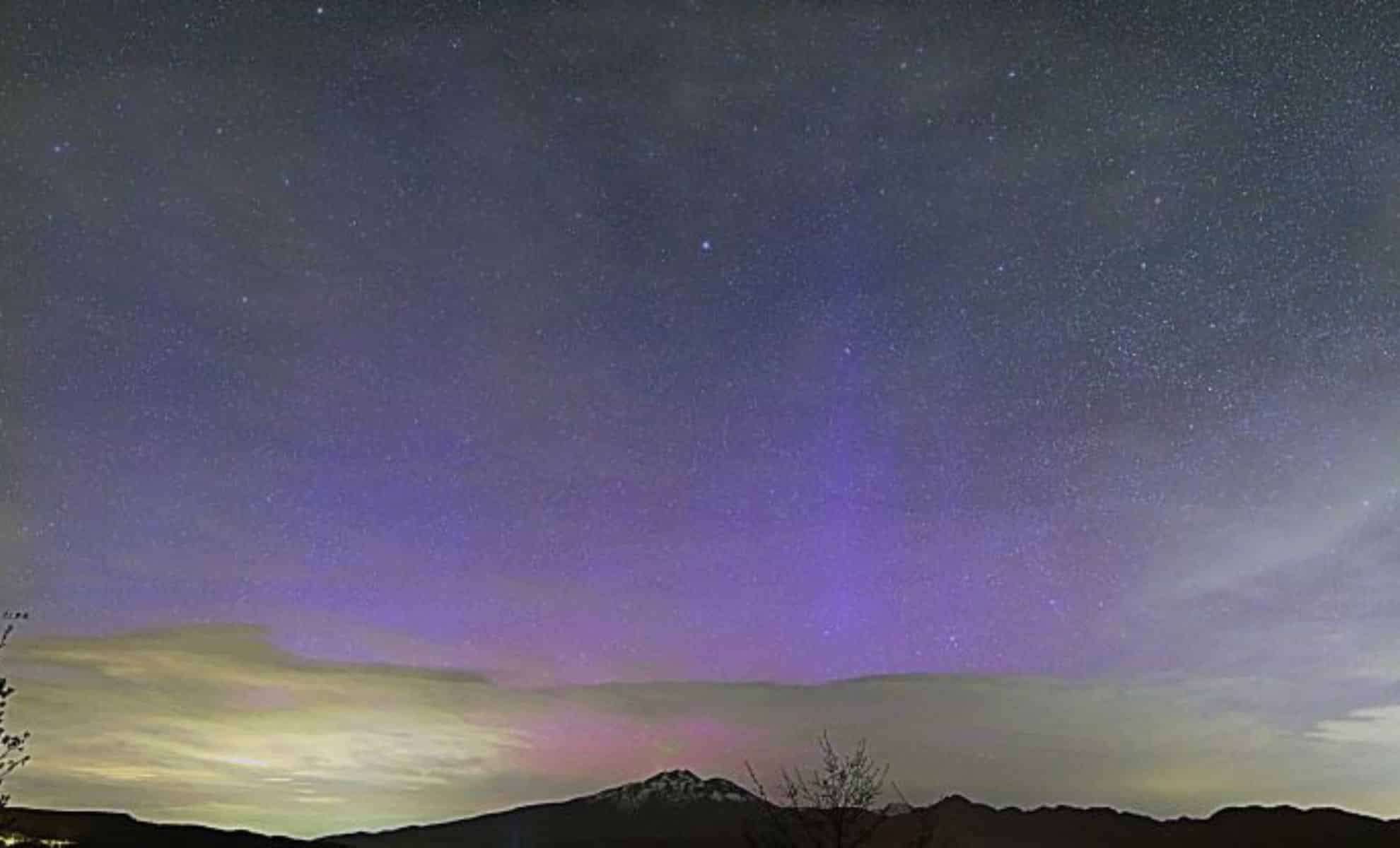
In May 2024, a remarkable aurora illuminated the skies above Japan’s Honshu and Hokkaido islands, presenting a truly unique spectacle that defied previous scientific observations. Triggered by a significant geomagnetic storm, the display prominently featured blue-hued auroras accompanied by a rare salmon-pink radiance, phenomena hardly witnessed at lower latitudes. Traditionally, auroras show up in shades of green or red, especially near polar regions, making this event particularly puzzling to experts.
Documented by both amateur skywatchers and corroborated by scientific measurements, these blue auroras challenged prevailing theories about their origin. Teams from Japan and Sweden, led by Sota Nanjo and Professor Kazuo Shiokawa, analyzed the event using a combination of public data and their own observations, revealing new structural and spatial features of the blue auroras. Their findings, published in December 2024, suggest a groundbreaking shift in the understanding of auroral phenomena.
Blue Lights at Unexpected Heights
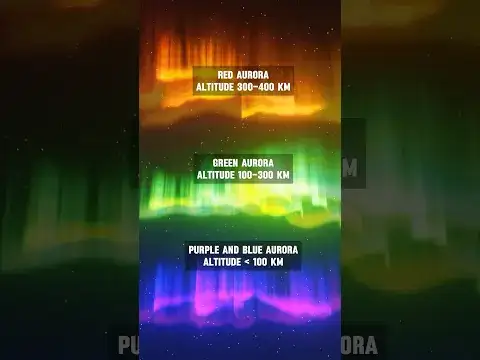
Auroras occur when charged solar particles encounter Earth's magnetic field, exciting atmospheric gases and generating vibrant light shows, typically in green and red hues.

Normally, these colors arise from oxygen atoms at altitudes between 100 and 200 km. Yet, the blue auroras seen over Japan took place much higher, spanning between 400 and 900 km above the surface. This unanticipated altitude range suggests unknown mechanisms behind their formation.
Professor Shiokawa from Nagoya University comments, “Our investigation indicates that nitrogen molecular ions may have been propelled upward by an unidentified process, driving the creation of the blue-dominant aurora.” This insight points to previously unrecognized atmospheric dynamics at considerable altitudes, though how these heavy and usually unstable ions endure in the upper atmosphere remains unclear.
Rethinking Conventional Auroral Models
The prevailing explanation for aurora formation centers on the ring current, a zone of trapped charged particles generating energetic neutral atoms (ENAs) that then produce auroras upon atmospheric interaction. However, the blue auroras witnessed challenge this framework.
Shiokawa points out, “The longitudinal structures spanning several hundred kilometers in the blue auroras observed are difficult to attribute solely to ENA activity. Furthermore, ENAs usually do not create auroral patterns aligned along magnetic field lines, as noted in this instance.” Such observations indicate that traditional auroral theories may not fully capture the processes behind these phenomena.
Moreover, the blue auroras displayed distinct longitudinal formations aligned with Earth's magnetic field lines, a characteristic previously unrecorded at these latitudes. This complicates existing models and hints at undiscovered atmospheric mechanisms active at these greater heights.
The Enigma of High-Altitude Nitrogen Ions
Although nitrogen molecular ions are a strong candidate for explaining these observations, their behavior at extreme altitudes puzzles researchers. Shiokawa notes, “Current understanding does not clarify how nitrogen ions, given their significant mass and rapid dissociative-recombination times, can persist at such elevated levels.”
Detecting these ions at altitudes exceeding 400 km overturns standard atmospheric models. The processes enabling their existence and acceleration remain an open question, implying the presence of novel atmospheric dynamics influencing ion behavior far above Earth’s surface.
- Categories:
- Astronomy ,
- Science ,
- Nature






0 comments
Sign in to Comment