
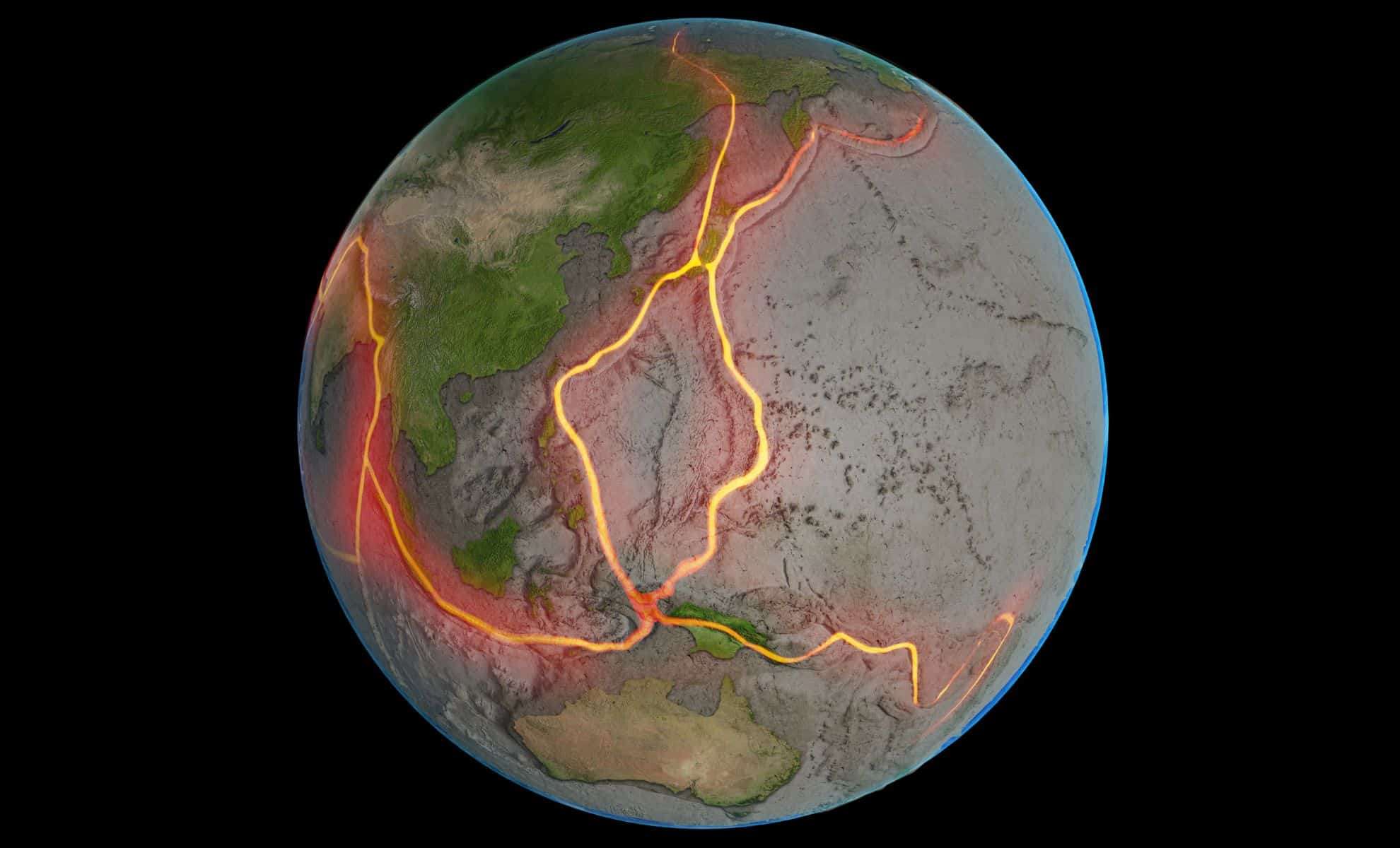
A recent Nature publication reveals new mechanisms behind the concentration of vital metals crucial for sustainable technologies beneath the edges of Earth's ancient continental nuclei. Directed by Dr. Chunfei Chen at Macquarie University, this investigation uncovers previously unrecognized geological processes that form natural “metal corridors” channeling elements like copper, cobalt, and rare earth metals. These discoveries point to new promising locations for mining exploration that could alleviate the global scarcity of essential materials required for the green transition.
Ancient Continental Nuclei as Key Metal Reservoirs
The most enduring and stable regions of Earth’s lithosphere—known as cratons—serve as foundational blocks for continental masses. Dr. Chen states, “These cratonic regions have a distinctive concave shape. Magma originating beneath their centers rises and flows outward toward their perimeters, which frequently generates volcanic activity around these margins.” This unique structure influences the trajectory and chemical evolution of mantle melts, causing them to shed silica and become rich in carbonate as they traverse beneath the craton margins. Such transformations promote the gathering of metals along these edges where volcanic processes further facilitate the deposition of economically valuable mineral concentrations.
How Carbonate-Rich Melts Concentrate Critical Metals
The conversion of mantle melts to carbonate-enriched fluids is vital for transporting and depositing important metals under old continental regions. Professor Stephen Foley clarifies, “While primary melts initially carry abundant metals and sulfur, our findings demonstrate that as silica diminishes, these components precipitate and accumulate along narrow zones surrounding thick continental cores.” This silica depletion triggers metals to segregate and form dense linear deposits, essentially creating natural “metal highways” packed with resources essential for environmentally friendly technologies. Evidence for these pathways includes mantle rock samples near craton boundaries showing elevated sulfur and copper levels in comparison to other continental regions.

Impact on Sustainable Resource Development and Exploration
Addressing the rising demand for metals vital to renewable energy and electric transport calls for discovering new sources outside traditional mining districts. By identifying craton margins as metal-rich hotspots, this research unveils new geological targets for future exploration efforts. Current global reserves of copper, cobalt, and rare earth elements are under pressure, making these insights especially relevant. Mining in these specialized corridors could unlock richer deposits and potentially minimize environmental damage through more localized extraction. This study not only advances knowledge of Earth’s interior dynamics but also offers practical strategies to secure the raw materials necessary for the world’s shift towards sustainable technologies.
Linking Deep-Time Geology to Modern Technological Needs
This work builds on previous observations by Australian National University and Geoscience Australia researchers who noted metal enrichment near craton edges. The current study details the mantle melting and chemical changes driving these concentration patterns. By understanding how carbonate-enriched melts interact with tectonic frameworks, scientists can better forecast metal deposit locations and their subterranean movement. These findings highlight how ancient geological formations continue to shape the distribution of resources critical for today’s technology challenges. As global reliance on clean energy grows, recognizing these hidden networks of metal transport may be essential for responsible resource management.
- Categories:
- News




0 comments
Sign in to Comment