

Questions about the essence of consciousness have fascinated thinkers from many fields for centuries. It probes deep into what it means to possess awareness and subjective experience, stirring debate over whether these traits are uniquely human or shared more broadly in the animal world. Addressing this requires meticulous research bridging both philosophy and science.
Exploring the Layers of Consciousness
Jonathan Birch, a philosopher at the London School of Economics, highlights how challenging it is to definitively recognize consciousness in others given its deeply subjective quality. Drawing on Herbert Feigl’s conceptual model, Birch divides consciousness into three strata: sentience, sapience, and selfhood.
At the foundation lies sentience—an organism’s capacity to directly experience sensations and feelings, such as pain or pleasure. Moving beyond this is sapience, which involves the ability to reflect on those sensations, like thinking “This is the most intense pain I have ever felt.” At the highest level is selfhood, encompassing an ongoing awareness of oneself through time.

Evidence for Consciousness in the Animal World
Much scientific attention has been devoted to investigating sentience in animals. Many species display clear signs of pain perception. For instance, dogs express distress in ways recognizable to humans, while studies show some fish actively seek substances to alleviate discomfort, indicating an awareness of suffering.
Social learning also offers compelling proof. Kristin Andrews, a philosopher from York University in Toronto, points out that animals often gain knowledge and skills through observing others—a trait present even among insects. Fruit flies, for example, have been shown to acquire mating preferences by watching their peers, revealing intricate social cognition.
Researchers have additionally identified episodic memory—the ability to recollect specific past events—in species such as rats, scrub jays, and chimpanzees, which suggests some level of self-awareness and mental time travel.
Consciousness Across Different Brain Architectures
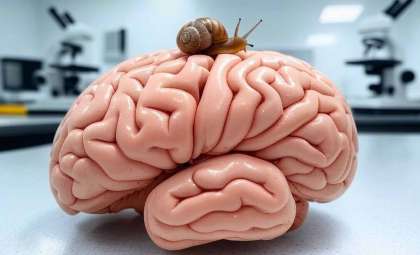
One major complexity in studying consciousness lies in the vast differences in brain structures among animals. Neural regions associated with conscious experience in mammals are absent or arranged differently in insects and other invertebrates. Nevertheless, behavioral observations strongly support the presence of sentience even in creatures with very distinct nervous systems.
In early 2024, the New York Declaration on Animal Consciousness was released, acknowledging a growing scientific consensus that many animals—including numerous invertebrates—likely have conscious experiences. This marks a notable evolution in how the scientific community regards non-human cognition.
Kristin Andrews argues for adopting a default position that all animals possess consciousness, challenging older scientific perspectives that traditionally excluded invertebrates. Jonathan Birch calls past scientific disregard of animal sentience “an aberration of Western science,” emphasizing that many non-Western cultures have recognized animal awareness for millennia.
- Categories:
- Science












0 comments
Sign in to Comment