

New research has dramatically broadened the scope of our knowledge regarding water on the Moon, demonstrating that it exists beyond the polar regions and is distributed throughout the lunar terrain.
Scientists have analyzed information gathered by NASA's Moon Mineralogy Mapper (M3), which was part of the Indian Space Research Organization's Chandrayaan-1 mission. Their findings revealed the presence of water and hydroxyl compounds (OH) in multiple lunar areas, challenging previous assumptions that water was predominantly trapped within the permanently shadowed polar craters.
Expanding Our Understanding of Lunar Hydration
Earlier research indicated that water appeared mainly in the permanently shadowed craters at the Moon's poles, where temperatures remain low enough to preserve ice. These spots were considered the primary reservoirs of lunar water, while the rest of the lunar landscape was assumed to be arid. However, data from the M3 sensor now confirms the existence of water even in sunlit zones.

This water is thought to be embedded in minerals across the lunar surface, particularly in anorthosite-heavy regions of the highlands. Roger Clark, lead researcher at the Planetary Science Institute, remarked, “Astronauts of the future might locate accessible water sources near the Moon’s equator by targeting these hydrated areas.” This insight significantly expands potential landing sites for sustained lunar exploration, reducing dependency on the poles and broadening prospects for resource extraction.
The Influence of Hydroxyl Molecules and Solar Wind
A key element of this lunar water discovery is the hydroxyl molecule, which contains one oxygen and one hydrogen atom—distinct from the typical water molecule (H2O). Hydroxyl forms through interactions between the lunar surface and solar wind, which delivers charged particles from the Sun. These particles supply protons that react with oxygen atoms in the Moon's minerals, producing hydroxyl.
Although hydroxyl is not potable water, it exists widely and remains stable over vast timescales. Clark pointed out, “The Moon’s geology is complex, featuring significant subsurface water and an outer surface layer rich in hydroxyl.” While solar wind gradually breaks down hydroxyl into hydrogen and oxygen, much endures for millions of years, offering a valuable water precursor for lunar missions.
Additionally, the hydroxyl's distribution provides clues about the Moon's geologic past. Some of these molecules likely emerged from volcanic eruptions and impact events, blending with surface materials to form a persistent, thin hydroxyl layer. This shifts perspectives on the lunar surface’s dynamic processes and resource potential.
Detecting Lunar Water with the Moon Mineralogy Mapper
The discovery of water and hydroxyl compounds across the Moon was enabled by the Moon Mineralogy Mapper (M3), part of the pioneering Indian lunar mission Chandrayaan-1. The instrument utilized infrared spectroscopy to analyze sunlight reflecting off the Moon, identifying unique spectral signatures indicative of water and hydroxyl.
Between 2008 and 2009, M3’s observations revealed these molecules’ presence beyond the polar ice deposits, extending to equatorial and mid-latitude regions marked by diverse geology. By examining the infrared wavelengths, scientists pinpointed locations with elevated concentrations of water and hydroxyl, overturning prior assumptions that much of the lunar surface was desiccated.
Clark emphasized the value of these findings for planning lunar exploration, stating, “Identifying water distribution enhances our grasp of lunar history and guides astronauts to future water sources.” This knowledge is crucial for designing sustainable human missions and long-term lunar habitats.

Impact on Human Missions and Lunar Settlement
The widespread confirmation of water and hydroxyl presence across the Moon holds immense promise for future manned missions and lunar colonization efforts. Water is vital both for consumption and for producing oxygen and rocket fuel. Extracting lunar water in situ could dramatically lower the logistical and financial burdens of transporting resources from Earth.
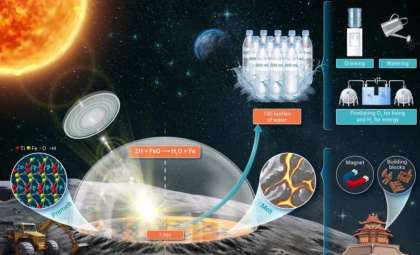
Multiple extraction methods are under consideration. One technique involves heating water-bearing minerals, such as anorthosites, to liberate trapped water molecules. Alternatively, mining ice reserves in the shadowed polar craters offers an immediate but geographically limited source. Transporting polar water to other moon regions remains a challenge.
Clark and colleagues propose that both strategies have merit depending on mission objectives and location. “The water-infused anorthosites offer a promising target for future astronauts,” Clark said. “Although extracting water requires heating the soil and rocks, it presents a sustainable supply for long-duration lunar operations.” Despite energy requirements, this approach could ensure a steady water source where polar ice isn't accessible.
Furthermore, the presence of these resources enhances potential for in-situ resource utilization (ISRU), an approach vital for sustainable space exploration. NASA and other agencies are prioritizing methods that leverage local materials, aiming to establish more autonomous and cost-effective lunar outposts. These water findings could serve as a cornerstone for such efforts.







0 comments
Sign in to Comment