
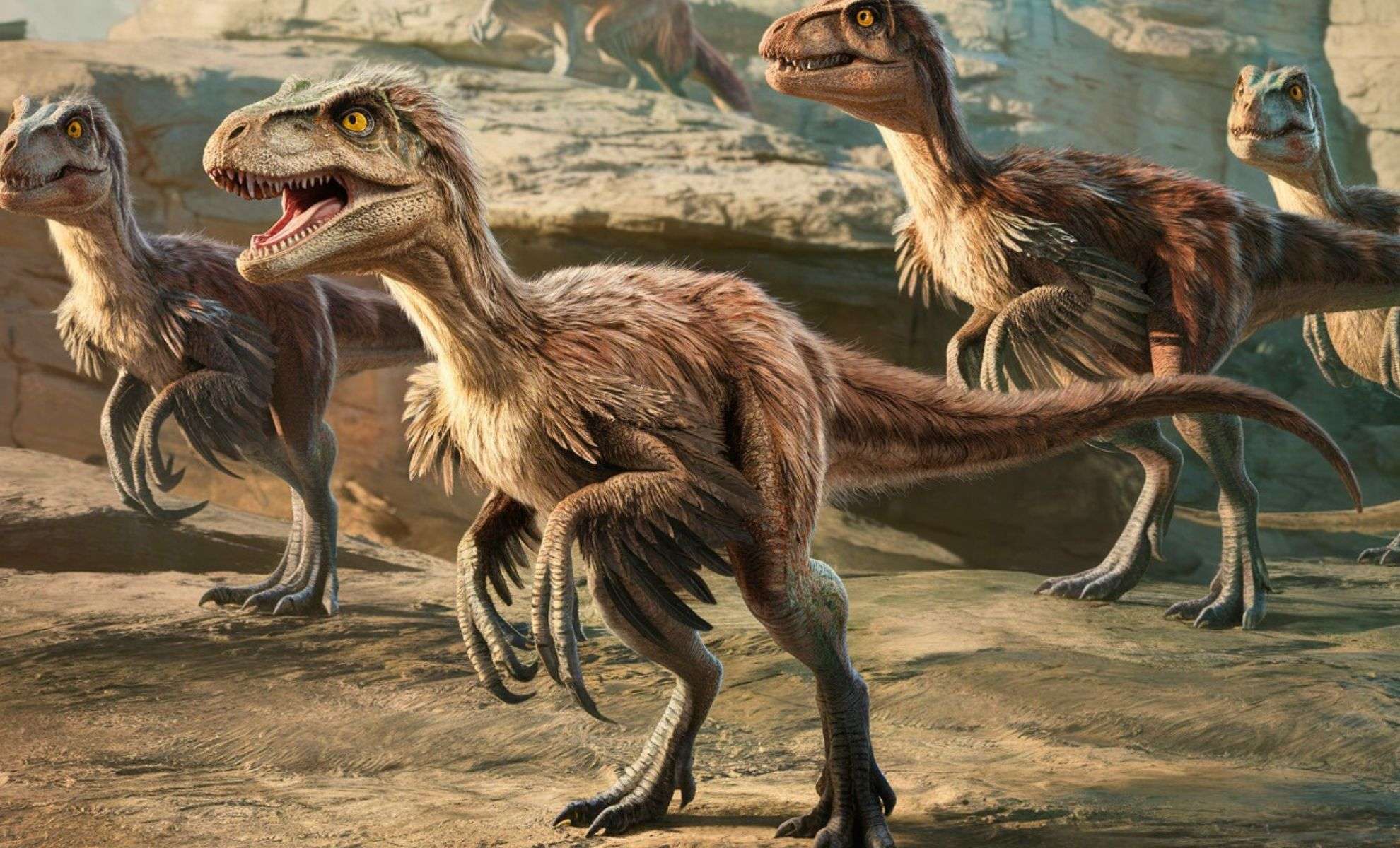
For many years, scientists have been intrigued by the cognitive capabilities of dinosaurs, moving beyond the outdated image of these giants as mere instinctive creatures. Cutting-edge research and technological advancements are shedding new light on their mental capacities, enabling experts to pinpoint which dinosaur species exhibited the greatest intelligence.
Reevaluating Tyrannosaurus Rex’s Mental Skills
Known for its fearsome reputation, the Tyrannosaurus rex has also been a focal point in discussions about dinosaur intelligence. Traditionally, its success as a predator was linked to sharp senses, tactical hunting, and possible social behaviors, but its actual cognitive abilities are still under debate.
A recent 2024 investigation led by Dr. Emily Wright at the University of Alberta used state-of-the-art imaging on fossilized skulls to reassess the brain structure of T. rex. Published in The Anatomical Record, the study found that its brain's neuron count rivals that of present-day crocodilians, known more for instinct than complex reasoning. Their conclusion states, “the T. rex may have excelled at processing sensory data, but its ability to solve problems was probably limited.”

That said, the dinosaur’s sensory abilities—especially in sight and smell—were extraordinary, positioning it as a dominant predator in the Hell Creek Formation in Montana around 68 to 66 million years ago. While its intelligence might be overstated in popular culture, it was undoubtedly well-adapted for survival as an apex predator.

Troodon: A Contender for the Sharpest Dinosaur
The Troodon stands out as one of the smartest dinosaurs discovered, boasting a significantly higher brain-to-body ratio compared to most others. This compact theropod, found in what is now Canada and northern parts of the United States, measured about 1.2 meters tall and weighed roughly 50 kg, yet its mental prowess is what truly intrigues paleontologists.
Its enlarged optic lobes imply acute vision, likely aiding its nocturnal hunting techniques. Dr. Sarah McConnell from the Royal Tyrrell Museum explains, “Troodon possessed brain features indicative of heightened sensory perception and sophisticated decision-making.” Fossils from Alberta’s Dinosaur Park Formation suggest this dinosaur hunted small mammals and reptiles, using its curved claws and sharp teeth with remarkable precision.
Additionally, the development of its cerebral hemispheres—key regions linked to advanced processing in modern creatures—hints at abilities like learning and memory retention. Although some behavior remains speculative, Troodon's brain anatomy marks it as a dinosaur with advanced cognitive traits.
Velociraptor: Social Predation and Mental Agility
Popularized in movies, the Velociraptor has been the subject of numerous studies exploring its intelligence. Fossils found in Mongolia’s Djadokhta Formation date this creature to around 75 million years ago. Contrary to its Hollywood image, real Velociraptors were smaller, feathered, and highly agile predators with intriguing behavior patterns.
Experts have proposed that Velociraptors might have hunted in packs, although direct evidence is limited. The well-known fossil called the “Fighting Dinosaurs” shows a Velociraptor locked in combat with a Protoceratops, suggesting possible social and hunting strategies. Brain endocasts reveal areas responsible for sensing and coordinating movement.
Dr. Alan Smith of the American Museum of Natural History recently studied claw and tooth wear patterns, uncovering signs that Velociraptors used calculated feeding tactics, targeting weak spots on their prey. These behaviors point to refined motor skills and learning abilities, reflecting advanced intelligence.
A Summary of Dinosaur Brainpower
Here’s an overview of the cognitive features exhibited by these notable species, drawn from the latest findings:
New Perspectives on Dinosaur Intelligence
It’s important to remember that dinosaur intelligence should not be judged by human standards but understood as adaptations shaped by their unique ecological roles. Whether through the sensory strength of the Tyrannosaurus rex, the complex brain structure of the Troodon, or the social hunting techniques of the Velociraptor, these creatures showcase diverse forms of intelligence shaped by evolutionary demands. Continued technological advances promise to deepen our insight into the cognitive world of prehistoric life.
- Categories:
- Science










0 comments
Sign in to Comment