
Excavations at the Wangzhuang ruins in Jiyuan City, located in Henan Province of central China, have led to a remarkable insight into the Neolithic Dawenkou Culture. This prehistoric culture, which thrived from around 4000 B.C. to 2600 B.C., provides important evidence of emerging social structures and widespread cultural connections. Among the 45 graves uncovered, one particular tomb, dubbed Tomb M27, stands out due to its grand scale and rich assortment of artifacts, implying it once belonged to a figure of royal stature.
Tomb M27: A Majestic Testament to an Early Ruler
Tomb M27 ranks as one of the largest and most impressive finds within the Wangzhuang site. Measuring roughly 15 feet long and 12 feet wide, it is among the most expansive from the Dawenkou era. The tomb houses a double wooden coffin with a combined area close to 182 square feet.
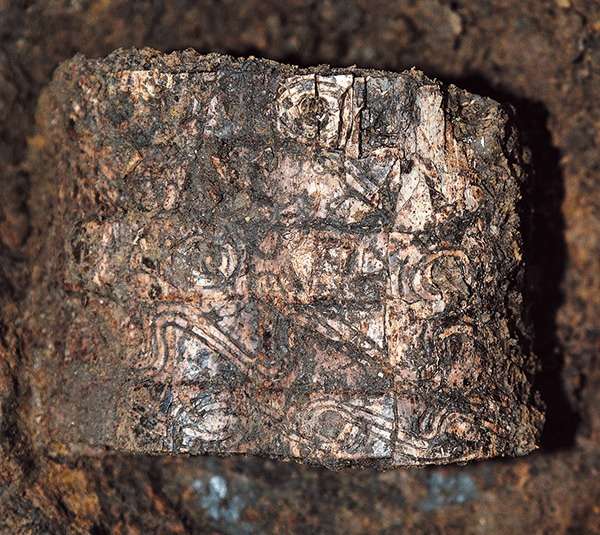
Inside, archaeologists discovered an exceptional collection of approximately 350 burial items, highlighting the high rank of the person buried there. Among these treasures were:

- Nearly 200 jade pieces that exhibit intricate artistry.
- Bone tools and animal remains, notably pig jawbones, which symbolized wealth in prehistoric burials.
- About 100 pottery artifacts demonstrating the Dawenkou Culture’s mastery in ceramic craftsmanship.
Specialists suggest the wealth found within Tomb M27 underscores both the elite status of the occupant and reflects the formation of social classes in early prehistoric communities. Archaeologist Liu Haiwang commented, “The lavish assortment of burial goods corresponds with tomb size, signaling the presence of defined social hierarchies and class divisions.”
Insight into Cultural Interactions and Regional Identity
Artifacts recovered from M27 and other graves reveal extensive networks spanning eastern and central China and the Yangtze River basin. This variety of materials supports the idea that the Wangzhuang site was a hub of early intercultural exchange.
The deputy director of the Institute of Ancient History at the Chinese Academy of Social Sciences, Li Zinwei, highlighted the significance of these findings: “The site’s artifacts offer crucial evidence for the initial mingling of early Chinese cultures, shedding light on the diverse character of ancient Chinese civilization. It provides valuable examples for studying how prehistoric cultures merged.”
At the same time, some discoveries reflect localized customs, such as small-necked jars and the interment of water deer teeth, illustrating specific ritualistic traditions. These distinct local elements deepen our knowledge of the Dawenkou Culture’s spiritual life, which may have influenced later ceremonial practices.
Signs of Tomb Disturbance: Indications of Ancient Conflict
Interestingly, Tomb M27 shows signs of deliberate damage shortly after it was built. Most of the human skeletal remains were removed, leaving only toe bones intact. Additionally, certain ritual items were purposefully smashed, implying intentional defilement. Zhu Guanghua, the lead archaeologist from Capital Normal University, suggests this could reflect hostility from competing groups, capturing early evidence of political strife in prehistoric China.
Further Discoveries at Wangzhuang
The excavation uncovered a total of 45 graves tied to the Dawenkou Culture, which range widely in size and content, revealing social stratification within this ancient community. The site also shows signs of sophisticated pottery-making technology, a key feature of the culture. The craftsmanship and specialization evident in the finds highlight the high level of production skills achieved by this civilization.
The research team posits the Wangzhuang ruins were likely more than a mere habitation area; they propose it functioned as the capital center of an early kingdom. Zhu Guanghua affirmed, “Our latest results point to the Wangzhuang site being the seat of a prehistoric kingdom rather than just a typical settlement.”
Wider Historical and Cultural Importance
Discoveries at Wangzhuang open a rare window into the social, political, and cultural fabric of the Dawenkou Culture. This site emphasizes the complexity of early Chinese societies through:
- Hierarchical social organization, shown by tomb dimensions and burial wealth.
- Interregional cultural interactions, indicated by diverse origins of artifacts.
- Distinct ritual customs, revealed by unique burial practices and ceremonial objects.
Ongoing study of this location enriches our comprehension of prehistoric China, securing its role as a key chapter in early human civilization.










0 comments
Sign in to Comment