
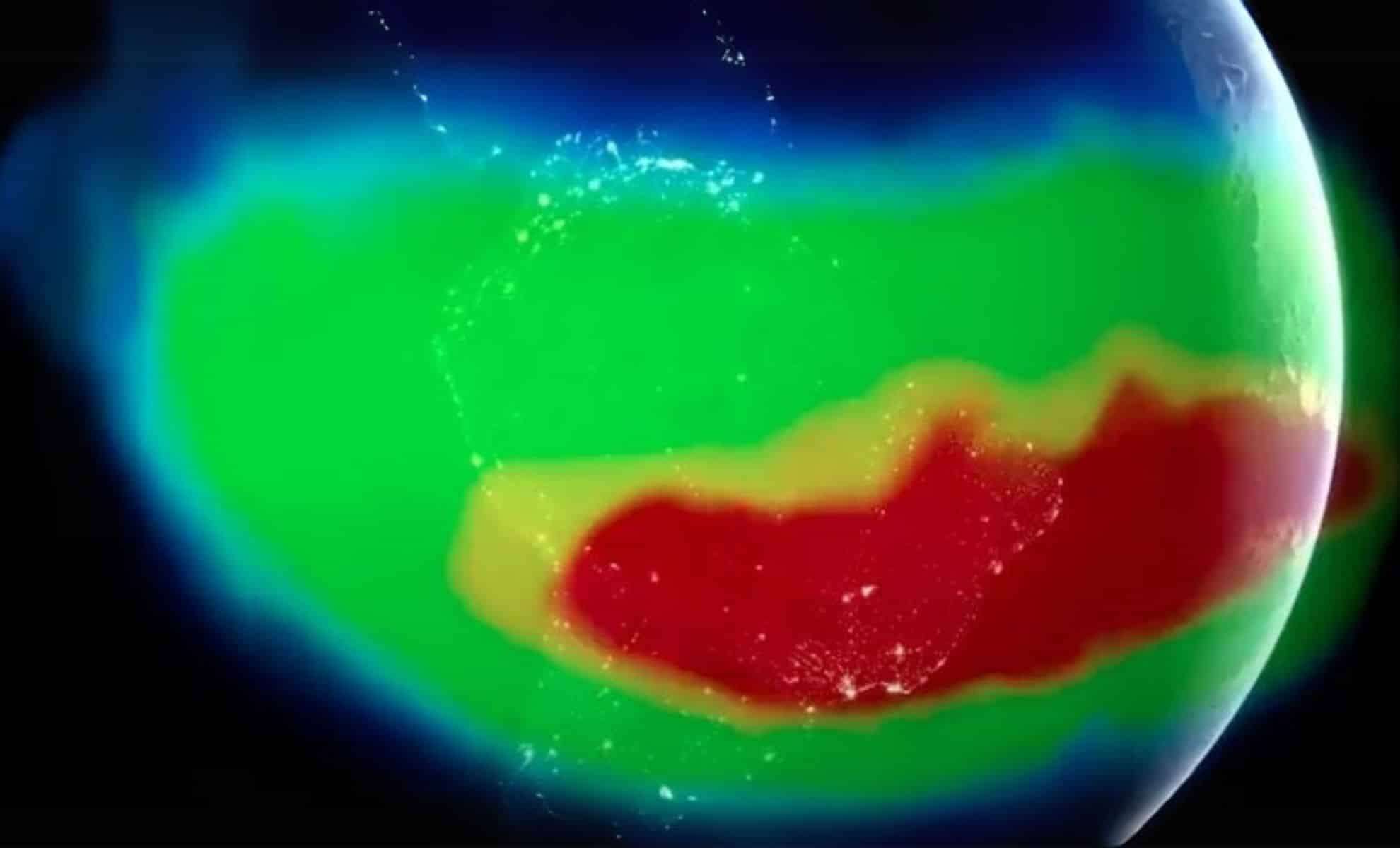
A significant and shifting weakness in Earth’s magnetic shield, positioned above South America and the southern Atlantic Ocean, remains a central focus for NASA scientists. Termed the South Atlantic Anomaly (SAA), this zone features a noticeable drop in magnetic strength, allowing increased access of high-energy solar particles closer to the planet’s surface.
Formation and Deep Earth Processes Behind the Anomaly
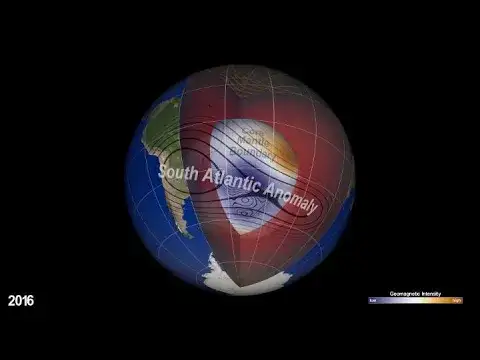
The SAA arises from processes deep inside Earth’s core, where the churning of molten iron and nickel in the outer core generates the planet’s magnetic field through the geodynamo mechanism. However, this field is irregular due to several geological influences.
Specifically, an off-center tilt in Earth’s magnetic axis combined with the effects of a massive, slow-moving structure called the African Large Low Shear Velocity Province, located nearly 2,900 kilometers beneath Africa, create localized disturbances in magnetic field generation.

This results in the weak magnetic patch above the South Atlantic. NASA experts note the anomaly also involves a localized inversion of magnetic polarity, which further diminishes the local magnetic field’s strength.
According to Weijia Kuang from NASA’s Goddard Space Flight Center, the reversed polarity area has expanded, causing magnetic intensity to be lower than neighboring regions. This creates a kind of “magnetic gap” weakening Earth’s protective shield.
Implications for Satellites and Space Operations
The diminished magnetic protection allows solar charged particles easier entry into near-Earth space. Spacecraft that traverse the SAA encounter elevated levels of energetic protons, leading to what engineers call single event upsets (SEUs).
These events can disrupt electronics temporarily, corrupt stored data, or in severe cases, cause lasting hardware damage. Many satellites manage this risk by powering down non-critical components when passing through the anomaly.
NASA’s spacecraft, including the International Space Station (ISS), cross the SAA with each orbit. While astronaut safety is maintained by shielding, instruments on the ISS, like the Global Ecosystem Dynamics Investigation (GEDI), suffer occasional data interruptions.
GEDI’s deputy principal investigator, Bryan Blair, notes that despite periodic glitches and resets, data loss is relatively minor, amounting to only a few hours monthly. The Ionospheric Connection Explorer (ICON) mission also monitors conditions closely, adjusting its operation schedules accordingly.
Changes in Size and Shape Over Time
Satellite observations, including data from ESA’s Swarm constellation and historical NASA SAMPEX measurements, confirm that the SAA is dynamically changing.
It is slowly shifting northwestward, expanding, and dividing into two separate regions of lowest magnetic strength. This split was first detected in 2020 and has been validated using CubeSats and other space-based instruments.
The development of dual magnetic lobes increases hazardous zones for satellites and complicates predictive geomagnetic models. NASA’s Terry Sabaka highlights the importance of tracking these transformations to safeguard satellite operations and plan future missions.
Interactions with Solar Activity and Radiation Risks
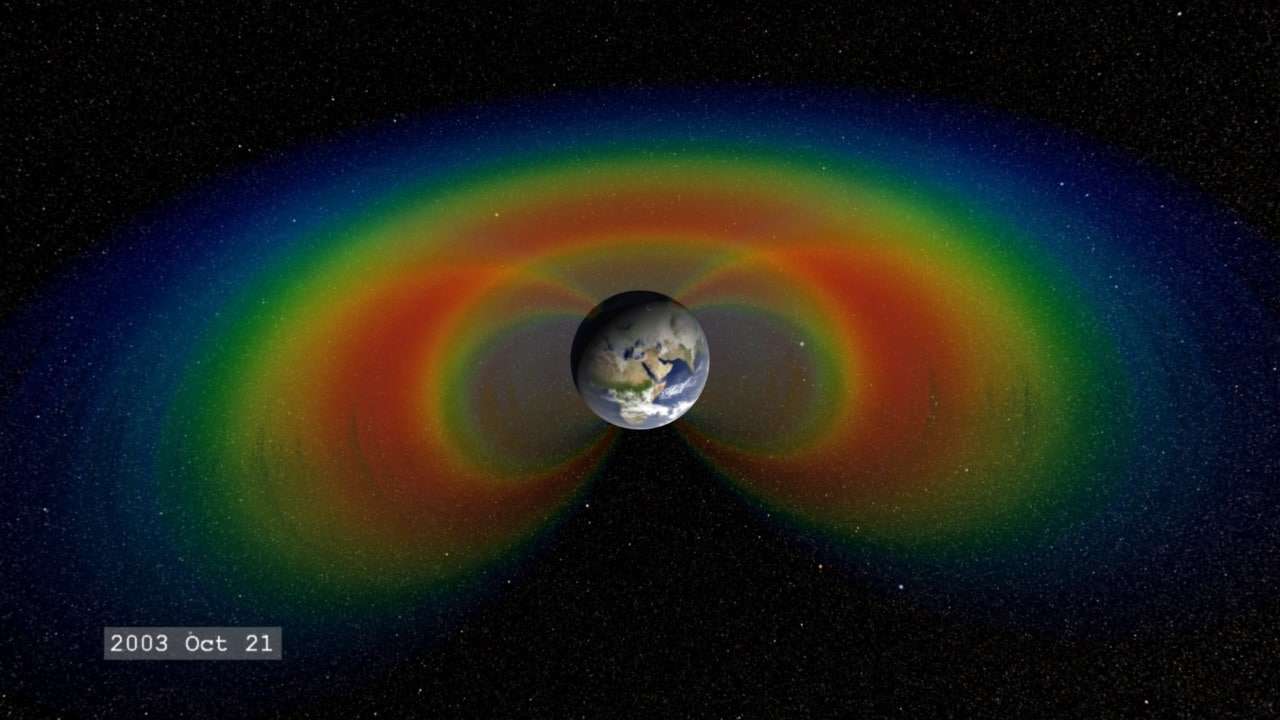
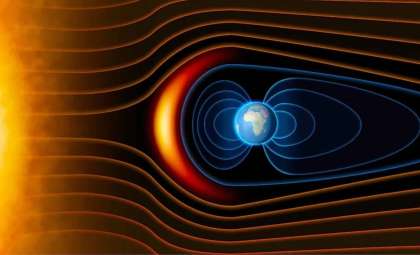
The SAA’s diminished magnetic field impacts how Earth interacts with solar winds. Usually, Earth’s magnetosphere deflects most solar particles and traps some in the Van Allen radiation belts, a doughnut-shaped region starting roughly 400 miles above Earth. This protective barrier weakens in the SAA zone.
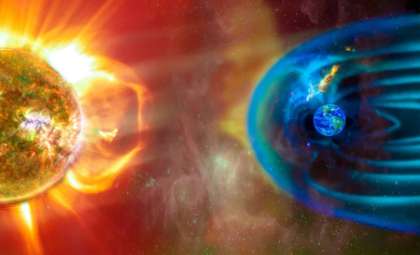
During intense solar events like coronal mass ejections (CMEs), additional charged particles enter near-Earth space. These can distort the magnetic field, increasing radiation penetration in the SAA area. Studies show elevated radiation exposure here due to the weakened field.
Heliophysics researchers including Ashley Greeley and Shri Kanekal underscore the value of long-term analysis of particle movement in this anomaly. Two decades of SAMPEX data have quantified increased solar radiation, aiding the design of radiation-hardened satellite technologies.
Ongoing Surveillance and Forecasting Efforts
NASA combines satellite observations with models simulating core dynamics to enhance understanding and prediction of magnetic field variations. These insights contribute to global tools like the International Geomagnetic Reference Field (IGRF), essential for satellite navigation and studying Earth’s internal mechanisms.
Similar to meteorological forecasting but on extended time scales, NASA scientists such as Andrew Tangborn integrate observational data and physical simulations to predict secular variation — the gradual shifts in Earth's magnetic field over years to decades.
Context Within Geological History
While the current growth and bifurcation of the SAA are unprecedented in the satellite era, geological records suggest such anomalies have occurred before.
A 2020 investigation indicates that similar features may date back as far as 11 million years. This suggests that the current anomaly does not signal an immediate magnetic pole reversal, a slow and rare phenomenon spanning hundreds of thousands of years.
This perspective situates the SAA within the broader context of Earth’s magnetic evolution, driven by the interplay of the core, mantle, and solar influences.









0 comments
Sign in to Comment