
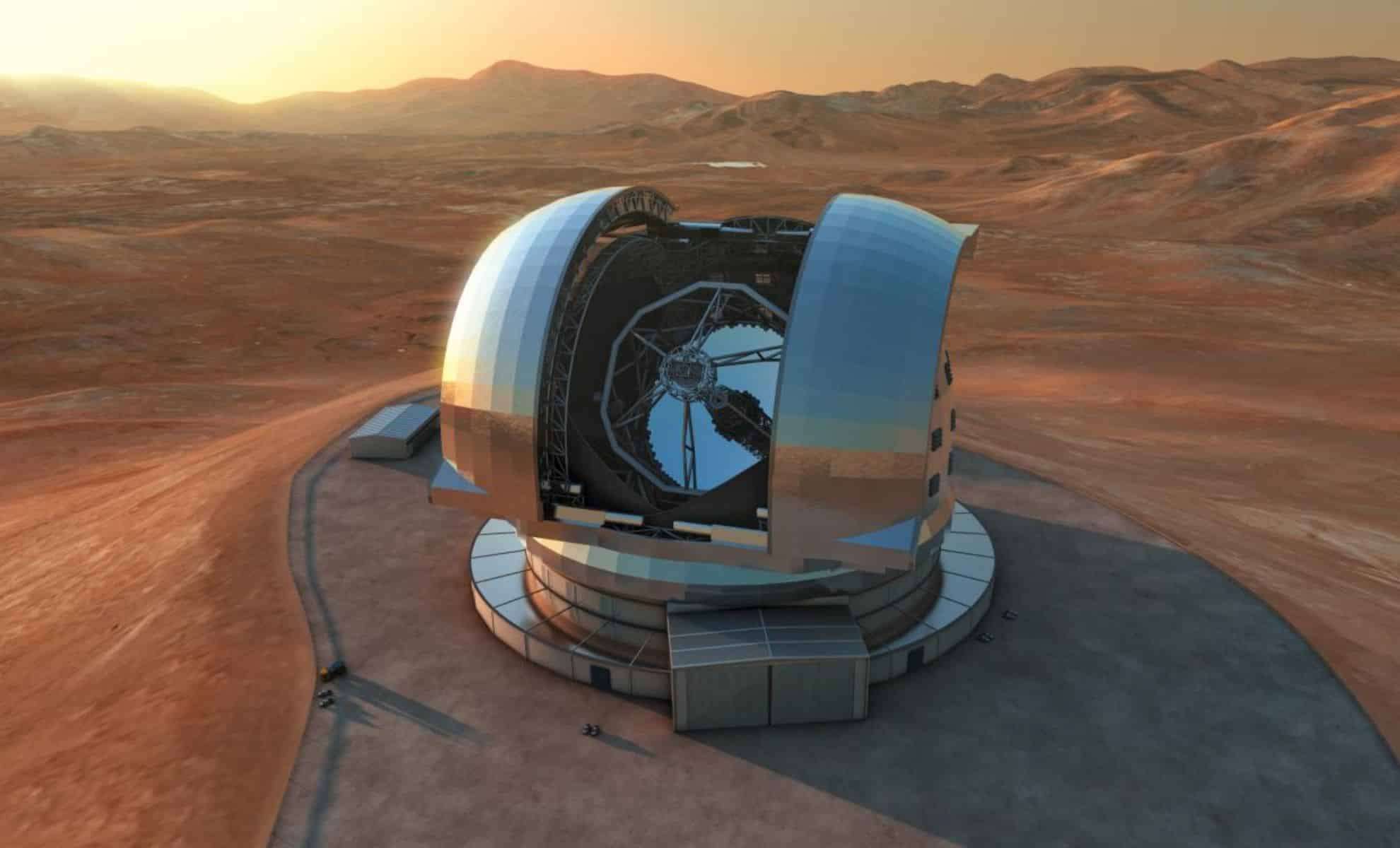
Upcoming astronomical instruments such as the European Extremely Large Telescope (E-ELT) and the Vera C. Rubin Observatory promise to revolutionize our cosmic perspective, venturing deeper into space than ever before. These advanced observatories aim to investigate mysteries like dark matter, dark energy, and the genesis of distant galaxies, potentially leading to unprecedented findings about our universe.
Record-Breaking Optical Telescopes
The E-ELT boasts an extraordinary 39-meter primary mirror, making it the largest optical/infrared telescope constructed to date. Situated atop a secluded peak in Chile’s Atacama Desert, it will capture more light than any existing instrument, enabling astronomers to study the faintest and farthest cosmic bodies. Its versatile capabilities will address critical scientific challenges, from galaxy formation mechanisms to exoplanet characterization.
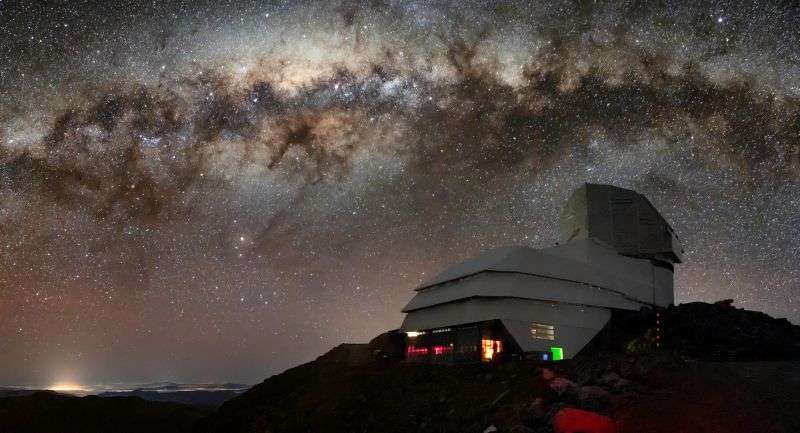
Simultaneously, the Vera C. Rubin Observatory, also based in Chile, will employ an immense 3,200-megapixel camera to scan the entire visible sky every three days. Over a decade, it will compile a dynamic cosmic chronicle, capturing events ranging from supernovae to asteroid trajectories with high resolution. Rubin’s mission is to monitor celestial changes in near real-time. “We’re making a digital color motion picture of the universe,” explains Rubin Observatory Chief Scientist Tony Tyson.

Delving Into Dark Matter and Dark Energy
These cutting-edge telescopes are uniquely equipped to investigate the enigmatic forces of dark matter and dark energy, two central puzzles in modern cosmology. While dark matter constitutes about 27% of the cosmos and dark energy approximately 68%, their intrinsic nature remains mysterious. Dark matter, invisible to light, is detected only via its gravitational pull, whereas dark energy is thought to drive the universe’s accelerating expansion.
The Rubin Observatory will play a vital role in this quest. As Kathy Turner, program manager at the DOE, notes, “Rubin will sweep back and forth across the sky for 10 years, and each object it observes will be measured repeatedly. From that, you can unfold the dark energy.” Its prolonged and precise sky surveys may illuminate the properties of these elusive components, paving the way for new cosmological theories.
Beyond Known Horizons
A thrilling aspect of these instruments is their potential to detect “unknown unknowns”—previously unimaginable cosmic phenomena. Historic telescopes like Hubble and James Webb have already expanded our knowledge in surprising ways. Hubble’s insights revealed black hole vortices, manifestations of dark matter, and the accelerating expansion of the universe, none of which were anticipated at its inception.
With innovative technology, researchers anticipate similar groundbreaking discoveries. Cosmology expert Richard Massey affirms, “The best science experiments shouldn’t just tell us about the things we expect to find, but also about the unknown unknowns.” These observatories are engineered not only to fulfill their expected objectives but also to usher in transformative revelations reshaping our cosmic understanding.
Advancing a New Era of Astronomical Exploration
As the E-ELT, the Rubin Observatory, and other next-gen telescopes become operational, they will enhance astronomers’ capabilities to observe previously inaccessible epochs and regions of space. These tools will offer fresh perspectives on galaxy evolution, black hole activity, and the mysteries of dark matter and energy. Their arrival signals a transformative phase in unraveling the universe’s most profound enigmas.
By capturing trillions of cosmic phenomena and detecting the faintest planetary and stellar traces, these observatories are set to extend the boundaries of human knowledge. As Tony Tyson enthusiastically remarks, “I think we’re going to discover something that blows our minds.”
- Categories:
- Astronomy ,
- News ,
- Science ,
- Space










0 comments
Sign in to Comment