
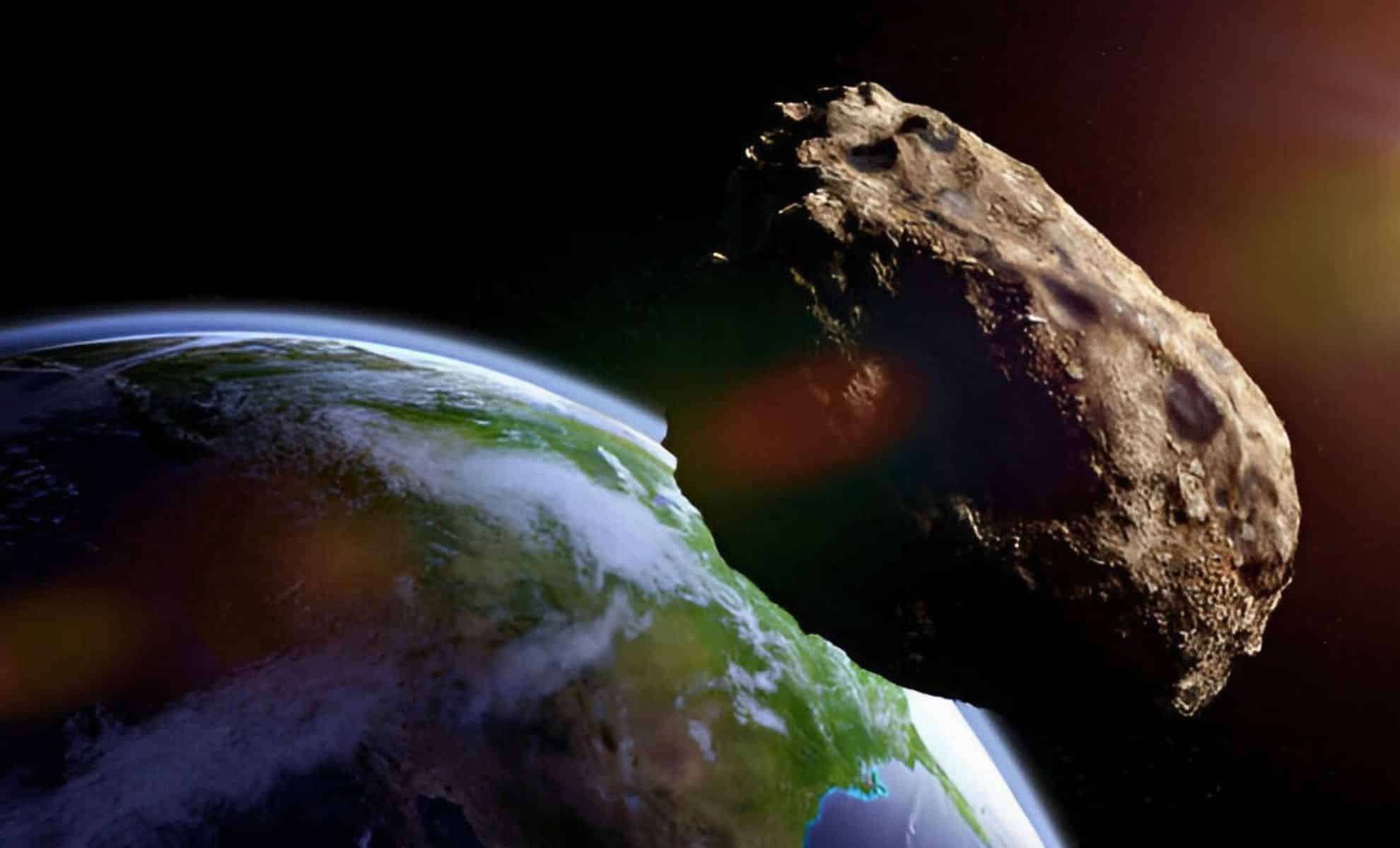
In the quiet city of Murcia, Spain, a groundbreaking discovery promises to transform our cosmic perspective. Oscar del Barco Novillo, a physicist at the University of Murcia, has developed an equation that enhances our view of the universe like never before.
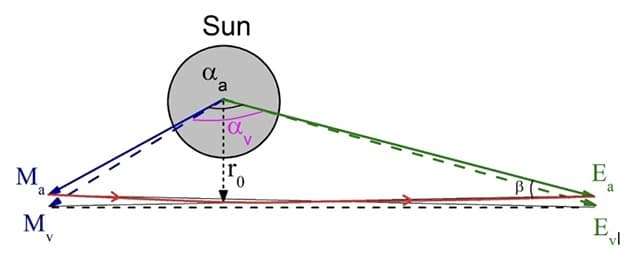
By refining the way we calculate gravitational bending of light (GBL)—the process through which massive bodies warp light paths—Del Barco Novillo’s innovation uncovers hidden celestial hazards and improves our grasp of orbital dynamics.
“The core importance of our new formula lies in its precise calculation of the GBL angle,” Del Barco Novillo states. This breakthrough questions traditional astronomical methods and paves the way for fresh insights into the cosmos.

Decoding Gravitational Lensing
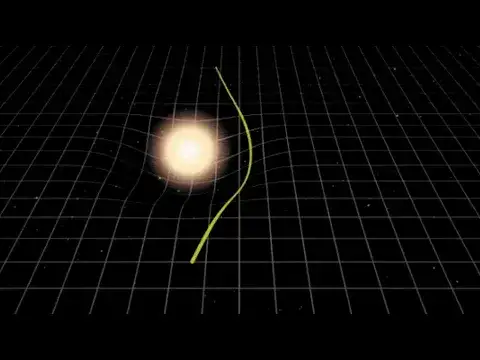
The universe often deceives observers through gravitational bending, where massive objects distort the fabric of space-time, causing stars and planets to appear shifted. Initially explored by Newton, given mathematical depth by Einstein, and studied extensively since, this effect obscures our view of true celestial positions.
Del Barco Novillo’s equation moves beyond the old assumption of infinite distances. “Our research, grounded in a geometric optics framework, delivers an exact formula for the most accurate GBL angle calculation to date for static massive bodies like the Sun or planets,” he elaborates.
Utilizing the material medium approach—which simulates light passing through substances like water or glass—this method replaces rough estimates with precise measurements, enabling astronomers to detect previously unseen asteroids, comets, and dwarf planets.
Protecting Earth: The Critical Need for Accuracy
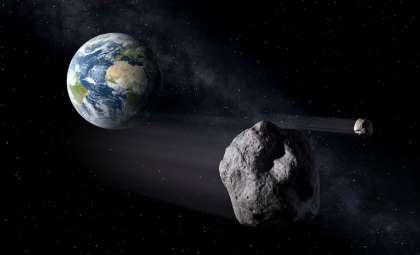
Space rocks care nothing for human safety, making accurate trajectory prediction essential to avoiding catastrophe. Del Barco Novillo’s discovery transforms uncertainty into opportunity by offering a way to anticipate threats with improved clarity.
Challenges of Gravitational Distortion
The gravitational fields around asteroids warp the light they reflect, complicating observations and delaying identification. The new formula corrects this distortion, allowing for precise orbit calculations.
A Vital Instrument for Defense
This advancement enhances planetary defense systems by:
- Earlier detection: Providing astronomers with more lead time to spot objects potentially on a collision course with Earth.
- Sharper orbit tracking: Mapping asteroid trajectories with greater accuracy, aiding targeted countermeasures.
“This could be key in accurately pinpointing the locations of small celestial bodies within our Solar System, resulting in improved orbit determination around the Sun,” Del Barco Novillo remarks.
Transforming Space Exploration
The equation’s influence extends beyond planetary defense. Projects like the European Space Agency’s Euclid mission, which charts billions of galaxies, face challenges posed by gravitational bending. By refining measurements of this effect, Del Barco Novillo’s formula aids in more accurately mapping dark matter, the elusive structure underpinning galaxies.
Closer to Earth, this tool enhances searches for nearby stars such as Proxima Centauri, offering clearer insights into the cosmic neighborhood. Its applications span stellar dynamics and the orbital mechanics governing celestial bodies, where tiny errors can cascade into significant misconceptions.
“Astronomy and astrophysics fields including celestial mechanics and stellar dynamics could find great value in these improved calculations,” Del Barco Novillo explains. The scope extends from astrometry to gravitational lensing phenomena.
The findings are detailed in the Monthly Notices of the Royal Astronomical Society.
- Categories:
- Space






0 comments
Sign in to Comment