
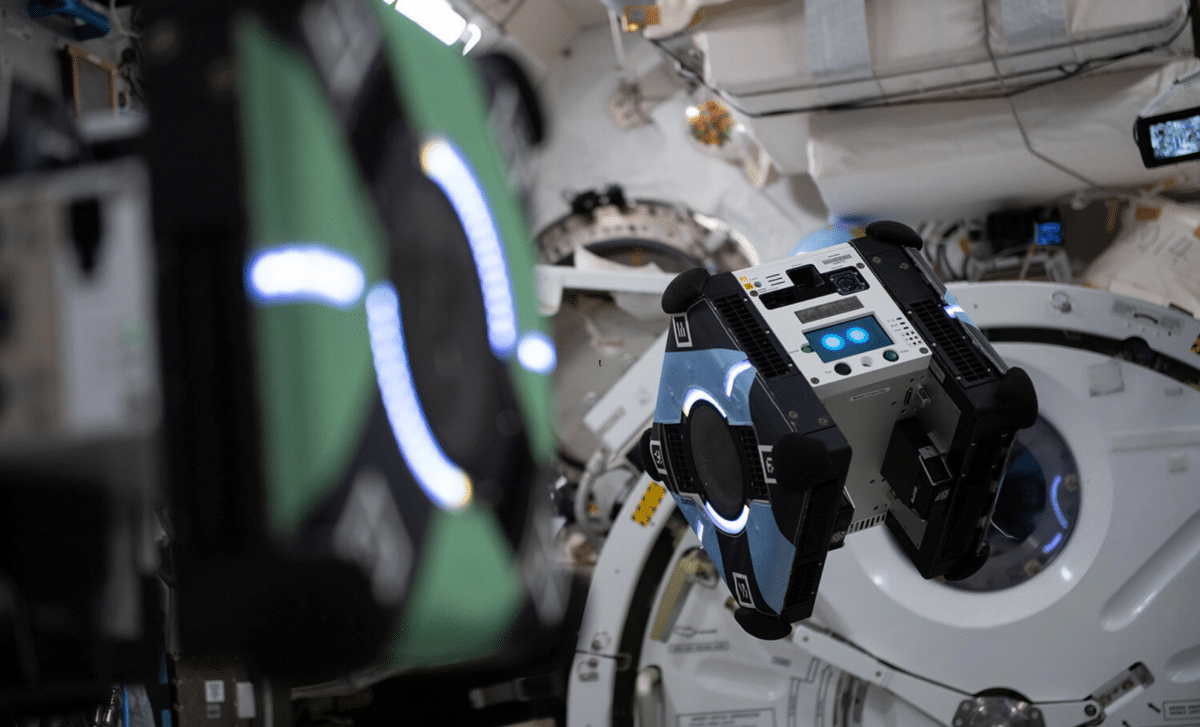
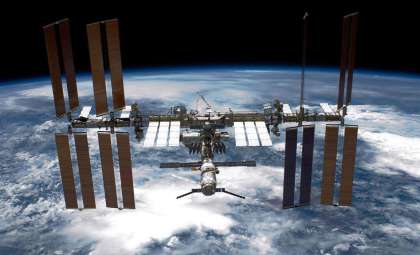
Advances in artificial intelligence are swiftly reshaping the capabilities of robots on the International Space Station (ISS). A recent investigation featured on the arXiv platform highlights how AI technologies are boosting robotic mobility, enabling significantly quicker and more streamlined movements. This innovation promises to redefine space exploration by empowering autonomous robotic systems to execute tasks with greater precision in environments where real-time human control is limited. Here, we explore the study’s findings, the obstacles encountered, and what this means for upcoming space endeavors.
Integrating AI into Space Robotics
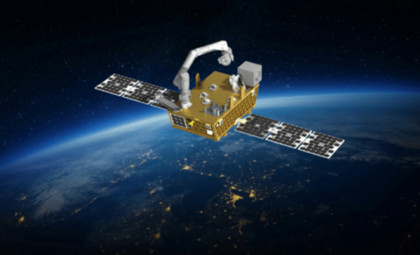
The integration of AI within robotics is a growing field, but its deployment on the ISS represents a pivotal advancement. The research, accessible via the arXiv preprint and led by experts at Stanford University, reveals how machine learning algorithms can enhance the operational efficiency of robots such as Astrobee aboard the station. Thanks to AI, these robotic systems can execute movement plans up to 50-60% faster than previous approaches, particularly in more complex scenarios. Senior researcher Marco Pavone explains,
“The flight computers to run these algorithms are often more resource-constrained than ones on terrestrial robots.”
Add Cosmo Herald as a Preferred Source

This limited computational capacity presents unique challenges for deploying AI technologies effectively in space, where optimizing resources is critical.
Adding to the complexity are the unique conditions of the space environment itself.
“In a space environment, uncertainty, disturbances, and safety requirements are often more demanding than in terrestrial applications,” Pavone continued.
Such demanding factors make AI crucial for enabling robots to operate independently and safely, minimizing the need for direct input from Earth.
Enhancing Speed and Safety Through AI
A key outcome of this research is the AI’s ability to help robots like Astrobee navigate the ISS at accelerated speeds without sacrificing safety.
“This is the first time AI has been used to help control a robot on the ISS,” said Banerjee, a key contributor to the research.
With AI-enabled autonomy, robots can independently determine optimal routes and adjust dynamically to their surroundings. Findings demonstrate that this system allows Astrobee to maneuver through the ISS up to 60% quicker, particularly when navigating complex areas where older algorithms might require significantly more time to find safe paths.
Banerjee illustrated the technique behind this advancement with an analogy:
“Using a warm start is like planning a road trip by starting with a route that real people have driven before, rather than drawing a straight line across the map. You start with something informed by experience and then optimize from there.”
This approach, known as “warm starting,” allows AI algorithms to utilize previous data to significantly reduce computation time and improve trajectory planning.
A Meaningful Achievement for the Team
For researcher Banerjee, witnessing Astrobee’s operations within the ISS was more than a technical success—it held special personal significance.
“The coolest part was having astronauts float past during the experiment,” Banerjee recalled. “One of them was one of my childhood heroes, Sunita Williams. Seeing years of work actually perform in space and watching her there while the robot moved around was incredible.”
This experience highlights the deep emotional investment many scientists have in their work—especially when it advances humanity’s frontiers. The team's dedication to refining autonomous robotics culminated in this critical milestone for space robotics.
The Path Ahead: Autonomous Missions Beyond Earth
The future of space exploration hinges on robots with advanced autonomous capabilities.
“As robots travel farther from Earth and as missions become more frequent and lower cost, we won’t always be able to teleoperate them from the ground,” said Banerjee. “Autonomy with built-in guarantees isn’t just helpful; it’s essential for the future of space robotics.”
Equipped with reliable self-governance and safety checks, these robotic explorers will be indispensable for ventures to distant locations like Mars and the Moon.
Upcoming missions depend on robots able to rapidly make informed decisions, carry out intricate tasks, and adapt to unforeseen challenges—capabilities that AI advancements continue to propel forward. This progress marks a vital leap toward a future where autonomous robots operate seamlessly in space, aiding astronauts and tackling assignments too complex or hazardous for humans alone.
- Categories:
- News




0 comments
Sign in to Comment