
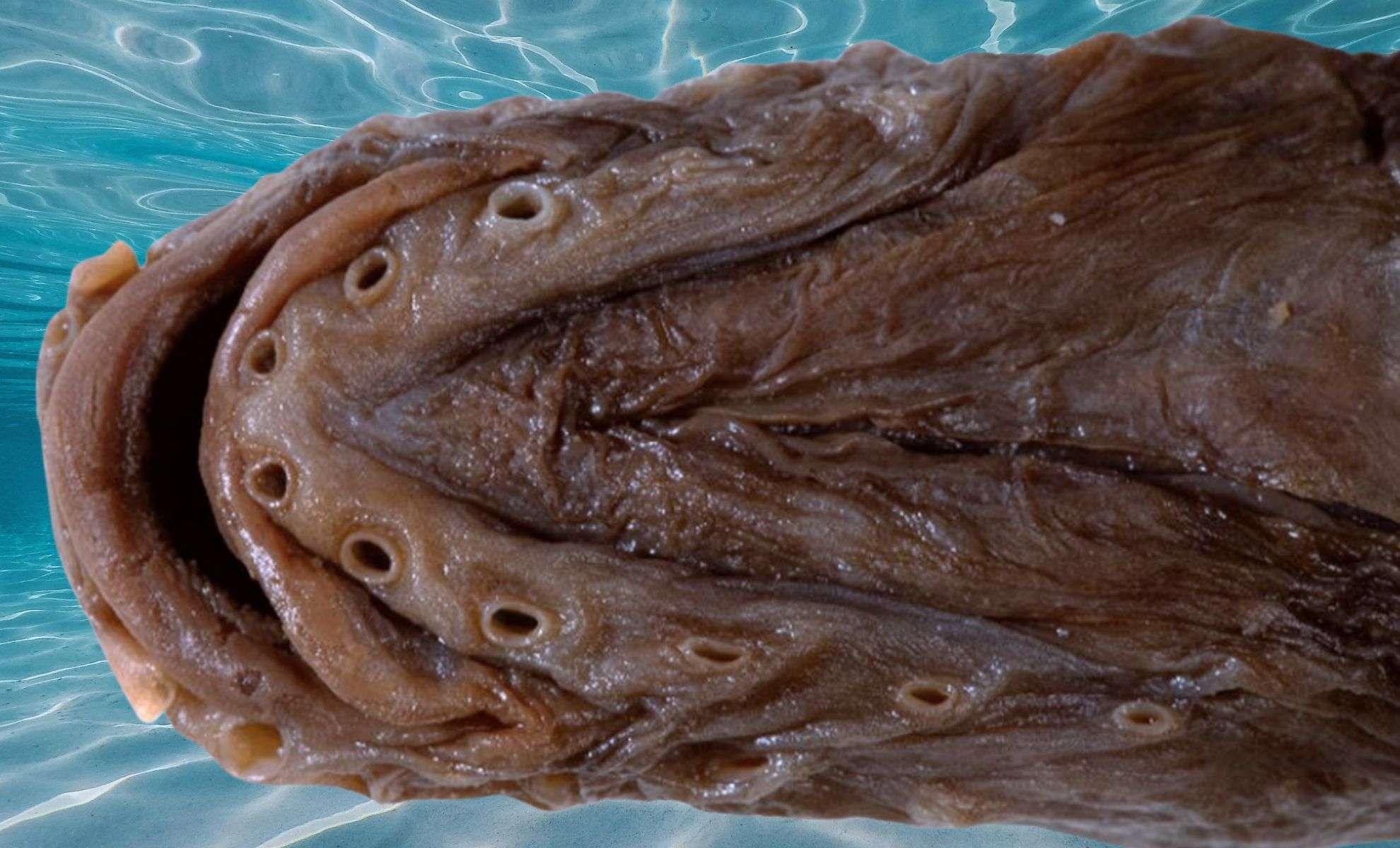
A rare deep-ocean fish species has finally been described, originating from a Soviet expedition that took place 36 years ago in the remote Cosmonauts Sea near East Antarctica.
The species, named Ophthalmolycus kosmonautis, was identified by Mikhail V. Nazarkin, a researcher at the Russian Academy of Sciences. His findings were published in the journal Polar Biology (Springer). He examined specimens collected during a 1989 Soviet research expedition that had been preserved for decades at the Zoological Institute in St. Petersburg.
Originally mistaken for a relative within the Zoarcidae family, commonly called eelpouts, these fish exhibited distinct physical traits that set them apart. Only after detailed comparison with known species did their distinct identity emerge.

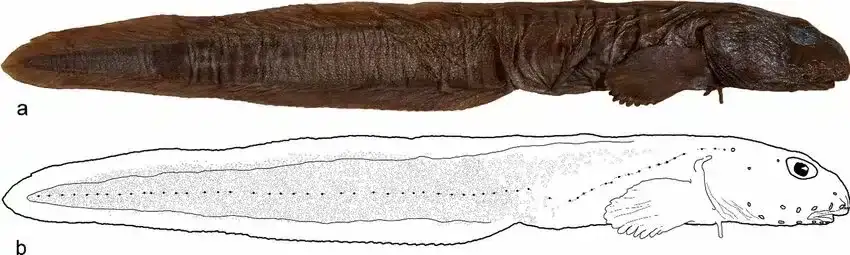
Introducing the Cosmonaut Eelpout
The Ophthalmolycus kosmonautis is a modest-looking brown fish measuring roughly 18 centimeters in length. It features a chocolate-colored body, large eyes, and a delicate upper jaw. However, its most notable characteristic is the presence of large, distinct pores on its head and throat.
These pores serve as part of a mechanosensory system — essentially an inbuilt sonar that allows the fish to navigate through completely dark waters and sense nearby movement. Nazarkin’s paper details how these pores connect with channels inside the skull bones containing receptors that detect water pressure changes and vibrations.
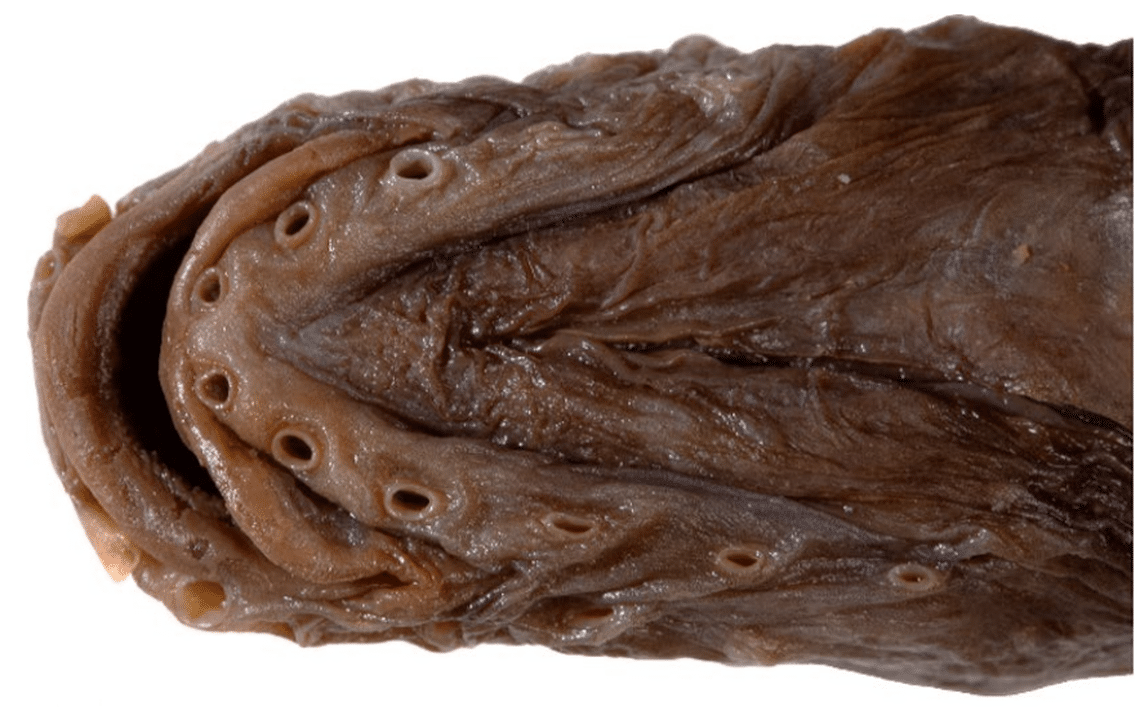
Such sensory adaptations are typical for creatures dwelling in polar deep-sea habitats, where sunlight is nearly nonexistent and survival hinges upon detecting stimuli other than sight. Yet, Nazarkin highlights that the quantity and arrangement of these pores are unique within the genus.
This species was located in the Cosmonauts Sea, a little-explored part of the Southern Ocean named in 1962 by Soviet explorers as a tribute to their astronauts. Despite its evocative name, biologically, this area is one of the least explored marine zones on the planet, suggesting it harbors many more unknown organisms.
Rediscovering Hidden Value in Old Collections
Perhaps the most astonishing aspect of this discovery is how long the species went unrecognized. Like many biological samples from the Cold War period, these specimens were preserved but largely untouched for decades.
Nazarkin’s work serves as a powerful example of how museum and research collections continue to be vital sources of new biodiversity discoveries. As highlighted in a 2020 report from Science Advances, historic museum specimens worldwide hold massive potential to broaden scientific knowledge, especially for understudied ecosystems.
Eelpouts, in particular, remain understudied. Although over 300 species are known, many live at extreme depths which makes direct observation in their natural environments challenging. These benthic fish typically feed on small invertebrates near the sea floor like crustaceans and worms.
“Very little is known about the ecology of these fish,” Nazarkin notes. “Every new specimen adds a piece to the puzzle.”
A Name Honoring Exploration and Discovery
By naming the fish kosmonautis, Nazarkin linked the species not only to the location where it was found but also to the pioneering spirit of exploration. In a way befitting its Soviet namesakes, this eelpout has emerged from obscurity, expanding the boundaries of what we understand about life in extreme habitats.
The identification of this species adds depth to the genus Ophthalmolycus, initially described in the early 1900s, and draws attention to the delicate and enigmatic ecosystems beneath the Antarctic ice.
Such findings come at a crucial moment. With climate change progressing and increased human activity threatening polar regions, this discovery highlights how much of Earth's coldest ecosystems remain unexplored and at risk of disappearing without notice.











0 comments
Sign in to Comment