
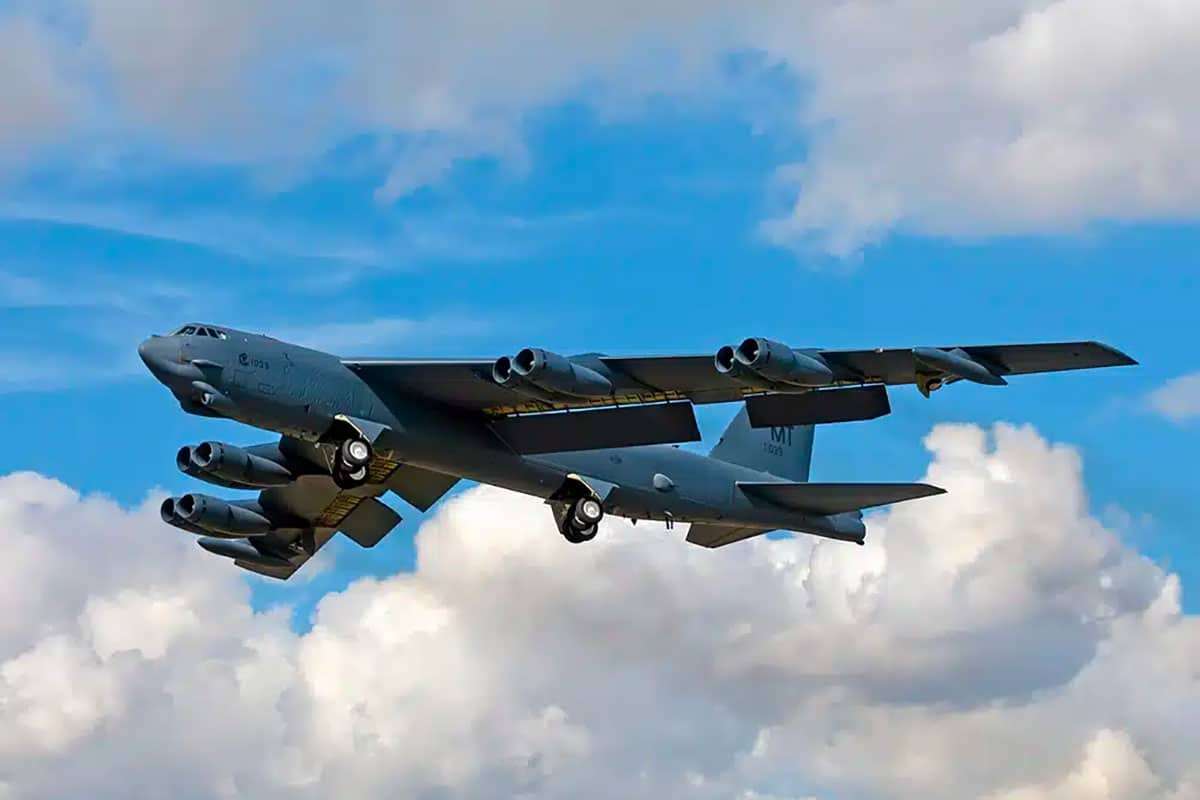
In a striking act of military demonstration, two Russian Su-27 fighters engaged in an interception of U.S. Air Force B-52H bombers close to Kaliningrad above the Baltic Sea. This occurrence took place during a NATO exercise, emphasizing the rising strategic tensions in this pivotal area amid intensifying geopolitical rivalry between Russia and Western nations.
Russian response during NATO drills
The interception happened on November 27, 2024, amidst the ongoing NATO-coordinated Apex Jet exercise. These B-52 bombers, capable of deploying both nuclear and conventional arms, were participating in operational drills alongside Finland and Sweden—two countries gaining prominence within NATO. The bombers carried out simulated armament deployments and collaborated with Finnish F/A-18 Hornet fighters and Swedish JAS 39 Gripens.
Observers viewed Russia’s action as a direct reaction to the NATO exercises. Despite U.S. officials describing the encounter as “safe and professional,” it highlighted the fragile power dynamics in the Baltic vicinity. Kaliningrad, a heavily fortified Russian exclave, remains a key hotspot because of its stockpile of Iskander ballistic missiles and S-400 air defense systems, plus its close proximity to NATO nations.

The role of B-52 operations in deterrence
B-52 Stratofortress bombers deployed in Europe send a strong message about NATO’s deterrence posture. These aircraft, outfitted with cutting-edge electronic warfare capabilities, underscore the U.S. commitment to protecting its European partners. Their capacity to fly over 14,000 kilometers without refueling and to carry up to 31.5 tons of payload cements their strategic value in modern combat scenarios.
Drills such as Apex Jet aim to boost NATO’s operational cohesion, especially following Finland’s recent entry into the alliance. The addition of northern partners fortifies NATO’s presence along Russia’s 1,300-kilometer border, complicating Moscow’s strategic calculations.
Baltic Sea emerges as a hotspot
Both NATO and Russia increasingly view the Baltic Sea as a critical battleground for power projection. NATO’s activities near Kaliningrad serve to display readiness and alliance solidarity, while Russian interceptions demonstrate heightened alertness over sensitive airspace. Experts caution that such intense military encounters elevate the chances of missteps, especially with a documented increase of 35% in regional activity since 2023.
Impact of the Ukraine conflict
The ongoing war in Ukraine continues to deeply affect NATO-Russia ties. The U.S. has ramped up support by supplying Ukraine with advanced arms like ATACMS missiles capable of reaching deep into Russian territory. Russia has reciprocated by intensifying military showcases, including a recent test missile launch near Dnipro.
The contest now extends beyond Ukraine’s borders, turning the Baltic Sea into a fresh geopolitical battleground. Moscow perceives NATO’s expanding influence as provocative, while the West stresses the importance of protecting allied nations from possible threats.
Delicate equilibrium amid rising tensions
The Baltic region has become a complex arena for power struggles, raising questions about how far the involved parties are prepared to push escalation. The Russian interception of U.S. bombers is more than a single episode; it symbolizes a wider competition for dominance in Europe. As tensions simmer, global attention remains fixed, hoping prudence will prevent confrontation.
https://www.airforcetimes.com/air/2024/11/04/air-force-to-send-bomber-task-force-to-europe
- Categories:
- News













0 comments
Sign in to Comment