
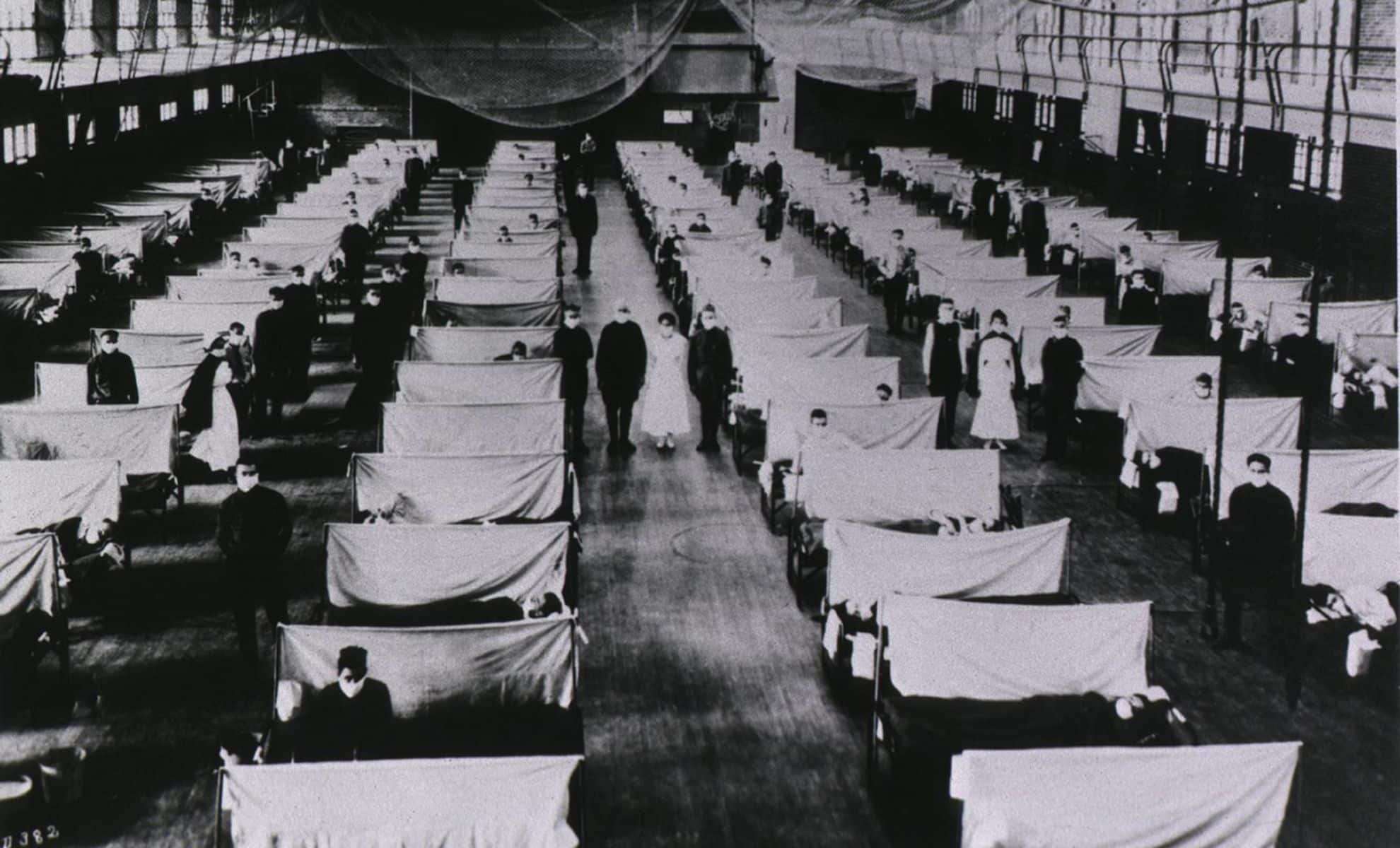
Researchers from the Universities of Basel and Zurich have made a major breakthrough by deciphering the genetic blueprint of the 1918 influenza virus—the strain behind the devastating Spanish Flu pandemic. Their work illuminates the virus’s evolution and adaptation mechanisms to human hosts during the early stages of the outbreak.
Unveiling the Secrets of the 1918 Influenza Virus
The infamous 1918 Spanish flu pandemic resulted in the deaths of an estimated 20 to 100 million people worldwide. Despite its historic impact, many questions about how the virus evolved to infect humans remained unanswered until now. Led by paleogeneticist Verena Schünemann at the University of Basel, this study marks an important advance in deciphering the evolutionary trajectory of the virus.
By analyzing a preserved viral sample collected from a formalin-fixed specimen, stored for over a century at the Institute of Evolutionary Medicine’s Medical Collection at the University of Zurich, scientists successfully sequenced the virus’s genome. Their genetic analysis revealed that the virus possessed crucial adaptations to human hosts right from the pandemic’s onset.

Identifying Crucial Genetic Changes
The research uncovered three notable mutations in the Swiss variant of the 1918 influenza virus. Schünemann stated, “This is the first time an influenza genome from the 1918-1920 Swiss pandemic has been sequenced, granting fresh perspectives on the virus’s evolutionary behavior during the early European outbreak.”
Two of these mutations enhanced the virus’s resistance to a key antiviral response of the human immune system, a defense that typically blocks animal-origin flu viruses from spreading between people. The third mutation affected a membrane protein, improving the virus’s ability to attach to and enter human cells.
Innovative Techniques for Ancient RNA Recovery
Influenza viruses carry RNA as their genetic material, which is far less stable and prone to degradation than DNA present in viruses like adenoviruses. This fragility has historically hindered attempts to study ancient flu strains. The team tackled this challenge by pioneering a new technique to efficiently extract degraded RNA from long-preserved tissue samples.
Christian Urban, the study’s lead author from the University of Zurich, explained, “Ancient RNA can only survive over extended periods under very particular conditions. To overcome this limitation, we devised an improved method to retrieve these delicate RNA fragments from preserved specimens.”
Historical Archives Inform Future Pandemic Research
This project involved close collaboration with the Medical Collection at UZH and the Berlin Museum of Medical History at Charité University Hospital. Frank Rühli, co-author and head of the Institute of Evolutionary Medicine at UZH, highlighted the value of such archives: “Medical collections represent an unmatched resource for reconstructing genomes of ancient RNA viruses, yet their potential remains largely untapped.”
Though centered on the past, the findings of this study carry important implications for the future. By comprehending the adaptation strategies of viruses like the Spanish flu, scientists can improve predictive models and response plans for potential pandemics ahead. Schünemann concluded, “Gaining a clearer view of how viruses evolve in response to human hosts over time is critical for building better tools to anticipate and combat future outbreaks.”
- Categories:
- News










0 comments
Sign in to Comment