
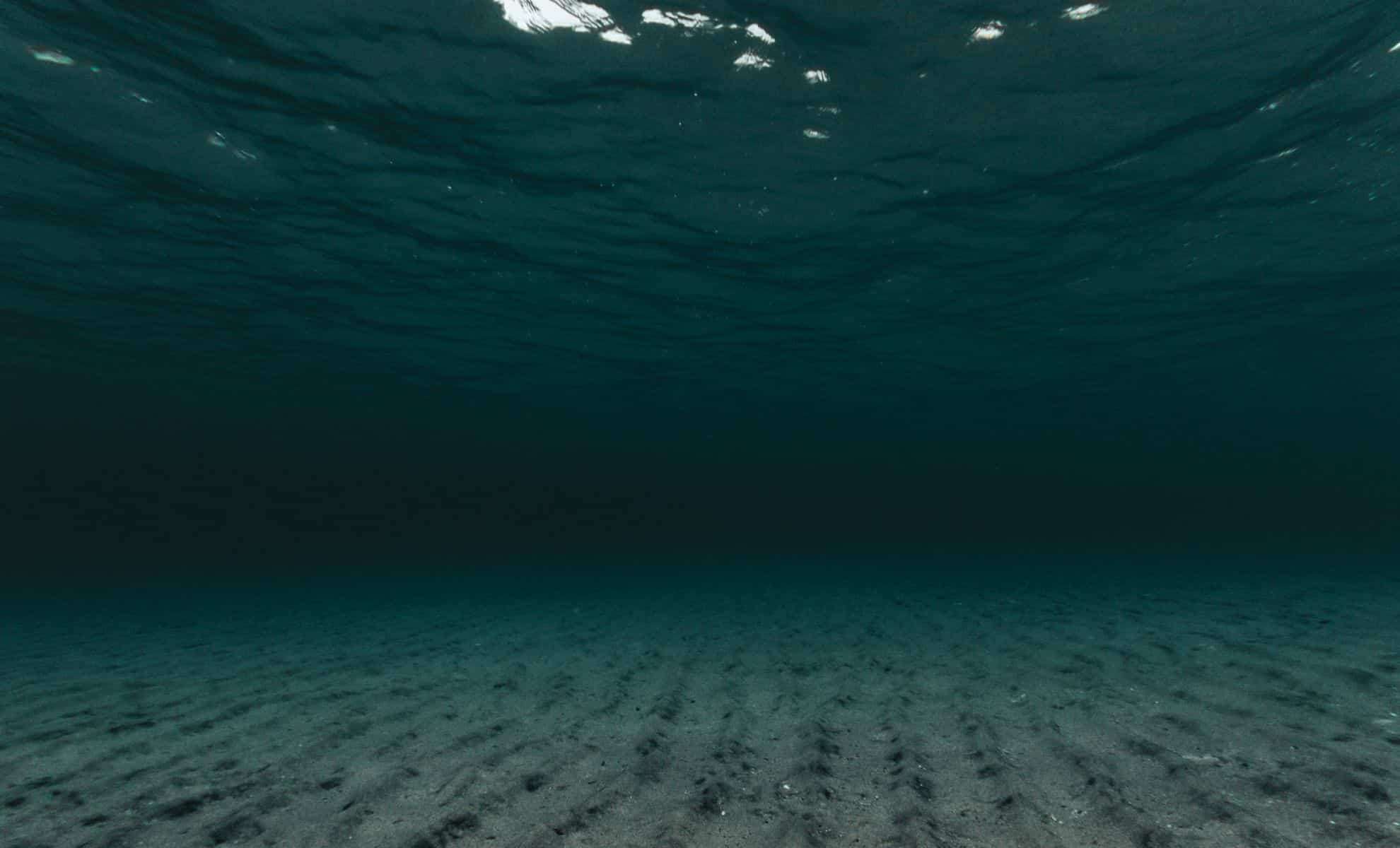
A global group of scientists has revealed vibrant ecosystems thriving in some of Earth's most forbidding environments. Leading the mission, researchers from the Chinese Academy of Sciences explored a remote section of the northwest Pacific Ocean, spanning between Japan and Alaska, diving deeper than 31,000 feet—almost triple the depth of the Titanic wreck.
Life Beyond Sunlight
In these immense depths, sunlight is completely absent. Instead of relying on photosynthesis, the organisms depend on a fascinating natural process known as chemosynthesis. This allows specialized microbes to transform substances such as methane and hydrogen sulfide into organic material, building a self-sustaining food web in total darkness.
“This marks the deepest community of chemosynthetic organisms ever documented,” explained Mengran Du, a scientist at the Institute of Deep-sea Science and Engineering at the Chinese Academy of Sciences. The findings, featured in Nature, reveal life’s extraordinary resilience, thriving amid pressures that challenge most human-made devices, including some submersibles.

Exploring Untouched Depths
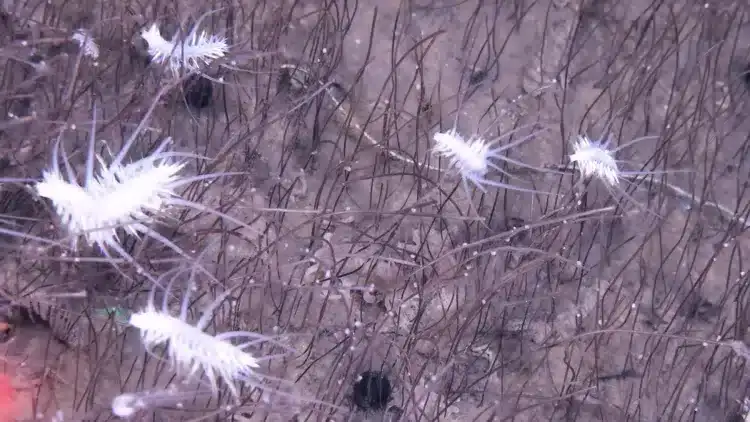
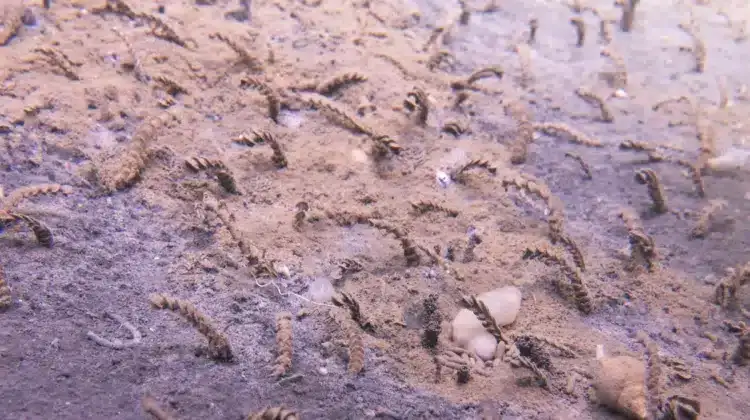
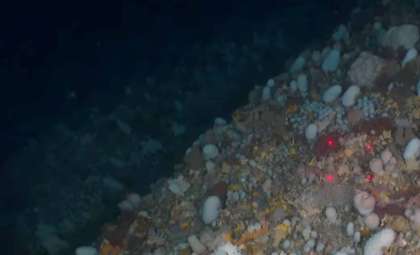
Utilizing the crewed submersible Fendouzhe, the team accessed seafloor areas never before visually recorded. Their observations unveiled remarkable communities where marine life exists in close association with these chemical habitats. Extensive carpets of tube worms populated the ocean floor, their pale structures interspersed with numerous marine snails, creating a scene both alien and captivating.
Unlike species near the ocean’s surface dependent on sunlight, these organisms are completely adapted to isolation, sustaining themselves exclusively through chemical energy. Their survival challenges conventional views about life’s endurance and raises intriguing questions about whether similar ecosystems could be found elsewhere, even beyond our planet.
Challenges of the Deep
Accessing these abyssal zones is immensely challenging. The Fendouzhe submersible represents one of the elite vessels engineered to endure the immense pressure found deeper than 30,000 feet underwater. This expedition highlights the vast uncharted nature of our oceans and the possibility that hidden ecosystems may inform us not only about Earth’s biology but about life’s potential across the cosmos.
These deep-ocean communities are still largely undiscovered, but their identification paves the way for groundbreaking research, where marine biology, chemistry, and geology intersect in the profound darkness of the planet’s deepest trenches.
- Categories:
- News




0 comments
Sign in to Comment